


India’s Sukhoi-30MKI Flies with US B-1 Lancer Bomber for the First Time in Landmark Air Exercise
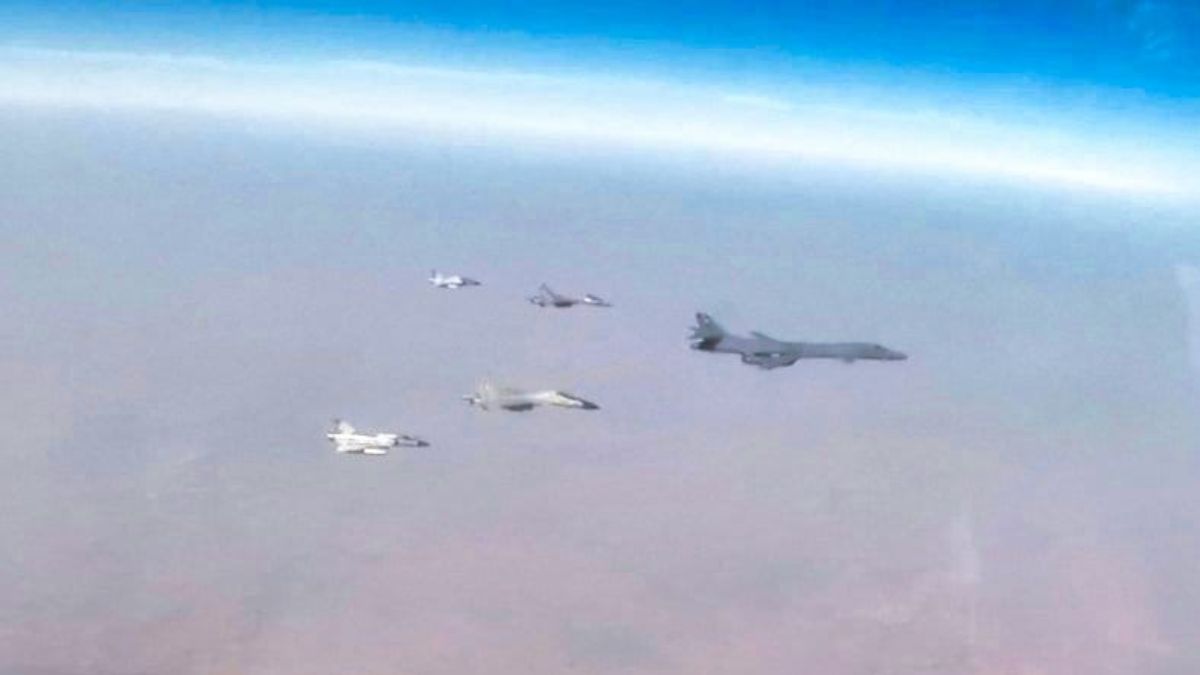
The Indian Air Force and United States Air Force are engaged in a bilateral exercise from 10–13 November, 2025. Image courtesy: X.com/@IAF_MCC

In a first-of-its-kind military aviation milestone, the Indian Air Force (IAF) and the United States Air Force (USAF) are conducting a unique four-day bilateral air exercise that has brought together two formidable aircraft: India’s Russian-origin Sukhoi-30MKI fighter and America’s long-range strategic bomber, the B-1B Lancer.
The exercise, underway from November 10 to 13, 2025, in southern India, was the first operational integration of the IAF’s Su-30MKI with a US heavy bomber, signaling a deepening level of interoperability between the two air forces.
What did IAF and USAF do during the air exercise?
The IAF, on November 12, released striking visuals of its Sukhoi-30MKIs and Mirage-2000s flying alongside the sleek, swept-wing B-1 Lancer, which is known for its long-range precision strike capability.
The USAF has fielded only the B-1 Lancer for this engagement, underscoring its focus on strategic bomber operations and coordination with Indian frontline fighters in diverse mission profiles.
“The Indian Air Force and United States Air Force are engaged in a bilateral exercise from November 10–13, aimed at fostering mutual learning and enhancing interoperability. The US Air Force is participating with the B-1B Lancer,” the IAF posted on X (formerly Twitter).
Why is the current air exercise seen as important?
This exercise — though not officially linked to the larger Cope India series involving QUAD nations (India, the US, Japan, and Australia) — is being viewed as an important precursor to future multilateral drills.
The operations are taking place over central India, with a Notice to Airmen (NOTAM) issued to restrict air routes across parts of Uttar Pradesh and Madhya Pradesh.
Why is this air exercise more than usual training?
For India, this is more than a routine training engagement. The presence of the B-1 Lancer, which was last seen in India during the Aero India 2025 air show in Bengaluru, transforms the current drill into an operational collaboration.
Unlike its earlier symbolic flyovers, this time, the B-1 is flying coordinated missions with Indian fighters, refining tactical procedures, communication protocols, and aerial combat synchronization.
What do experts say about the development?
Strategic experts view this development as a reflection of growing mutual trust and the maturity of the India-US defence partnership.
Once limited to basic exchanges and staff-level interactions, the bilateral relationship now spans complex joint operations, logistics sharing, and co-development of cutting-edge technologies.
The USA designated India as a “Major Defence Partner” in 2016, paving the way for high-level technology transfers and regular operational integration between their armed forces.
Since then, both nations have signed multiple foundational agreements — including COMCASA, BECA, and LEMOA — that facilitate real-time intelligence exchange, access to advanced navigation systems, and joint logistics support.
What is the background to the present air exercise?
This latest exercise comes amid a backdrop of minor trade and tariff frictions between the two nations. Yet, their military relationship continues to strengthen, sending a strong signal of sustained strategic convergence despite economic disagreements.
As the skies over India witness the thunderous symphony of the Su-30MKI and the B-1 Lancer flying side by side, the message is unmistakable: India and the United States are not just partners in diplomacy — they are increasingly partners in power projection.