No Indian Death In Saudi Strike: Embassy Issues Clarification After ‘Unfortunate Incident At Al Kharj’ Amid Iran War
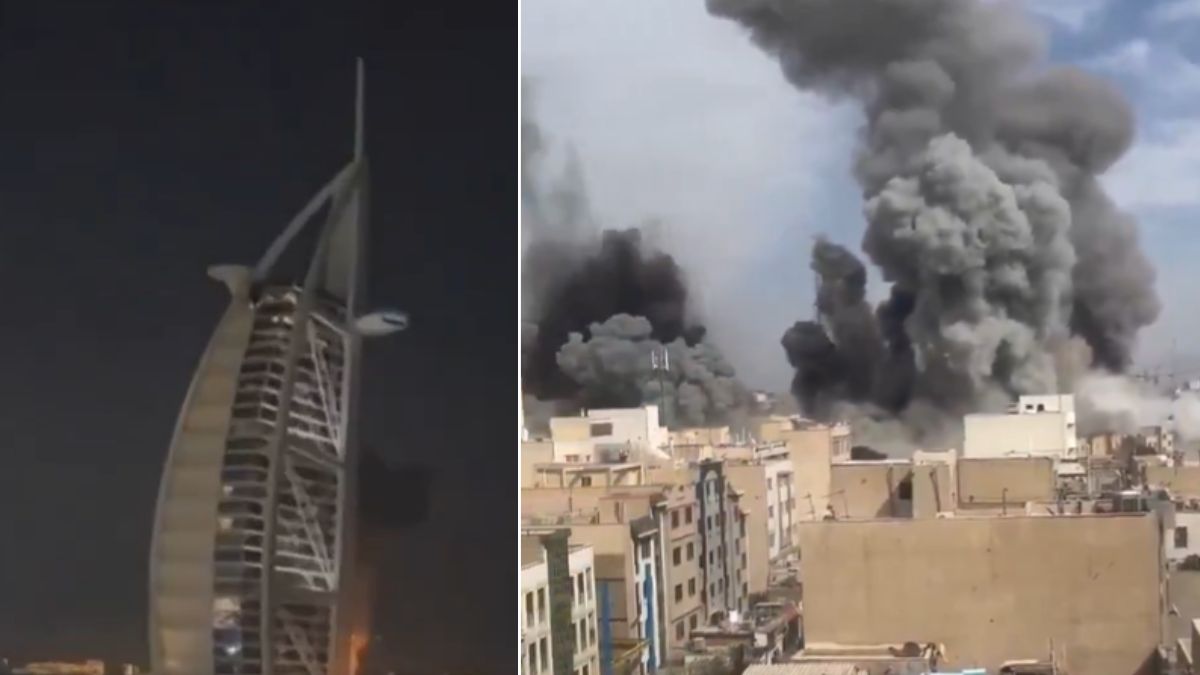
Earlier on Saturday, Dubai Media Office confirmed that debris from an aerial interception fell onto a vehicle in the Al Barsha area, resulting in the death of a Pakistani driver. Image courtesy: RNA

After reports emerged that the Israel-Iran war has claimed first Indian life, the Indian Embassy in Riyadh has clarified that no such thing has happened. The Embassy stated that no Indian national was killed after a military projectile struck a residential area in Al Kharj, Saudi Arabia, amid the ongoing war involving Iran, Israel and the United States.
The embassy issued the clarification early Monday (March 9, 2026) after initial reports suggested that an Indian worker may have been among the fatalities in the incident. “It is a matter of relief that there has been no Indian fatality in the unfortunate incident at Al Kharj yesterday evening,” the embassy said in a statement posted on X.
However, officials confirmed that one Indian national was injured and is currently undergoing treatment at a government hospital.
Injured Indian national receiving treatment
According to the embassy, Counsellor (Community Welfare) Y. Sabir visited the injured Indian worker and is coordinating with local authorities. “The injured Indian national is currently receiving treatment at a government hospital in Al Kharj,” the embassy said, adding that it remains in contact with Saudi authorities regarding the incident.
The clarification was issued after Saudi officials released updated details on the casualties following the projectile strike.
Saudi authorities confirm two deaths and several injuries
Saudi Arabia’s General Directorate of Civil Defence confirmed that a military projectile struck a residential compound belonging to a maintenance and cleaning company in Al Kharj Governorate. The strike resulted in two deaths and multiple injuries, according to officials.
Authorities later clarified that the two fatalities were Bangladeshi nationals, while 11 Bangladeshis and one Indian national were injured in the incident. Civil defence officials also reported material damage to the residential facility.
“The incident resulted in the deaths of two individuals and injuries to several residents,” the Civil Defence spokesperson said, describing the strike on civilian infrastructure as a violation of international humanitarian law.
War spillover seen across Gulf region
The projectile strike highlights how the Iran–Israel conflict is increasingly spilling over into neighbouring Gulf countries. Earlier, authorities in the United Arab Emirates confirmed that debris from an aerial interception operation fell onto a vehicle in Dubai’s Al Barsha area, killing a Pakistani driver.
Dubai officials also reported minor damage to the façade of a tower in Dubai Marina, though no injuries were recorded in that incident.
Several sites in the Gulf states are facing Iranian strikes, which is retaliating to the US-Israel strikes on Tehran. Even Iranian President Masoud Pezeshkian’s said sorry to neighbours for launching attacks on US bases and assets in the Middle East, saying “I apologise to the neighbouring countries. We have no intention of invading other countries.”
Conflict triggered by US-Israel strike on Iran
The current escalation in West Asia began on February 28, when a joint US–Israel military strike on Iranian territory killed Supreme Leader Ayatollah Ali Khamenei and several senior military leaders. The attack triggered large-scale retaliation from Iran, which has launched waves of drone and missile strikes targeting Israeli assets and US-linked facilities across the region.
The war has now entered its ninth day, with multiple countries in the Gulf reporting incidents linked to interceptions of Iranian missiles and drones.
The intensifying conflict has caused significant civilian casualties and displacement inside Iran. According to reports cited by Al Jazeera, more than 1,300 people have been killed since the fighting began. The conflict has also forced around 100,000 residents to flee their homes, triggering a growing humanitarian crisis.
Political developments inside Iran
Amid the conflict, Iran’s political landscape has also shifted dramatically. Following Ayatollah Khamenei’s death, Seyyed Mojtaba Khamenei, his second son, was appointed Iran’s new Supreme Leader by the Assembly of Experts. Iranian state media reported that the Islamic Revolutionary Guard Corps (IRGC) and the country’s armed forces have pledged their support to the new leader.
Large crowds were seen celebrating the appointment in several Iranian cities.
Meanwhile, the conflict has also rattled global energy markets, pushing oil prices higher due to fears of supply disruptions in the Gulf. US President Donald Trump said the short-term spike in oil prices would be worth it if it leads to the elimination of Iran’s nuclear threat.
“Short term oil prices, which will drop rapidly when the destruction of the Iran nuclear threat is over, is a very small price to pay for USA and world safety and peace,” Trump wrote on Truth Social.