India-US Navies To Engage In More Complex Bilateral Exercises; CNS Tripathi Pushes Indo-Pacific Security Agenda
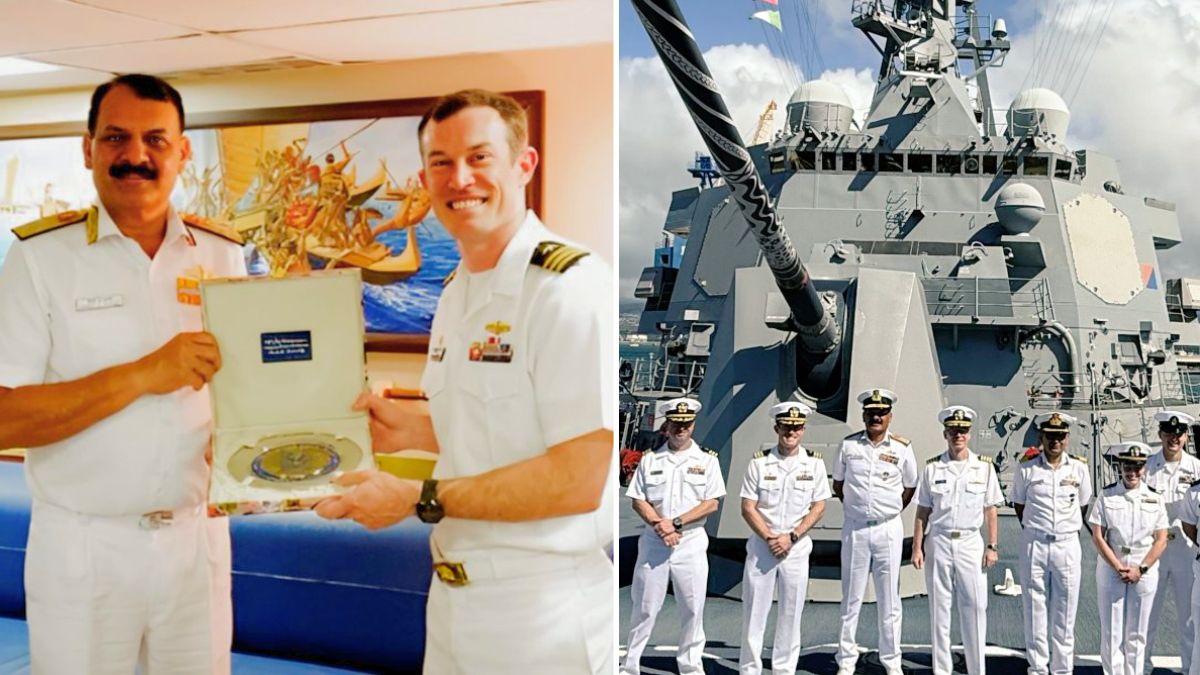
The interactions reaffirmed the enduring partnership between the Indian Navy and the US Navy, as well as the growing synergy with US Marine and joint forces. Image courtesy: X.com/@indiannavy

Even as they continue to experience some friction on the trade and tariffs front, India and the United States (US) are witnessing a significant push aimed at bettering the bilateral maritime ties with Chief of the Naval Staff Admiral Dinesh K Tripathi’s ongoing visit to the country.
Currently on a five-day official visit to the United States, CNS Admiral Tripathi held high-level talks with several officials which were aimed at strengthening operational synergy between the Indian Navy and US naval forces. According to the Indian Navy, the visit reaffirms New Delhi’s commitment to advancing a secure, stable and rules-based Indo-Pacific alongside Washington.
CNS Admiral Tripathi engaged in meetings with Admiral Samuel J Paparo, Commander of US Indo-Pacific Command; Admiral Stephen T Koehler, Commander of the US Pacific Fleet; and Lt Gen James F Glynn, Commander of US Marine Forces Pacific.

CNS Admiral Tripathi’s US visit: What was prioritised in maritime dialogue?
Key areas of his discussions with the officials included enhanced maritime security coordination, strengthened operational interoperability, expanded logistics and sustainment cooperation. A major focus remained on seamless information-sharing and improved maritime domain awareness, including deeper integration between the Indo-Pacific Maritime Domain Awareness initiative and India’s Information Fusion Centre–Indian Ocean Region (IFC-IOR).
Discussions also covered priority areas of mutual maritime interest, including safeguarding sea lines of communication and critical undersea infrastructure, in addition to coordinated responses for HADR & SAR missions, counter-piracy, and non-traditional security challenges.
How will Indian and US navies Work together to secure critical sea lines?
With rising regional tensions and growing vulnerability of key maritime assets, India and the United States examined new mechanisms to safeguard sea lanes, critical undersea infrastructure and chokepoints in the Indo-Pacific. Discussions also emphasised greater collaboration in humanitarian assistance and disaster relief, search and rescue operations, counter-piracy missions.

These areas remain central to both navies’ cooperative engagements across the Indian Ocean and Pacific theatres.
Are joint naval drills set to become more complex and frequent?
A significant part of CNS Tripathi’s engagement focused on scaling up joint and multilateral exercises. Both sides are expected to enhance the complexity and regularity of MALABAR, PASSEX, MILAN series drills. These exercises are designed to boost combat-readiness, advance cross-domain warfighting skills and refine joint warfighting, logistics, and sustainment.
Admiral Tripathi’s discussions also ventured into emerging warfare and technology domains, including unmanned and autonomous maritime systems; intelligence, surveillance and reconnaissance (ISR) cooperation; cyber operations; space-based maritime capabilities.
Officials highlighted these as essential for enhancing readiness and resilient naval operations in contested environments.
What does this visit signal for future of India–US maritime partnership?
Admiral Tripathi’s visit underscores a rapidly expanding India–US maritime partnership rooted in trust, shared values and convergent Indo-Pacific strategies. Both navies are now moving toward deeper operational integration, greater technological collaboration and stronger cooperative mechanisms.
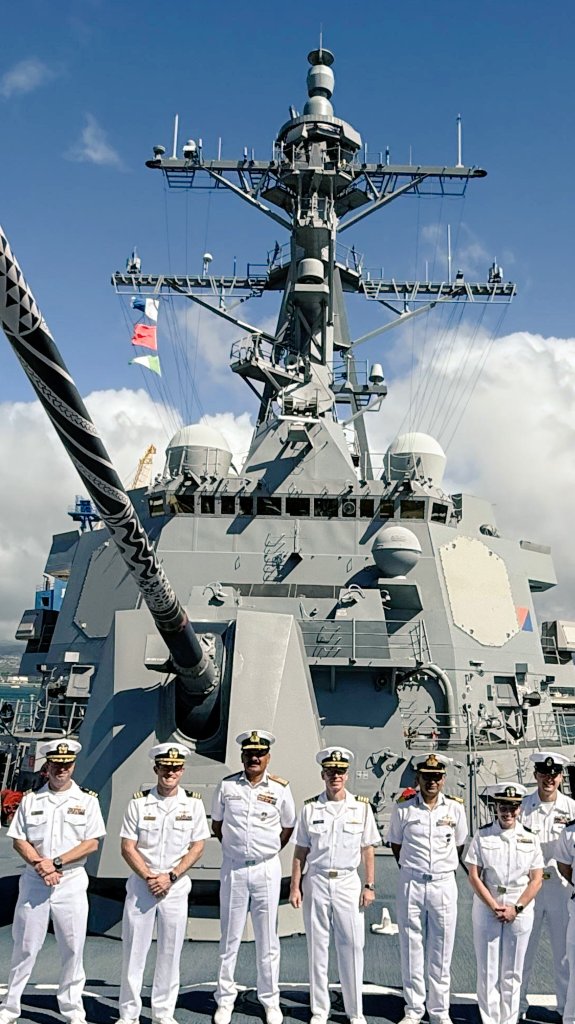
Meanwhile, Admiral Tripathi also visited US Navy’s state-of-the-art Arleigh Burke class guided missile destroyer USS Daniel Inouye. He was briefed on the destroyer’s cutting-edge modifications, multi-mission versatility, and advanced maritime surveillance systems. The CNS also visited Joint Base Pearl Harbor–Hickam.