
Dubai Airshow 2025: Russia’s UEC Showcases 5th Gen And UAV Engines
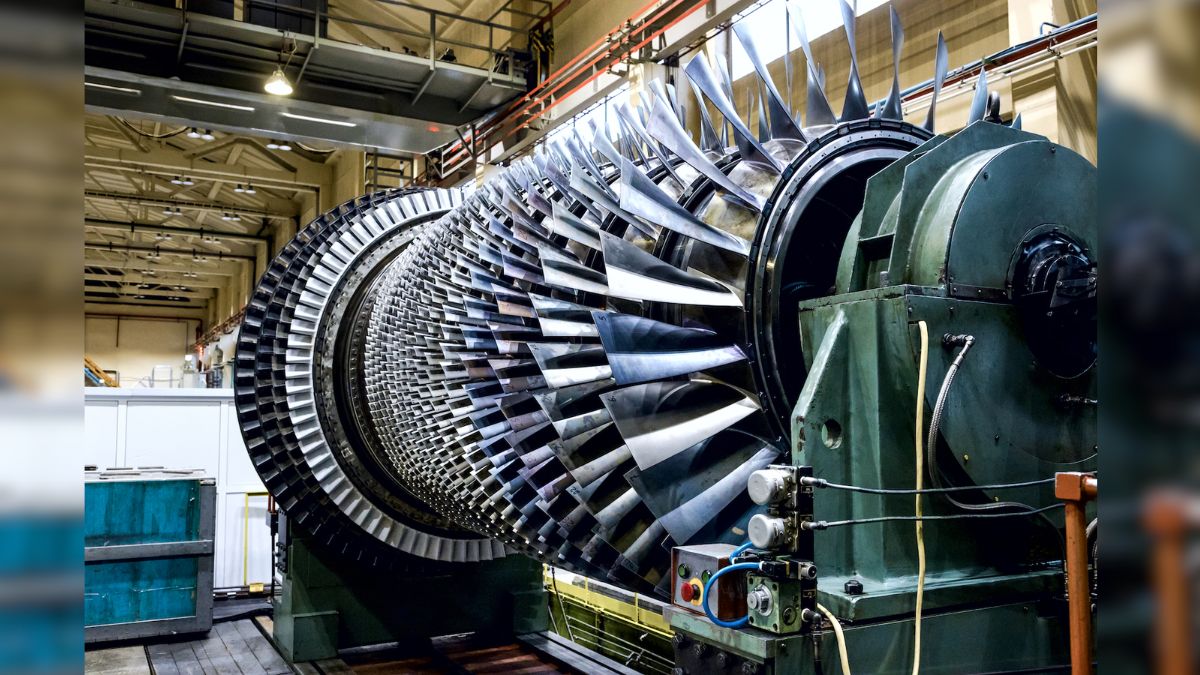
Rostec's United Engine Corporation (UEC) is showcasing a variety of advanced engines at the Dubai Airshow 2025. Image courtesy: Representative image via UEC

Russia’s United Engine Corporation (UEC), part of the Rostec State Corporation, showcased a line-up of new aircraft engines on the opening day of the Dubai Airshow 2025, highlighting its ambitions in the helicopter, fixed-wing and UAV markets.
The aviation developments of the country were presented to the first deputy Prime Minister of Russia D. Manturov, during his visit to the Dubai Air Show on the first day. Dmitry Shugaev, the head of Russia’s Federal Service for Military Technical Cooperation also attended the show.
The show, which runs from 17 to 21 November at Dubai World Central, is one of the aviation industry’s biggest stages and a key shop window for new technology.
Making its West Asia debut, UEC’s fifth-generation 177S engine for tactical aircraft was one of the centrepieces of the Russian pavilion. Company representatives said the 177S offers higher thrust and a longer service life than previous-generation engines, with reduced fuel burn across all operating modes, positioning it as a powerplant for future combat and advanced trainer platforms as well as upgrades of existing aircraft.
UEC first presented the 177S engine in November 2024 at Airshow China. It also showcased the engine along with several other engines of its at Aero India 2025 held in Bengaluru earlier this year.
UEC describes the 177S as a fifth-generation engine for operational-tactical aircraft that cuts fuel consumption, extends range, provides more electrical power for modern avionics and is designed to re-engine existing tactical fighters, positioning it as a unified, exportable upgrade option rather than a single-platform engine.
UEC also brought to Dubai its VK-650V turboshaft engine for light helicopters. The fully Russian-made powerplant has been developed using modern design tools and advanced materials, and is promoted as combining low specific fuel consumption with a long service life for key components, allowing extended operation between overhauls. Equipped with a digital automatic control system, the VK-650V delivers 650 hp at take-off, with emergency power up to 750 hp, giving helicopter manufacturers and operators additional performance margins.
The company underlined that the VK-650V had received its Russian type certificate in December 2024 and had already begun flight testing on the Ansat light multirole helicopter in its import-substituting configuration. Those trials, which started in September, saw the Russian-built powerplants lift the Ansat in flight for the first time, a milestone UEC officials were keen to underline to visitors at the stand.
For the training and light combat segment, UEC presented the new SM-100 engine, designed for trainer and combat trainer aircraft but also adaptable for advanced UAVs. Similar in size to the current AI-222-25, the SM-100 is lighter yet delivers around one-third more thrust, up to 3,300 kgf. According to engineers at the stand, the design improves service life while simultaneously reducing specific thrust requirements, helping to cut operating and life-cycle costs for operators.
UEC stressed the SM-100’s flexibility, noting it can be configured for high-altitude, long-endurance UAVs as well as manned aircraft. This multi-role approach is aimed at air forces and customers seeking to rationalise engine fleets across manned trainers and unmanned platforms.
On the UAV side, UEC also used day one in Dubai to unveil small-size turbojet engines in the 40 to 150 kgf thrust class, along with the RH50 turbogenerator. These compact systems are already in service on Russian unmanned aircraft of various configurations and airframes, and are being pitched to international customers for use on new-build UAVs and other specialised aircraft where size, weight and power efficiency are critical.
UEC officials said all the engines on show in Dubai are already used on Russian platforms and can be adapted to “advanced foreign counterparts”, signalling a readiness to localise or tailor designs for specific customer requirements. With budgets in West Asia increasingly focused on unmanned systems, advanced trainers and light combat aircraft, the company is using the first day of Dubai Airshow 2025 to position its portfolio as a modular toolkit spanning helicopters, fixed-wing aircraft and UAV fleets.