Taliban Warns Pakistan After Khost Strikes: As Tensions Rise, Here’s A Look At How Pak Vs Afghan Militaries Compare
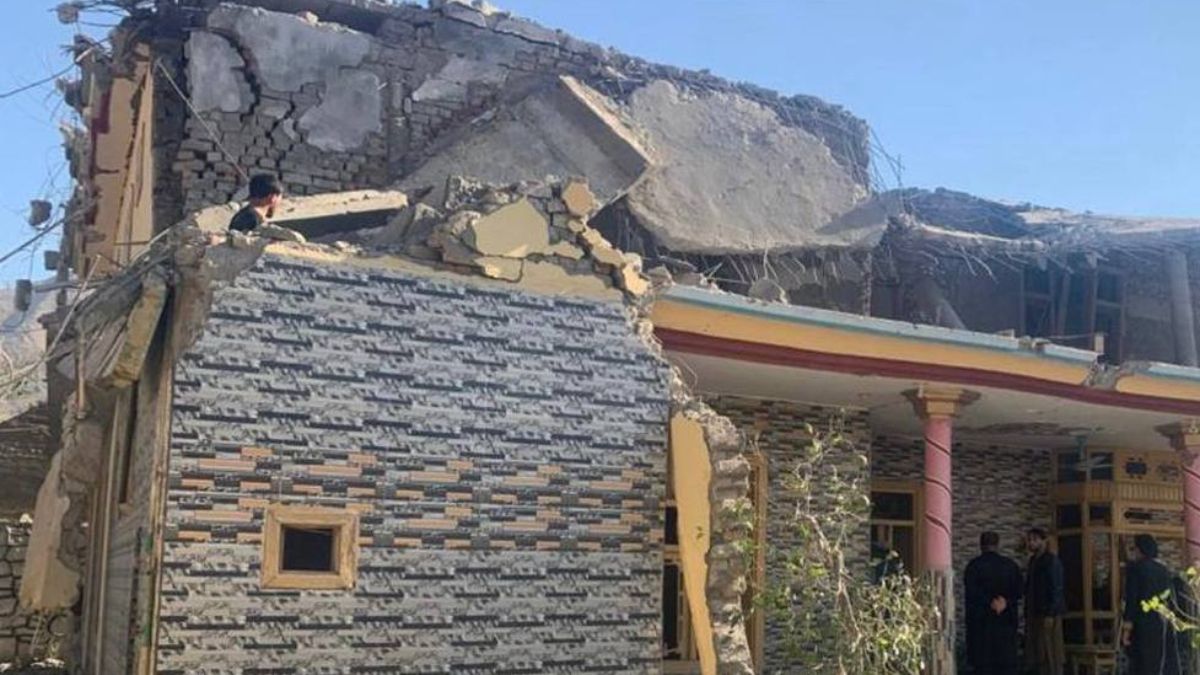
Taliban has accused Pakistani forces of air strikes in eastern Afghanistan that killed nine children and a woman. Image courtesy: X.com/@TheWarPolitics0

Tensions between Pakistan and Afghanistan escalated sharply after Kabul accused Islamabad of carrying out deadly overnight airstrikes in Khost province. According to Taliban spokesman Zabihullah Mujahid, the attacks, allegedly conducted with aircraft and drones, “martyred” nine children and a woman while injured several others in border districts including Khost, Kunar and Paktika.
Residents were seen digging through rubble and preparing graves for the victims. Local voices pleaded with Pakistan to “not bomb ordinary people”. “Civilians have done nothing wrong. Our request from the government of Pakistan is this: do not bomb ordinary people,” Sajidulrahman, a resident of the Jige Mughalgai area, told news agency AFP.
Calling the strikes a violation of Afghan sovereignty, the Taliban warned that it would “respond appropriately at the right time”. Pakistan, however, firmly rejected the accusations. Military spokesman Lt Gen Ahmed Sharif Chaudhry stated, “Pakistan has not attacked Afghanistan… We never target civilian populations. The allegations are baseless.”
Pakistan-Afghanistan conflict: What triggered the latest diplomatic flashpoint?
The airstrike allegations came a day after a suicide bombing at Pakistan’s Federal Constabulary headquarters in Peshawar killed three officers and injured 11. Pakistan blamed Afghan nationals for the attack, though no group claimed responsibility. President Asif Zardari pointed fingers at the Tehreek-e-Taliban Pakistan (TTP), calling the attackers “foreign-backed Fitna al-Khawarij”, and accused Kabul of allowing TTP commanders to operate freely from Afghan soil.
Monday’s (November 24, 2025) blast comes a few days after another suicide bombing took place near a court in Islamabad, killing 12 people. A Pakistani Taliban faction claimed responsibility, and Pakistan’s government said the attack was guided “step-by-step” by handlers based inside Afghanistan.
Information Minister Attaullah Tarar reiterated that Islamabad has “clear-cut evidence” linking the Afghan Taliban to the Islamabad blast, adding that militants were being sheltered across the border. “Afghanistan is fully involved… and their soil is also involved. The people being sheltered there are also involved,” says one of four suspects in custody in an alleged video, released by the minister.
Why have Pak-Afghan relations deteriorated since 2021?
Since the Taliban’s return to power in 2021, Pakistan–Afghanistan relations have been increasingly strained. Border clashes in October 2025 left around 70 people dead on both sides before Qatar and Turkey brokered a ceasefire. However, multiple negotiation rounds in Doha and Istanbul failed to produce stability.
Pakistan insists Kabul must crack down on TTP sanctuaries, while the Taliban deny the charge and accuse Pakistan of harbouring anti-Afghan groups.
Meanwhile, the border, the lifeline of bilateral trade, has remained closed for more than six weeks. Thousands of shipping containers remain stuck, costing traders up to $200 per container daily.
Pakistan vs Afghanistan military: Who has the bigger force?
If numbers are to be believed, Pakistan sure has the edge as its military strength overwhelmingly surpasses Afghanistan’s across every domain. More so, because it has China as its main defence partner. In collaboration with Beijing, Islamabad is modernising both its air force and navy.
When it comes to active personnel, Pakistan has 660,000, of whom 560,000 are in the Army, 70,000 in the Air Force, and 30,000 troops in the Navy, as per Reuters estimates. Afghanistan’s military, run by the Taliban regime, is significantly weaker and struggling due to lack of recognition, sanctions and poor maintenance capabilities.
Active personnel in the Afghan military are estimated to be around 172,000 (with plans to expand to 200,000).
In fighting vehicles and artillery too, Islamabad has an edge over Kabul will 6000+ armoured vehicles, 4600+ pieces of artillery. While the precise number of artillery Afghan military has, is not known, it is learnt to have armoured fighting vehicles including Soviet-era main battle tanks, armoured personnel carriers and autonomous underwater vehicles.
When it comes to the air capabilities, Pakistan Air Force has 465 combat aircraft, 260+ helicopters, while Kabul has no fighter aircraft; only six old planes and 23 helicopters (many likely non-operational). Pakistan has 170 nuclear warheads, Afghanistan has no nuclear capability.
Backed by Chinese military hardware, Pakistan continues to modernise its air force, navy and nuclear capabilities.