






Sanchar Saathi Controversy: Snoop Or Safety? Why Pre-Installed Mandate For The App Triggered A Privacy Storm
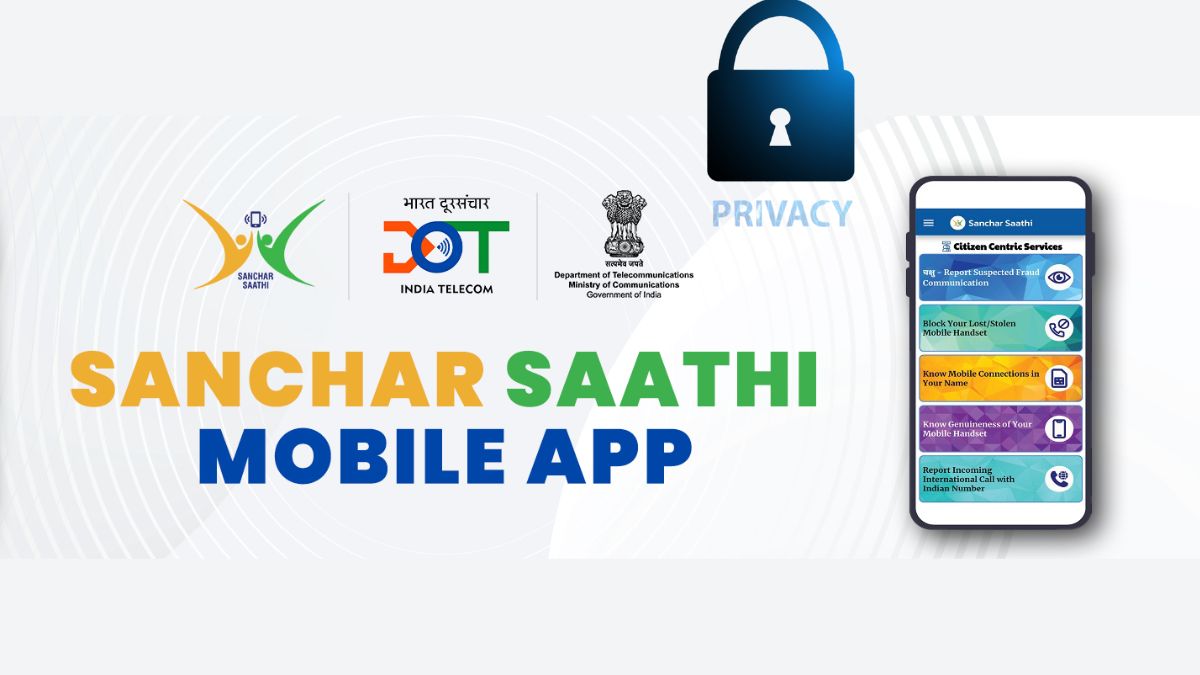
The government insists that the app is merely being “introduced” to every user, and that deleting it is allowed. Image courtesy: Sanchar Saathi

A major political and public debate erupted earlier this week after the government directed smartphone manufacturers to pre-install the Sanchar Saathi app on all devices sold in India. The directive triggered strong criticism, with opposition parties calling the move intrusive, “dictatorial,” and likening it to Pegasus-like snooping.
Amid rising concerns, the Centre issued a clarification on Tuesday (December 2, 2025), saying users were free to delete the app. “If you don’t want Sanchar Saathi, you can delete it. It is optional…It is our duty to introduce this app to everyone,” said Union Communications Minister Jyotiraditya Scindia.
But the clarification has done little to settle the central question that why was a pre-installation mandate required for an app the government says is optional?
Sanchar Saathi app controversy: What exactly did the government order say?
The government’s late-night directive left little ambiguity. It instructed all phone makers, including Apple, Samsung, Xiaomi, Vivo and others, to pre-load the app on every device within 90 days, and report compliance within 120 days. The order states manufacturers must:
Pre-install the Sanchar Saathi app on all phones shipped in India
Ensure it is visible at first use, and
Ensure its core functions are not restricted or disabled
This marked the strongest push yet for the Sanchar Saathi platform since its launch in 2023.
What is Sanchar Saathi designed to do?
The app is part of India’s broader strategy to curb mobile-related fraud, IMEI tampering, and illegal SIM usage. It links directly with the Central Equipment Identity Register (CEIR), a database of all authorised phones in India. Once installed, Sanchar Saathi can be used to block stolen or lost phones across all telecom networks; verify IMEI authenticity and detect tampering; show all mobile numbers registered under a user’s ID.
It can also flag, help disconnect fraudulently obtained SIMs; allow users to report suspicious calls or potential telecom fraud; and assist police in tracing stolen devices.
The Centre has said that the app empowers citizens and protects them from scams and black-market devices. It will come pre-installed, but that will not mean it’s watching you. It will not act as a surveillance tool, and it will not track your data in any way. Its only job will be to protect your mobile identity without accessing your personal information, DoT noted.
Sanchar Saathi app: Why are privacy concerns growing?
Opposition leaders and civil society groups argue that while the app’s purpose is useful, the mandatory pre-installation raises red flags, especially because many users may not fully understand or review the permissions it seeks. Congress leader Priyanka Gandhi called it a “snooping app”, saying, “Citizens have the right to privacy… They are turning this country into a dictatorship in every form.”
Congress MP Shashi Tharoor echoed that digital tools must remain voluntary, warning that making such apps compulsory “is troubling in a democracy.”
What permissions does Sanchar Saathi ask for?
App store listings show that Sanchar Saathi can request access to several sensitive components, depending on the device. On Android phones, it can ask for call logs, messages (for OTP and registration), phone state and ability to detect linked mobile numbers, camera and files, network information.
On iPhones, the app can ask for camera, photos and storage permissions. The access required only for specific functions. Critics are of the view that without full transparency and explicit limits on data access, a pre-installed app with these permissions could allow excessive visibility into personal devices, even if unintentionally.
Why did the Government say it is optional if pre-installed?
The government insists that the app is merely being “introduced” to every user, and that deleting it is allowed. However, the original order made no mention of removability, and mandated that its features remain active on first use. This contradiction has fueled fears that the app might be made non-removable later, or that users may feel pressured into keeping it due to lack of clarity.
As of now, the Sanchar Saathi app remains pre-installation–mandated, but officially optional. The controversy continues because the core tension remains unresolved as the government sees the app as a cyber-safety tool against fraud, the opposition sees it as a potential backdoor to user data. Privacy advocates see the ambiguity as the real danger.


