India–EU FTA Push Gains Momentum As Jaishankar Meets Top EU Trade Official: A Deal Before Year-End Deadline?
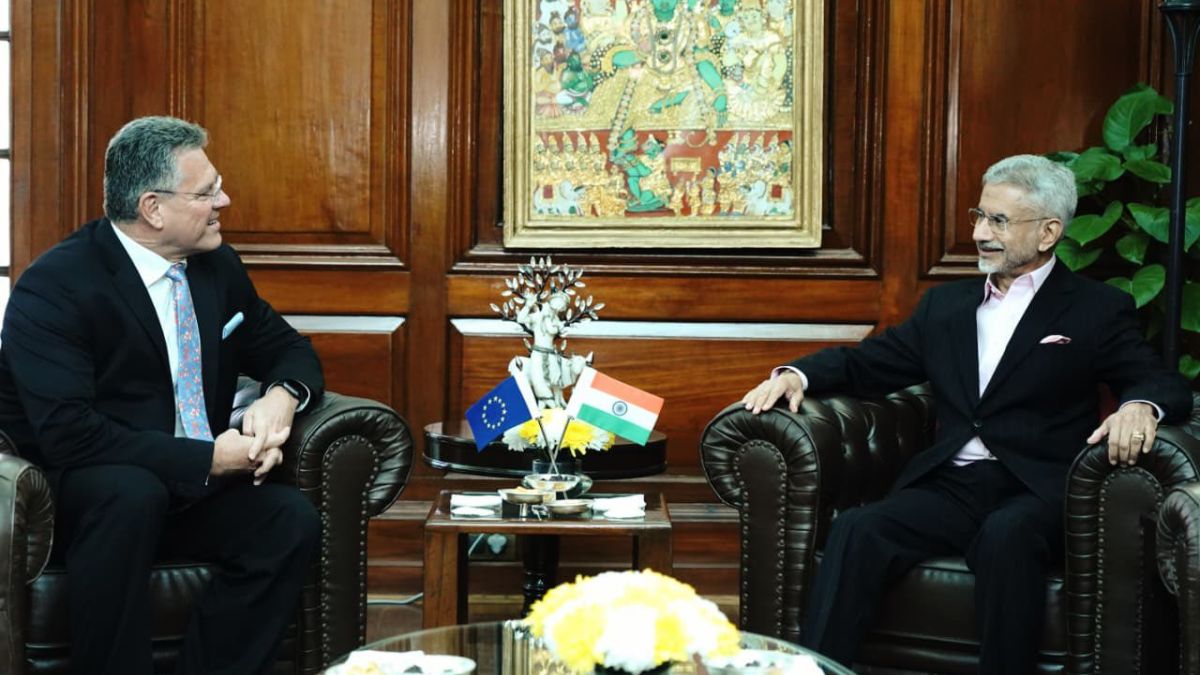

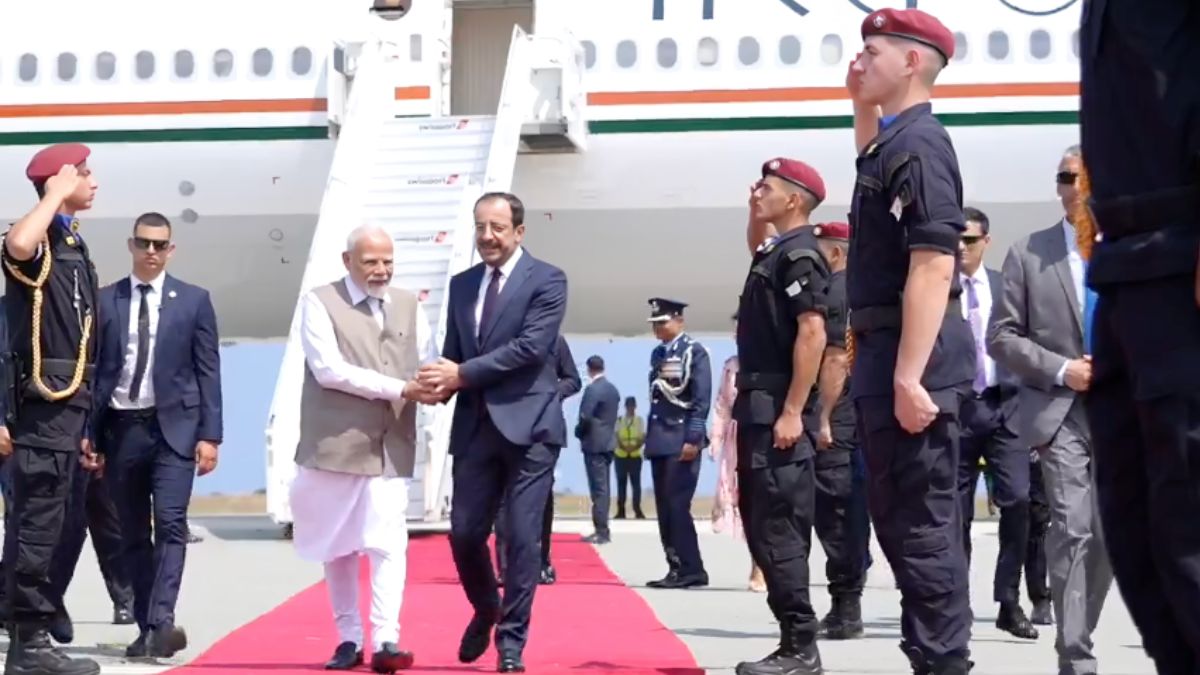
In a major diplomatic and economic development, External Affairs Minister S Jaishankar on Monday (December 8, 2025) met European Trade and Economic Security Commissioner Maros Sefcovic in New Delhi, giving fresh impetus to ongoing negotiations for the long-awaited India–EU Free Trade Agreement (FTA).
It was over 3 years ago in June 2022 that the European Union relaunched negotiations with India for a Free Trade Agreement. The FTA is crucial for India because the European Union is its largest trading partner with bilateral goods trade reaching $137.5 billion in 2023-24. India,on the other hand, is the EU’s 9th largest trading partner.
The Confederation of Indian Industry (CII), in its report India and EU: Expanding Future Horizons, stated that trade between EU and India is projected to reach $213.19 billion by 2028.
India-EU FTA talks: How have they evolved into a ‘2.0’ negotiation?
As he met the European Trade & Economic Security Commissioner, EAM Jaishankar said he was confident the visiting EU delegation would hold “productive discussions,” as India and the European Union began a new two-day round of talks. The negotiations now represent the most serious attempt yet to conclude a deal.
EU Ambassador to India Hervé Delphin recently described the current phase as “EU–India FTA negotiation 2.0,” stressing that the talks bear no resemblance to the stalled discussions from ten years ago. Calling the present approach a “complete shift,” Delphin said both sides now share “a growing sense of shared necessity and complementarity”.
Unlike before, negotiations are no longer restricted to formal rounds, they now take place in a continuous negotiation mode. A 40-member team of European negotiators is in New Delhi for this purpose, signalling the seriousness of the effort.
The visiting EU delegation, headed by Director General for Trade Sabine Weyand, is meeting Union Commerce Minister Piyush Goyal to review progress on the proposed agreement, according to an official. While discussions will follow a formal negotiation framework, the talks with Goyal are aimed at accelerating the pace of the deal.
Why does the India-EU FTA matter geopolitically?
The India–EU partnership represents enormous economic weight, together accounting for 25% of global GDP and 25% of the world’s population. With the world economy entering a volatile phase marked by tariff conflicts and supply-chain disruptions, both sides see the FTA as a tool to de-risk their economic future.
“The EU’s FTA history shows long-term, mutual benefits,” Delphin noted, saying European trade agreements have consistently led to higher trade volumes, more jobs, and expanded investments for partner nations.
How could India benefit from the FTA?
For India, the potential gains are significant and strategic, ranging from big market access, stronger supply chain security, investment upside to a significant boost to India’s manufacturing and jobs.
The EU is one of India’s largest export destinations. An FTA would lower tariffs on key Indian products such as textiles, pharmaceuticals, engineering goods, and IT services—helping Indian industries compete more effectively in Europe. Moreover, with geopolitical disruptions affecting global flows, a predictable EU partnership helps India reduce dependency on high-risk markets and diversify its trade footprint.
With Europe being one of the biggest sources of advanced technology and sustainable manufacturing expertise, an FTA could unlock greater European investment in Indian clean energy, semiconductors, green mobility, and defence production. This would eventually generate more jobs.
By when can India-EU FTA be finalised?
Both sides have expressed political will to conclude negotiations by the end of the year, though technical complexities remain. The shift to continuous engagement and the high-level meeting between Jaishankar and Sefcovic indicate that the long-delayed FTA may finally be moving toward a breakthrough.
Launched in 2007 as the EU-India Broad-based Trade and Investment Agreement (BTIA), negotiations faltered in 2013 over contentious issues like tariffs on dairy and automobiles, and intellectual property rights. If successful now, the agreement could reshape India’s global trade architecture.