Pakistan Accuses Afghanistan Of Being India’s Proxy, New Delhi Rejects Charges
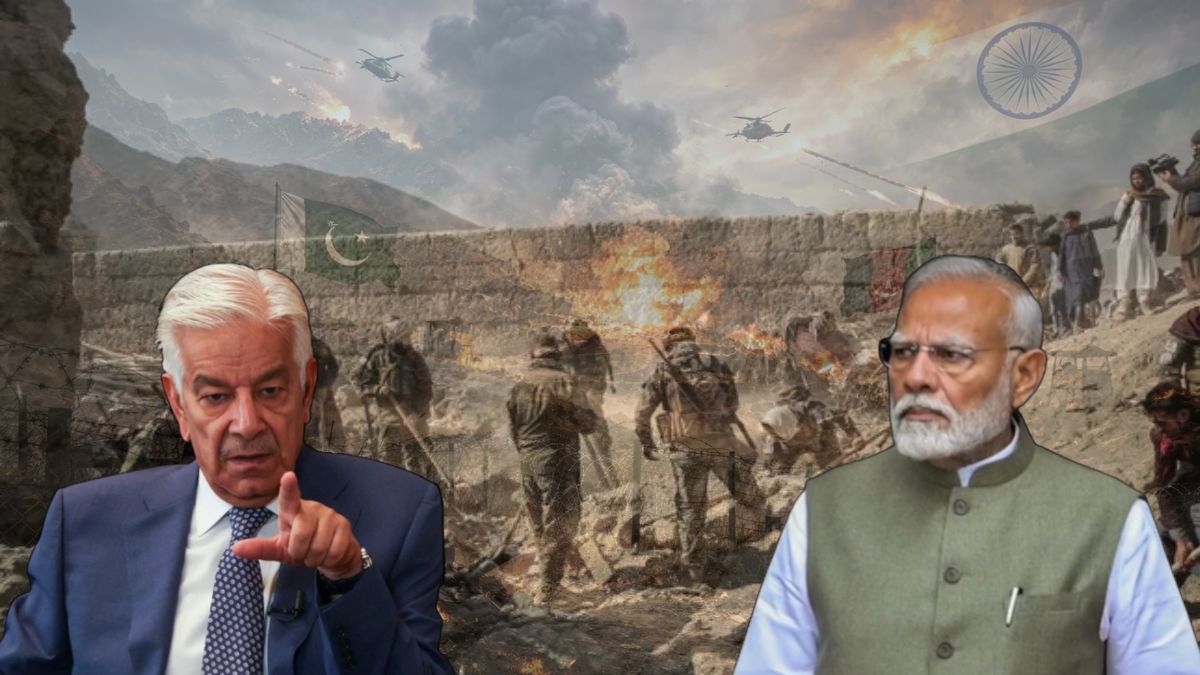
As Pakistan accuses Afghanistan of acting as India’s proxy amid escalating border hostilities, New Delhi rejects the charge and reiterates that Islamabad’s troubles stem from its own internal failures. Image courtesy: RNA

As Pakistan and Afghanistan enter into a phase of military conflict, Islamabad has accused Kabul of being New Delhi’s proxy, a charge India has rejected entirely, noting that it is entirely Pakistan’s internal failure.
Pakistan’s Defence Minister Khawaja Asif alleged that the Taliban government in Afghanistan was acting as India’s proxy, escalating tensions between the two South Asian neighbours and dragging New Delhi into the emerging military conflict.
During a media interaction, Khawaja Asif said the Taliban administration in Kabul allowed its territory to be used against Islamabad, threatening its security.
He claimed that forces inimical to Pakistan were finding a haven inside Afghanistan, suggesting that the Taliban’s actions were helping India.
Khawaja Asif, however, did not provide any evidence to support his allegations against both Afghanistan and India, but repeatedly raised concerns over the so-called cross-border militancy.
His remarks were seen against the backdrop of serious security breaches in Pakistan’s Khyber Pakhtunkhwa and Balochistan regions, where militants have targeted security installations in recent months through suicide bombings and armed attacks.
Since the Taliban returned to power in Kabul in August 2021, the relations with Islamabad have deteriorated rapidly, with the latest airstrikes by Pakistan killing civilians, which led to Afghanistan warning of serious consequences for Islamabad.
Pakistan has frequently raised the red flag, asking Kabul to rein in the Tehreek-e-Taliban Pakistan (TTP), a banned outfit that has claimed responsibility for the frequent armed attacks and bombings inside Pakistan.
While Kabul has rejected Islamabad’s allegations of support for the TTP, Taliban officials noted that they do not allow their territory to be used against any country, including Pakistan. Kabul has called for dialogue rather than Islamabad blaming it for Pakistan’s internal troubles.
Since last week’s airstrikes inside Afghanistan by Pakistan, the security situation at their borders were fragile, with occasional military clashes being reported.
This has led to border closures and halting of border trade, further straining bilateral ties between Pakistan and Afghanistan, and cross-border people movements and business associations.
With the Qatar-Turkiye brokered ceasefire collapsing into what Pakistan called “an open war,” the global community is keenly watching how India reacts to these developments in the region.
India has not reacted officially yet to the latest Pakistan provocations and allegations; however, New Delhi’s reactions earlier this week were indicators of where the nation stands in the Islamabad-Kabul war of words and border clashes.
India has consistently backed Afghanistan’s territorial integrity and targeted Pakistan for its “internal failures” for its deteriorating ties with Kabul.
India’s Ministry of External Affairs (MEA) spokesperson Randhir Jaiswal had noted that Pakistan remained a host and sponsor of terror in the region, habitually blamed its neighbours for its internal troubles, and has infuriated Afghanistan for exercising its strategic autonomy.
New Delhi has strongly criticised Pakistan for targeting civilians during its February 22, 2026, airstrikes inside Afghanistan that claimed 18 lives, including women and children.
“India strongly condemns Pakistan’s airstrikes on Afghan territory that have resulted in civilian casualties,” the MEA stated, adding that the timing during the holy month of Ramadan made the act particularly egregious. New Delhi framed the strikes as yet another attempt by Pakistan to “externalise” its own governance and security crises.
Meanwhile, the Taliban-led government in Afghanistan on Friday (February 27, 2026) said it was seeking dialogue with neighbouring Pakistan to resolve the escalating conflict between the two countries, even as cross-border hostilities intensified.
“We have repeatedly emphasised a peaceful solution and still want the issue to be resolved through dialogue,” Taliban government spokesperson Zabihullah Mujahid said at a press conference, following deadly fighting along the border.