
SC Reinstates Squadron Leader’s Honour Three Decades After Illegal Sacking
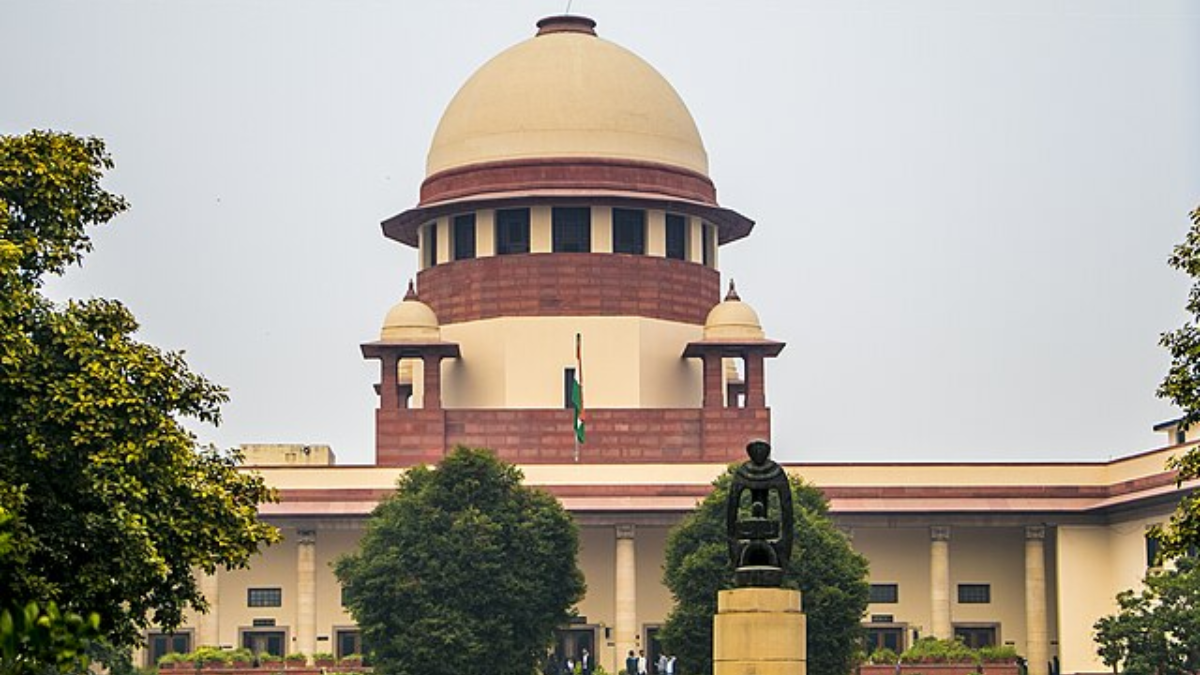
Supreme Court restores honour of IAF officer. Image courtesy: Wikimedia

India’s Supreme Court (SC) has restored the honour of an Indian Air Force (IAF) Squadron Leader, who was illegally sacked 32 years ago, delivering justice to an officer who crossed his retirement age during the legal fight.
The SC Bench of Justice Dipankar Datta and Justice K. V. Viswanathan on Wednesday (April 15, 2026) concluded that Squadron Leader R. Sood was wrongfully terminated from service on the charges of criminal force against a junior officer.
The Bench said Squadron Leader Sood was awarded disproportionate punishment on September 22, 1993. However, his Commanding Officer in the rank of a Wing Commander, whose order Squadron Leader Sood had followed, was let off leniently.
The Bench directed the Union government to pay Squadron Leader Sood arrears in salary and allowances to the extent of 50% from September 23, 1993, till the scheduled date of his retirement.
Squadron Leader Sood was ‘Senior Operations Officer’ in a remote village in the Thar desert and stationed in a building belonging to the General Reserve Engineer Force (GREF) when the said criminal force on a junior officer happened.
“…justice demands that the ignominy with which the appellant (Sood) had to survive the past more than three decades is obliterated, the wrongful termination of his service be revoked, and his honour restored,” the Bench said, setting aside the September 22, 1993, order of his dismissal from service.
“Appellant could not work beyond September 22, 1993, admittedly because of the illegal order of termination and not owing to any fault on his part,” it noted.
“Irrespective of service benefits, restoration of honour remains the foremost concern of defence personnel. We restore it with the direction that on a date to be fixed by the Chief of Air Staff, the appellant shall be signed off in the normal manner he would have otherwise been entitled to, but for the order of dismissal,” the top court said.
It asked the IAF to comply with its order within three months, and said that, for notional promotion, his case may be placed before the Review Departmental Promotion Committee as per the governing rules for consideration, and he has to be given pensionary benefits as admissible to him in law.
“The financial benefits due and payable in terms of this order, including increased pay subject to notional promotion being accorded, be calculated and paid to the appellant with interest at 9% per annum from the date of presentation of the writ petition before the High Court (an unspecified date of 1995, but the exact date must be gathered by the respondents from the records) till date of payment,” it ordered.
The Bench said that since Sood, having crossed the age of superannuation, cannot be reinstated in service, but in law, was entitled to claim all consequential service benefits which would have accrued to him, had he not been fastened with such illegal order of dismissal.
The SC set aside the high court order upholding the disciplinary proceedings against Sood. Finding fault with the order of termination of service, the Bench said Sood’s superior officer was let off with the penalty of “severe displeasure for three years,” while he was ordered to be dismissed from service.
It said the court finds it imperative to bear in mind that queries were repeatedly raised as to the rationale for imposing such a comparatively lenient punishment upon the senior officer while punishing the appellant with dismissal.
“The punishment of ‘displeasure’ was imposed on the Wing Commander before he had superannuated. It is not for us to question the government, in the course of these proceedings, why the Wing Commander was let off leniently; however, the question that certainly looms large is why was the appellant singled out for a harsher punishment despite his discharge from the criminal case?” the Bench said.