



Restoring Sri Lanka’s Lifeline, Indian Army Sets Up Fully Functional Hospital After 18-Hour Mission
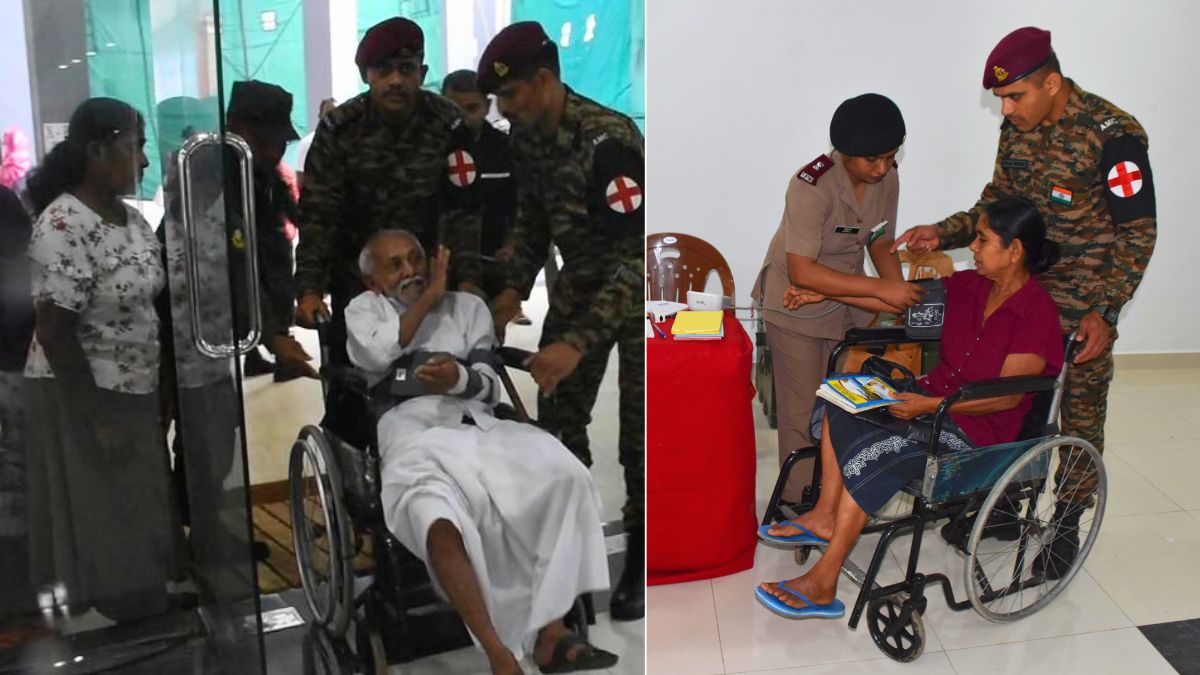
Op Sagar Bandhu has showcased the Indian Army’s ability to deploy new-age technologies in humanitarian missions. Image courtesy: RNA

In one of the most challenging humanitarian missions in recent years, the Indian Army contingent deployed under Op Sagar Bandhu has rapidly established and operationalised a fully functional field hospital in one of Sri Lanka’s worst flood-hit districts. This is part of India’s Operation Sagar Bandhu launched by PM Narendra Modi on November 28, 2025 in the wake of Cyclone Ditwah.
What began as a bare parking lot with no power, fragile water supply and broken communication lines has now transformed, within days, into a multi-specialty medical hub supporting thousands of flood-affected citizens. India was the first country to deploy trained disaster responders in Sri Lanka.
Operation Sagar Bandhu and the related missions under the same reflect India’s continued commitment to assisting Sri Lanka during crises, reinforcing the neighbourhood-first policy through decisive action on the ground.
How did the Indian Army overcome extreme ground challenges?
The Army’s journey to the disaster zone itself was a test of grit. After landing in Colombo, the contingent endured an 18-hour difficult move through washed-out roads and damaged infrastructure before reaching the devastation zone. On arrival, the team found nothing more than an empty parking space to build upon.
However, within hours, the contingent’s engineers and medical staff turned adversity into opportunity. They installed portable gensets to maintain uninterrupted power needed for surgeries and critical care, coordinated water supply with local authorities, rebuilt a reliable communication network despite widespread outages.
Additionally, the Indian Army troops also restored real-time connectivity with India, logistics nodes and Sri Lankan agencies. This seamless coordination allowed the hospital to begin operations at record speed.
How is technology boosting relief ops on the ground?
Op Sagar Bandhu has showcased the Indian Army’s ability to deploy new-age technologies in humanitarian missions. The contingent used surveillance drones for aerial terrain mapping and hospital layout optimisation, HVAC-equipped medical tents to create a sterile Operation Theatre, rapid diagnostic tools that drastically shortened lab turnaround time, and portable water purification systems delivering clean drinking water.
These innovations significantly enhanced patient flow, medical accuracy and operational efficiency.
Op Sagar Bandhu: How many lives has the Indian Army field hospital touched?
Within just a few days, the Indian field hospital has evolved into a full-fledged multi-specialty centre, offering Operation Theatre services, X-ray and lab facilities, dental care, dedicated OPDs in surgery, orthopaedics, family medicine and more.
Over 5,000 patients have already received treatment, along with comfort, stability and humanitarian reassurance during an overwhelming crisis.
The MEA on Tuesday (December 9, 2025) informed that the Indian Army Field Hospital, which has been set up at Mahiyanganaya in Badulla district, has treated 3388 persons till 08 December 2025, including performing surgeries.
How else is the Indian Army supporting Sri Lankan communities?
The 85-member Medical Task Force, comprising doctors, surgeons, engineers, signalers and logistics teams, has been working round the clock. Beyond medical relief, they have also restored a damaged optical fibre cable, reviving a key mobile network tower; rebuilt vital communication for thousands of local residents.
Moreover, they have worked towards providing potable water using mobile purification units; and extended humanitarian aid wherever gaps appeared. These efforts have made the Indian Army a dependable pillar of support for Sri Lanka in its darkest hour.
Op Sagar Bandhu: Relief update
The operation is more than a disaster response, it is a reaffirmation of India’s steadfast friendship with Sri Lanka.
Within the first three days of Cyclone Ditwah, 53 tons of emergency relief material was delivered; and several specialised search and rescue units and medical teams were deployed.
On November 28, 2025, 9.5 tons of emergency dry rations from Indian Navy Ship (INS) Vikrant and INS Udayagiri were handed over to Sri Lanka authorities in Colombo.
On November 29 and 30, 2025, further 31.5 tons of relief material was sent by three Indian Air Force (IAF) aircrafts – two C130J and one IL76 – which included tents, tarpaulins, blankets, hygiene kits etc; as well as high-priority medical HADR supplies.
On December 1, 2025, additional 12 tonnes of essential relief supplies arrived in Trincomalee aboard INS Sukanya.
On December 2, 2025, an IAF C-17 Globemaster airlifted a modular Indian Army field hospital, – including ambulances, trauma care units, operation theatres, and 73 personnel.
On December 6, 2025, the Centre facilitated the sealift by Indian Navy of a total of 997 tons of dry rations and other relief material from the State Government of Tamil Nadu to Sri Lanka.
Till December 9, 2025, over 450 persons have been rescued and assisted.


