India to Receive Remaining Apache Attack Helicopters as Navy Commissions Second Seahawk Squadron

Long delayed helicopter inductions are now moving into service as the armed forces work to close immediate capability gaps across both land and maritime domains. Image courtesy: AI generated picture via DALL-E

In a significant boost to India’s rotary-wing combat capabilities, the Army is set to receive delivery of its three remaining Apache AH-64 attack helicopters from the United States within days, while the Navy will commission its second squadron of MH-60R Seahawk anti-submarine warfare helicopters this week.
The long-delayed inductions will help plug immediate operational gaps across the western and maritime fronts, even as India prepares for a major shift towards indigenous helicopter fleets later this decade.
When did the Indian Army’s Apaches get delivered?
The three Apache gunships, often dubbed “tanks in the air” for their heavy firepower, are part of a six-helicopter deal worth ₹5,691 crore signed with the US in February 2020.
The first three were delivered in July after prolonged delays caused by global supply chain disruptions faced by the manufacturer Boeing.
What is the weapons suite on the Apaches?
Armed with Stinger air-to-air missiles, Hellfire Longbow air-to-ground missiles, rockets, and a chain gun, the Apaches will be deployed at Jodhpur, where the Army raised a dedicated squadron last year to support operations along the western front with Pakistan.
These six Army Apaches will add to the 22 AH-64 helicopters already inducted by the Indian Air Force in 2019–2020 under a ₹13,952 crore contract signed in 2015, significantly enhancing India’s attack helicopter fleet.
When is the Indian Navy raising a new Seahawks squadron?
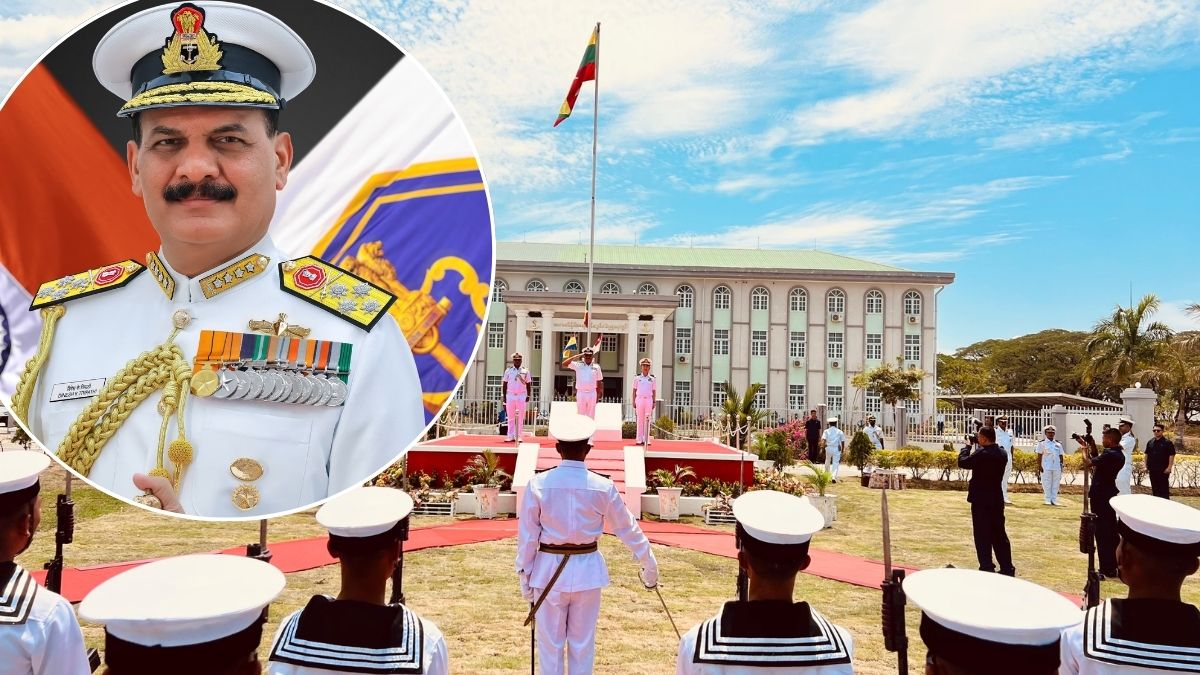
On the maritime front, Navy chief Admiral Dinesh K. Tripathi will commission the second squadron of MH-60R Seahawks at INS Hansa in Goa on December 17.
The first squadron was raised at INS Garuda in Kochi in March 2024. Of the 24 Seahawks ordered under a ₹15,157 crore contract signed in February 2020, the US has delivered 15 so far.
What are the weapons that arm the Seahawks?
Manufactured by Sikorsky-Lockheed Martin, the helicopters are equipped with Hellfire missiles, MK-54 torpedoes, precision-guided rockets, and advanced sensors.
Despite their high cost, the Seahawks are critical for the 140-warship Navy, which is currently operating with a shrinking fleet of ageing Sea King and Kamov-28 helicopters.
How does India need the Seahawks now?
This capability gap is becoming more acute as Chinese submarine deployments in the Indian Ocean Region continue to rise. Reflecting the platform’s importance, the defence ministry last month signed a follow-on support and spares contract worth ₹7,955 crore with the US.
Looking ahead, India’s long-term helicopter modernisation plans hinge on indigenous platforms. The armed forces estimate a requirement of over 1,000 new helicopters over the next 10–15 years, including 484 light utility helicopters and 419 Indian multi-role helicopters, though both programmes have faced delays at Hindustan Aeronautics Limited (HAL).
How would Indian indigenous helicopters enable capability?
The centrepiece of this indigenisation drive is the Light Combat Helicopter (LCH) ‘Prachand’. Under a ₹62,700 crore contract signed in March, HAL is to deliver 156 Prachand helicopters — 90 for the Army and 66 for the IAF — between 2028 and 2033.
Designed for high-altitude warfare, the 5.8-tonne Prachand is armed with a 20mm turret gun, 70mm rockets, and air-to-air missiles, and is optimised for operations in areas such as eastern Ladakh and the Siachen Glacier.
These will add to the 15 Prachands already inducted under a 2022 contract, marking a decisive step toward self-reliance in combat aviation.