


India-Canada To Establish Defence Dialogue To Boost Industries, Maritime Domain Awareness, Military Exchanges
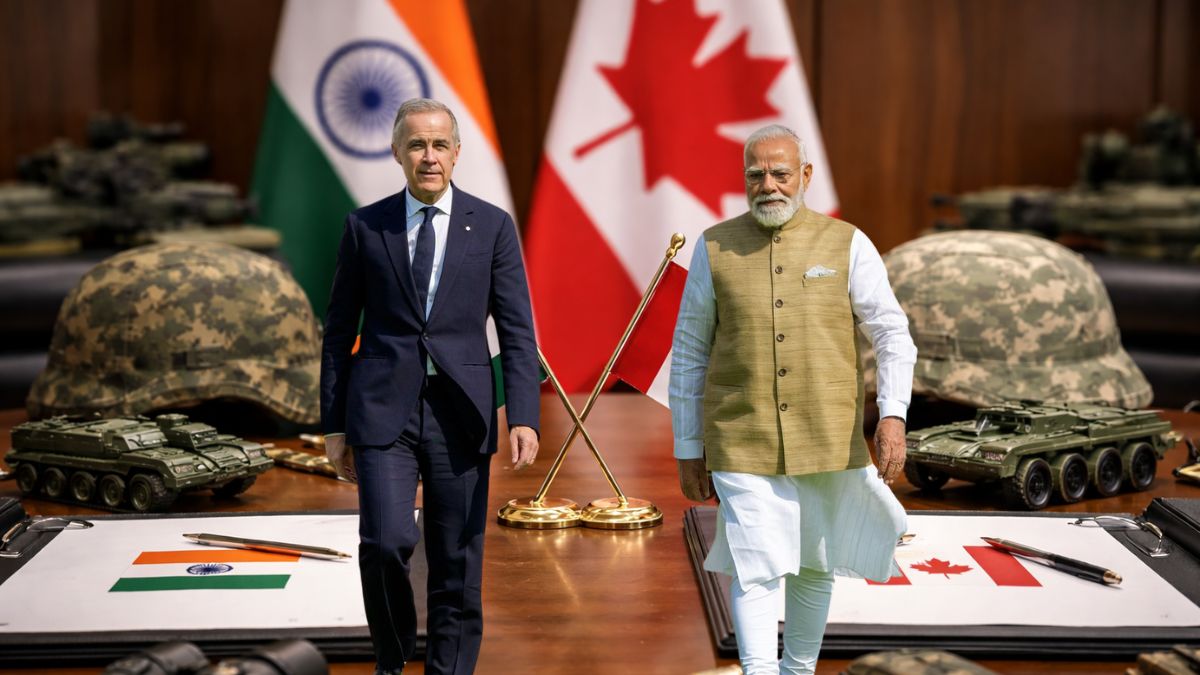
Further, PM Modi said that people-to-people ties are the real strength of the ties between Canada and India. Image courtesy: RNA

In a decisive step toward rebuilding strained relations, India and Canada on Monday (March 2, 2026) unveiled a sweeping package of defence, energy and trade initiatives, headlined by the launch of an India-Canada Defence Dialogue, a long-term uranium supply agreement, and a target to scale bilateral trade to $50 billion by 2030.
The announcements came after talks between Prime Minister Narendra Modi and visiting Canadian Prime Minister Mark Carney in New Delhi, marking what both sides described as a new phase in a revitalised partnership.
A defence breakthrough: What is the India-Canada Defence Dialogue?
The most strategically significant outcome of the meeting was the decision to establish a formal India–Canada Defence Dialogue, a move seen as a clear signal of renewed trust after diplomatic tensions in recent years. “The growing cooperation in the field of defence and security is a symbol of our deep mutual trust and the maturity of our relationship,” PM Modi said at the joint press briefing at Hyderabad House.
The dialogue framework will focus on defence industry collaboration, maritime domain awareness, military exchanges, bilateral and multilateral naval activities.
A statement from the Canadian Prime Minister’s Office underscored Ottawa’s Indo-Pacific outlook, noting that Canada, as a Pacific nation, sees deeper engagement in the region as critical to its security and sovereignty. The two sides also agreed to enhance interoperability through naval cooperation and knowledge exchange.
Strategic energy partnership: Why Uranium and LNG matter
Energy cooperation emerged as another cornerstone of the revived ties.
The two leaders announced a new Strategic Energy Partnership covering uranium, LNG, LPG, solar and hydrogen. The previously confirmed long-term uranium supply agreement reinforces India’s civil nuclear ambitions while positioning Canada as a reliable supplier in the global energy transition.
The partnership extends beyond hydrocarbons to clean energy and renewables, reflecting shared priorities in energy security and climate resilience.
Additionally, both countries agreed to establish the India–Canada Pulse Protein Centre of Excellence in India, an initiative aimed at strengthening agri-tech and food security collaboration.
India-Canada eye bilateral trade to reach $50 billion by 2030
In a major economic push, Modi and Carney committed to concluding a Comprehensive Economic Partnership Agreement (CEPA) within the year. Chief negotiators have already met in New Delhi, and the Terms of Reference have been finalised and signed. The leaders set an ambitious target: increase bilateral trade to $50 billion by 2030.
The CEPA is expected to unlock new investment flows, enhance supply chain resilience and create jobs in both economies, particularly in critical minerals, advanced manufacturing and clean technologies.
Three key Memorandums of Understanding were exchanged between External Affairs Minister S Jaishankar and Canadian Foreign Affairs Minister Anita Anand, covering critical mineral cooperation, renewable energy promotion, cultural cooperation.
PM Modi highlighted that people-to-people ties remain the backbone of the partnership. Canadian universities are set to open campuses in India, while new collaborations in AI, healthcare, agriculture and innovation were announced. “When two democracies stand together, the voice of peace becomes even stronger,” he stated, reiterating India’s call for dialogue and diplomacy in conflict zones.