

DRDO Seeks Indian Partners To Develop Indigenous Aeroengine To Power Future Combat Jets
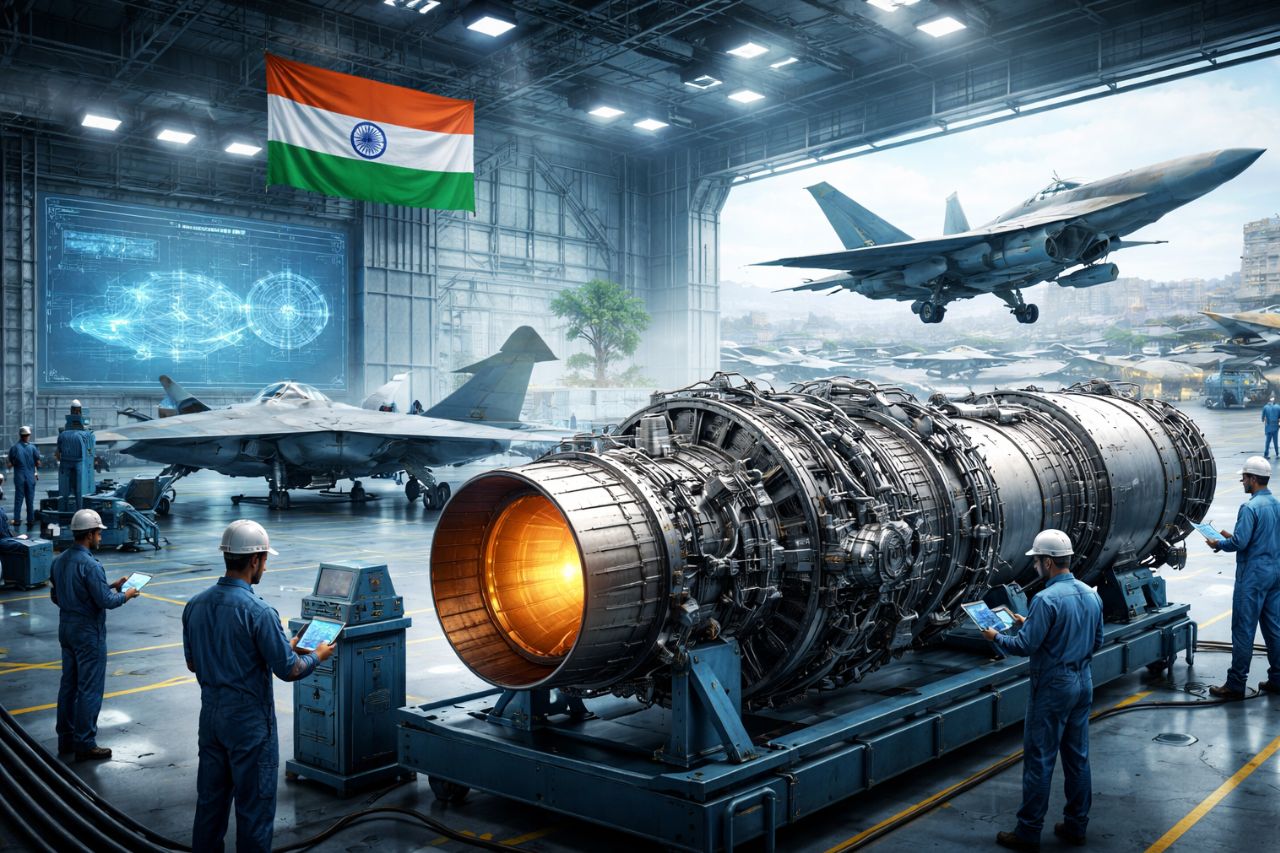
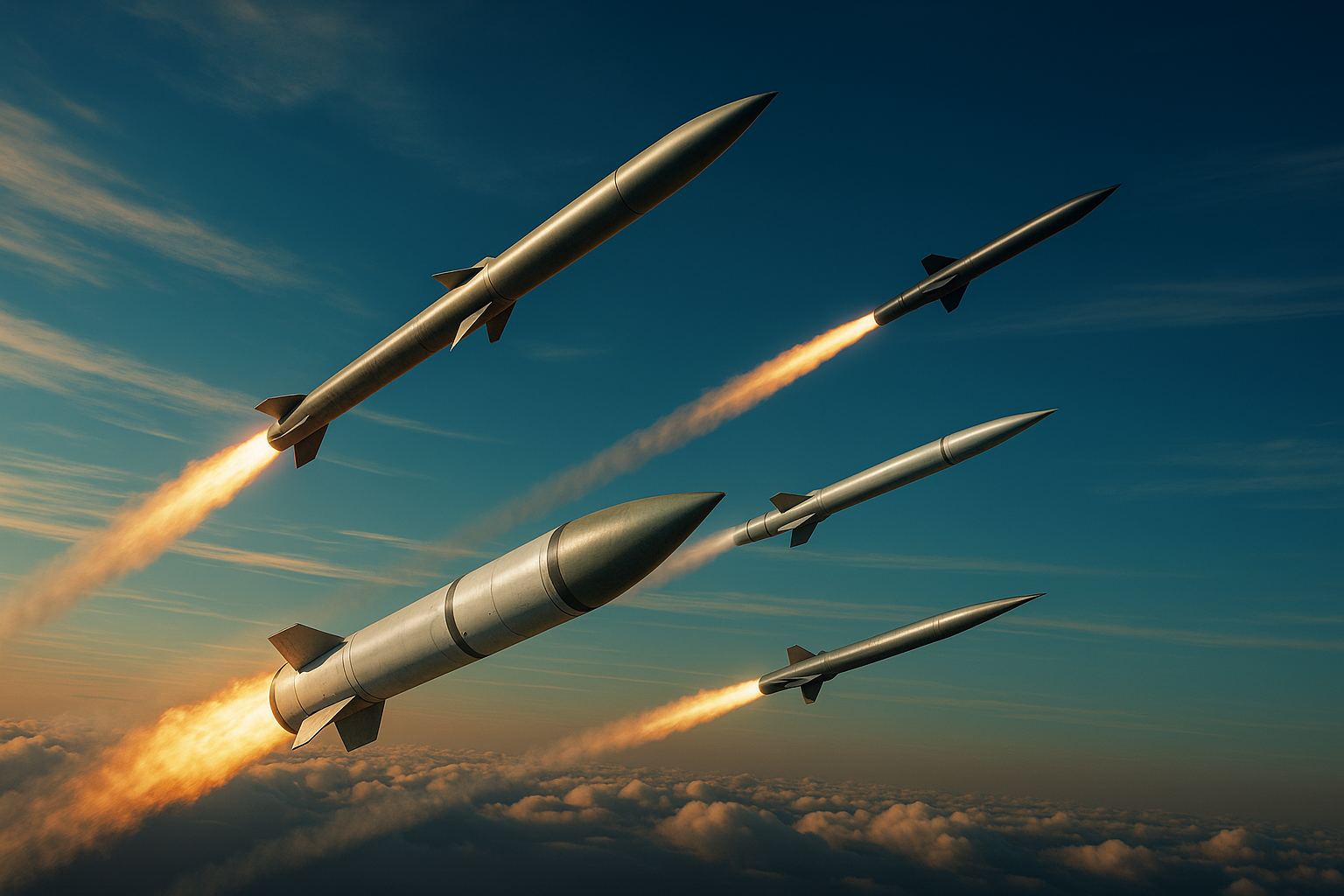
India moves to close a long-standing capability gap in military aviation as DRDO-led efforts push towards developing a fully indigenous high-thrust aeroengine for future combat aircraft. Image courtesy: AI generated picture via DALL-E

India is moving to develop the next generation aeroengine, with the Defence Research and Development Organisation (DRDO) inviting domestic aerospace and defence firms to partner in the effort.
At present, India is dependent on France and the US to power its domestic aircraft, the variants of the Tejas Light Combat Aircraft and futuristic Advanced Medium Combat Aircraft.
However, considering the over 500 indigenous aircraft that the Indian Air Force and the Indian Navy would need in the coming years to meet their combat and cargo aviation needs, India considers it viable to develop an indigenous aeroengine.
The aircraft requirements would mean, there is a huge scope for aeroengine production in India over the next 15 years and beyond, according to defence ministry officials.
The non-availability of a domestically developed aeroengine would cause a huge lacuna in the Indian capability to deploy a totally self-reliant combat aircraft and an incomplete industrial complex.
In this context, the DRDO has issued an expression of interest (EOI), asking Indian firms to send in their consent to join as a Development-cum-Production Partner (DcPP) in the project, named ‘Advanced High Thrust Class Engine’ (AHTCE).
The selected company would support DRDO on designing, developing, manufacturing, integrating, testing, and certifying the next-generation indigenous gas turbine aeroengine, according to the DRDO EOI.
The Indian company can partner with foreign aeroengine makers to assist them in the effort. Such foreign players include France’s Safran, United Kingdom’s Rolls-Royce, American GE Aerospace, and Japan’s IHI.
DRDO lab Gas Turbine Research Establishment (GTRE) would lead the design and development. GTRE is India’s lead agency for aeroengine development research.
The selected firm would be the primary industrial execution partner in the project, and would be the enabler of the GTRE’s inputs turning into a deployable, flight-worthy aeroengine.
“This includes tooling, manufacturing engineering, special processes, inspection systems, engine assembly, subsystem testing and final integration,” the EOI said.
These partners would get to manufacture and assemble the compressor, combustor, turbine, afterburner, gearbox, oil, and fuel systems.
The Indian firm would support GTRE through detailed engineering, 2D drawings, 3D models, design iterations, and configuration.
They would also manufacture components, sub-assemblies, and modules, including raw material procurement.
GTRE would take on the role of the design authority under the project and would provide engineering data and materials support.
The aeroengine so developed would provide a thrust of 120 kN. The American GE Aerospace’s F404 aeroengine that powers the Tejas aircraft provides 85 kN thrust.
India was pursuing the ‘Kaveri’ aeroengine, in partnership with Safran three decades ago, but the project faced disruptions due to the engine unable to provide the desired thrust.
Kaveri, which provide 50 kN thrust, is now repurposed to power the ‘Ghatak’ unmanned combat aerial vehicle developed by the DRDO.