



DRDO Work On Defence Research Never Constrained By Budget Allocation: Top Scientist
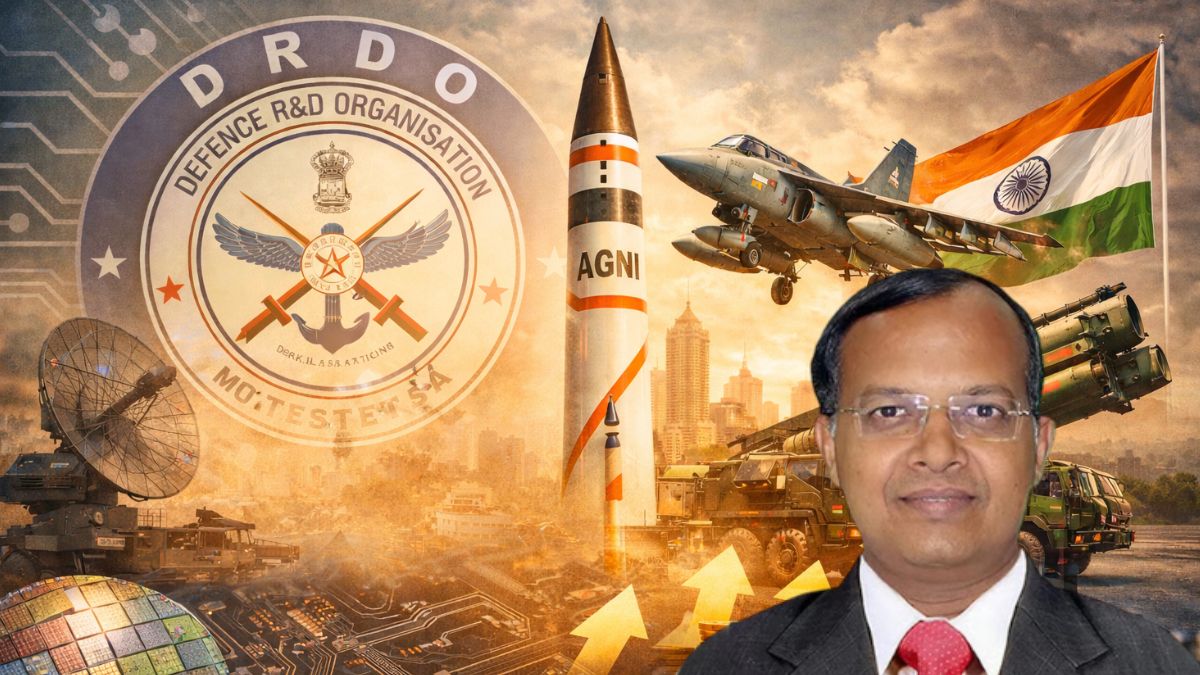
The government has reaffirmed that funding will not limit India’s defence research ambitions, with DRDO tasked to push ahead on next-generation indigenous military technologies despite a challenging global environment. Image courtesy: AI generated picture via DALL-E

India’s defence research agency Defence Research and Development Organisation (DRDO) work on developing weapons and military systems would not be constrained by budgetary allocation, a senior defence scientist has said.
In comments on Sunday (February 1, 2026) after Finance Minister Nirmala Sitharaman presented the national budget, DRDO Joint Director B. K. Das told the media.
He said the government had continued to heavily support the DRDO with sufficient funds, including making the research agency self-sufficient.
“The government has always had unconditional support for DRDO (Defence Research and Development Organisation), and budget has never been a constraint for us,” Das, a distinguished defence scientist, said.
The DRDO was told to develop next-generation defence technology that no other nation in the world had done, he said.
“We have to work on such equipment which our armed forces are dreaming to have, and we can’t wait to import such equipment because with today’s changing geopolitical situations, the kind of war scenarios happening, the dynamism has changed,” Das said.
He was speaking to the media after receiving the JIS Maha Samman award for his contributions in the fields of science and India’s defence research.
Das acknowledged that several young, fresh, and best minds were working in DRDO for a Viksit Bharat (Developed India) that was second to none.
The present budget would help the DRDO and the defence industry to realise and empower the military systems.
“This budget is going to help us to realise and empower our systems that what we develop…and make my country an economic superpower by export as well,” Das said.
“We have to develop the best of the systems which will be exported from India to the rest of the world, so we are at a technology inflection point of this country,” he added.
He referred to the decades when India was denied military technologies. “Today with pride we are denying import,” he said.
The scientist mentioned that India made significant breakthroughs in the semiconductors, mastering the Gallium Nitride (GaN) technology. The nation is working on self-sufficiency to the core in semiconductor technology, he added.
“It is the mission of our government that we should be able to be selfsuicient to its core,” Das said.
This can be achieved when indepth research is done on the basic scientific fields, and semiconductors happen to be one of them, he said.
“Who knows, a few years later (export of) even the basic semiconductor could be stopped to India,” the scientist said to a question about GaN breakthrough, a technology available with just a select few nations such as the US, China, and France. This technology was earlier denied to India, he said.
Warning that India should be prepared for technology denials, he said it can’t be achieved overnight.
“That is the reason the semiconductor mission has gone in. By the time we realise our semiconductors, our own chips, India will be completely self-sufficient, not only in systems or subsystems, also on the technology as well as the basic core components, so that we can design and develop our systems, and produce those in numbers that nobody can choke the production,” he said.
On a time frame for developing such technologies in India, Das said that development of the technology takes time, and named the US, Japan and Taiwan, as examples.
“We could have also done it at the component level, but more important is rst to be self-sufficient in the basic systems,” he said.
“We have realised the systems, we have realised subsystems and now we are in situations to realise the components.
“Could be in another five to 10 years, we should be fully ready with our own,” Das said.
The scientist claimed denial is subjective, and asserted that three decades ago, when the first Agni ballistic missile was developed and tested in May 1989, the technologies were denied to India.