



India Set To Approve Next-Gen DRDO Laser Systems As Army, IAF Plan Major Drone-Defence Push
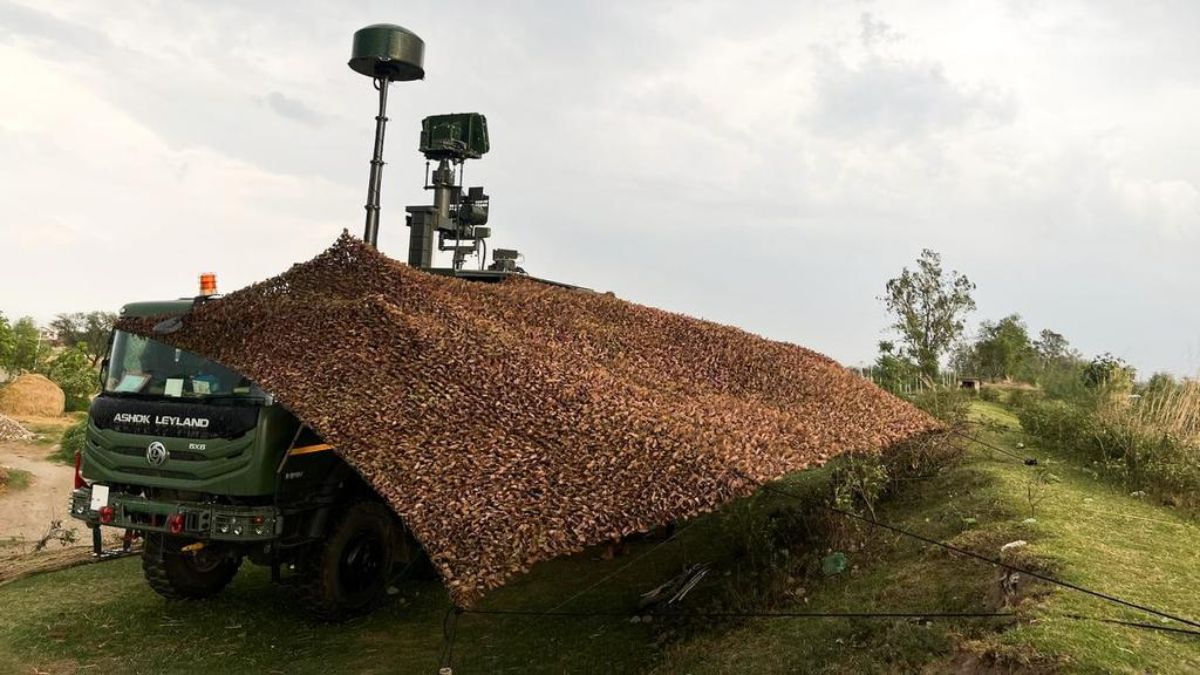
Image courtesy: Representative picture via X.com/@BEL

India is preparing to make a significant leap in counter-drone warfare, with the Army and Air Force poised to place orders for 16 advanced indigenous drone detection and interdiction systems.
The Defence Ministry is expected to shortly approve the Defence Research and Development Organisation’s (DRDO) upgraded Integrated Drone Detection and Interdiction System (IDDS Mark-II), marking a major boost to India’s air-defence preparedness amid growing threats from unmanned aerial platforms.
What is the new anti-drone system capable of?
The new Mark-II variant features a powerful 10-kilowatt laser capable of neutralising hostile drones at a range of up to 2 km, double the reach of the first-generation system, which was limited to around 1 km, according to defence officials.
The enhanced system arrives at a time when India has faced an uptick in drone-borne surveillance and attempted attacks, including Pakistani drone activity during Operation Sindoor, which Indian forces successfully thwarted.
Why is the Army pushing for a fast-track acquisition?
The push to fast-track counter-UAS capabilities also aligns with DRDO’s ongoing work on long-range directed-energy weapons. The organisation recently test-fired a 30-kilowatt laser system capable of disabling aerial targets at distances of up to 5 km.
Trials of this high-energy weapon, conducted with the involvement of the armed forces, represent a major milestone in India’s indigenous laser-weapon programme.
Is the laser-based system effective?
In April, India demonstrated for the first time its ability to shoot down fixed-wing aircraft, missiles, and swarm drones using a 30-kilowatt laser-based system.
With this, India joined a select group of nations, including the United States, China, and Russia, that possess such advanced directed-energy capabilities.
Which Indian agency is working on the laser systems?
Much of this work is being led by DRDO’s Centre for High Energy Systems & Sciences (CHESS). In Kurnool, Andhra Pradesh, CHESS recently showcased the DEW Mk-II(A), a vehicle-mounted laser weapon that successfully destroyed a fixed-wing UAV and swarm drones by causing structural damage and disabling onboard sensors.
With drones playing an increasingly decisive role in recent global conflicts, India is pushing to accelerate production and deployment of its indigenous IDDS units.
DRDO chief Dr. Samir V. Kamat has also indicated that the organisation is developing complementary technologies such as high-energy microwaves and electromagnetic pulse systems, capabilities he says could eventually give India a “Star Wars-like” technological edge.