
As India Leads BRICS in 2026, Lavrov Hosts Envoys To Discuss Current Global Issues
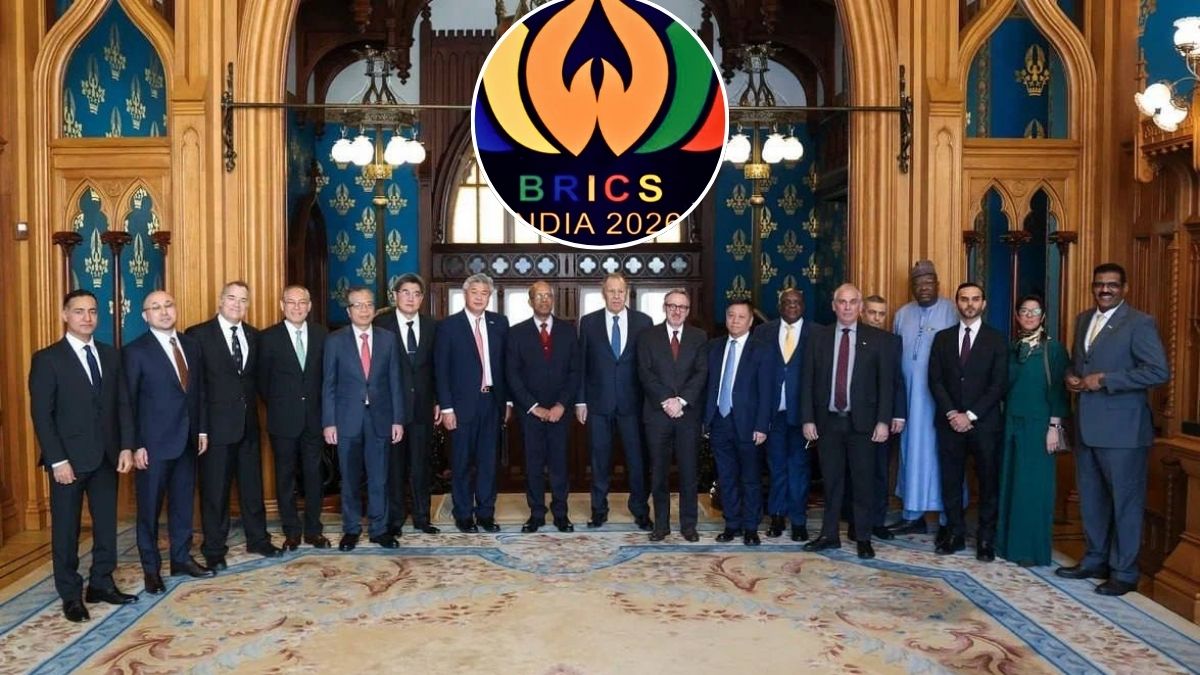
Sergey Lavrov hosted a working lunch with the heads of diplomatic missions from BRICS Members and partner countries. Image courtesy: RNA

In a significant diplomatic signal under India’s 2026 BRICS chairmanship, Russian Foreign Minister Sergei Lavrov on Tuesday (February 17, 2026) hosted ambassadors from BRICS member and partner countries in Moscow, with discussions focused on strengthening strategic coordination within the expanded bloc.
The meeting comes weeks after India formally assumed the rotating chair of the 10-member grouping on January 1, 2026, positioning New Delhi at the helm of one of the most influential coalitions representing the Global South.
The participants held a comprehensive exchange of views on enhancing the strategic partnership within the group, taking into account the priorities outlined under India’s BRICS chairmanship this year.
What happened at the BRICS partners’ Moscow meeting?
According to a statement from the Russian Foreign Ministry, Lavrov held a working lunch with BRICS and BRICS-plus envoys, where participants engaged in a “comprehensive exchange of views” on deepening strategic partnership within the grouping.
It added that the discussion focused on current global issues, highlighting the importance of preserving the UN’s central role, with the participants stressing the need for joint efforts to reform the global governance system. It also took into account the priorities outlined under India’s chairmanship this year.
A group photograph shared by the ministry showed Indian Ambassador to Russia Vinay Kumar standing prominently beside Lavrov, a visual reflection of India’s leadership role in the bloc for 2026.
Beyond bilateral coordination, the talks focused on preserving the central role of the United Nations, reforming global governance structures, enhancing the influence of the “Global Majority” in international decision-making, and strengthening BRICS coordination in key multilateral forums.
Why is India’s BRICS chairmanship significant in 2026?
India assumed the BRICS presidency at a time when the bloc has expanded and geopolitical fragmentation is deepening. Originally comprising Brazil, Russia, India, China and South Africa, BRICS has grown to include five additional members, significantly broadening its geographic and economic footprint.
Today, BRICS represents nearly 49.5% of the global population, around 40% of global GDP, and roughly 26% of global trade. With such weight, the grouping is increasingly viewed as a counterbalance to Western-dominated financial and governance institutions.
What are India’s priorities this year?
Last week, India presented its roadmap to fellow members under the theme:
“Building for Resilience, Innovation, Cooperation and Sustainability.”
The priorities were formally shared during the first meeting of BRICS Sherpas and Sous Sherpas held in New Delhi on February 9–10.
India’s agenda focuses on strengthening economic resilience amid global uncertainty, promoting innovation-led growth, enhancing cooperation across development sectors, advancing sustainability and climate commitments.