


China’s Occupation Of Tibet: 65 Years Of Human Rights Abuses And Cultural Erasure
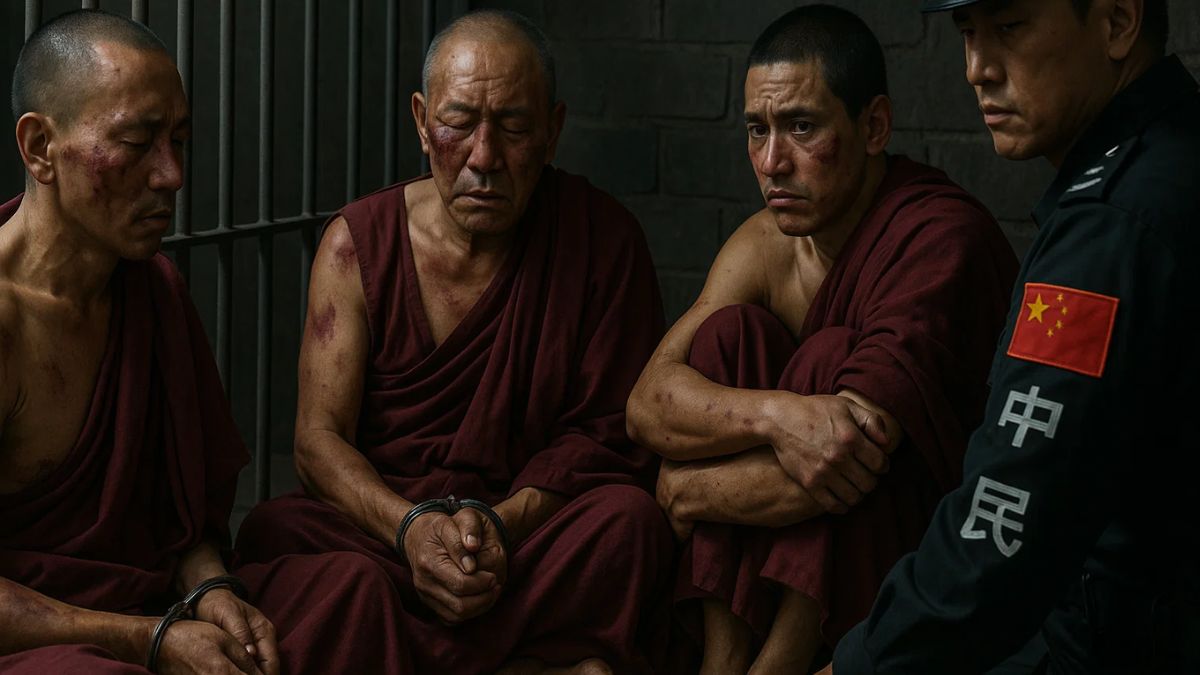
Tibetans have faced the relentless scourge of China's human rights abuses since 1950. Image courtesy: AI-generated picture via Sora

Seventy-five years after the People’s Liberation Army crossed the Jinsha River and occupied Tibet, the region remains a site of profound human-rights concern. Beijing casts its 1950 invasion as a “peaceful liberation” of a backward frontier. But for Tibetans the chapter that began that autumn has evolved into an enduring story of repression, surveillance and cultural erosion.
More than a geopolitical milestone, the occupation triggered a dramatic social rupture. Monasteries were dismantled, land-holding systems upheaved and a campaign of assimilation launched under the guise of modernization. On the ground, ordinary Tibetans encountered heavy surveillance, forced relocations, language suppression and systematic curtailment of religious freedom.
What evidence is there of human-rights violations?
Reports by credible human-rights organisations document a wide range of abuses in Tibet. In 2009 the Amnesty International recorded arbitrary arrests, detention without trial, torture and ill-treatment of Tibetans in protest.
The International Commission of Jurists (ICJ) in a seminal 1997 analysis described China’s rule over Tibet as featuring “gross human-rights violations” in contravention of international law.
A key concern has been religious and cultural suppression. Tibetan Buddhists face strict state-managed controls: gatherings with the Dalai Lama are banned, monasteries are tightly monitored and children are educated chiefly in Mandarin.
At the same time, large‐scale migration of Han Chinese into Tibetan areas has raised alarm about demographic engineering and cultural marginalisation.
What happened in the years immediately after the invasion?
Following the 1950 occupation, Tibet’s administration was swiftly altered. The 1951 Seventeen- Point Agreement formalised Chinese sovereignty — while promising autonomy and religious freedom. Critics argue the agreement was signed under duress and has never been fully honoured.
The 1959 Lhasa uprising marked a further turning point: tens of thousands of Tibetans died or fled abroad while Beijing abolished the local government and intensified its crackdown on dissent.
Over subsequent decades, Tibetan society felt the impact of land reform campaigns, forced collectivisation and mass relocations. Rural nomads were resettled in state-built towns, traditional livelihoods disrupted and cultural rhythms broken. Contemporary reports show thousands more Tibetans are still being moved into urban zones under China’s “ecological migration” programmes, with critics calling it forced assimilation.
Why does the issue still matter today?
Tibet’s occupation is often framed in terms of geopolitics. But beyond the contested border lies a deeper moral question: what happens when a people’s language, faith and identity are rendered subordinate within their own land? For Tibetans in exile and at home, the memory of autonomy persists, even as their culture is constrained.
The international community has repeatedly urged China to open Tibet to independent observers, respect religious rights and uphold freedom of speech. But Chinese authorities consistently reject what they call “external interference,” declaring Tibetan matters a domestic affair.
UK Parliament Committees
In the end, Tibet is more than a disputed territory. It is a case study in how the occupation of a land can become the occupation of a people — their institutions, their beliefs, their destiny. The human-rights costs of that transformation remain deeply felt and, for many, far from resolved.