
Despite Tariff Heat, US Calls India An Indispensable Ally In Indo-Pacific Strategy, Stresses On Good Ties
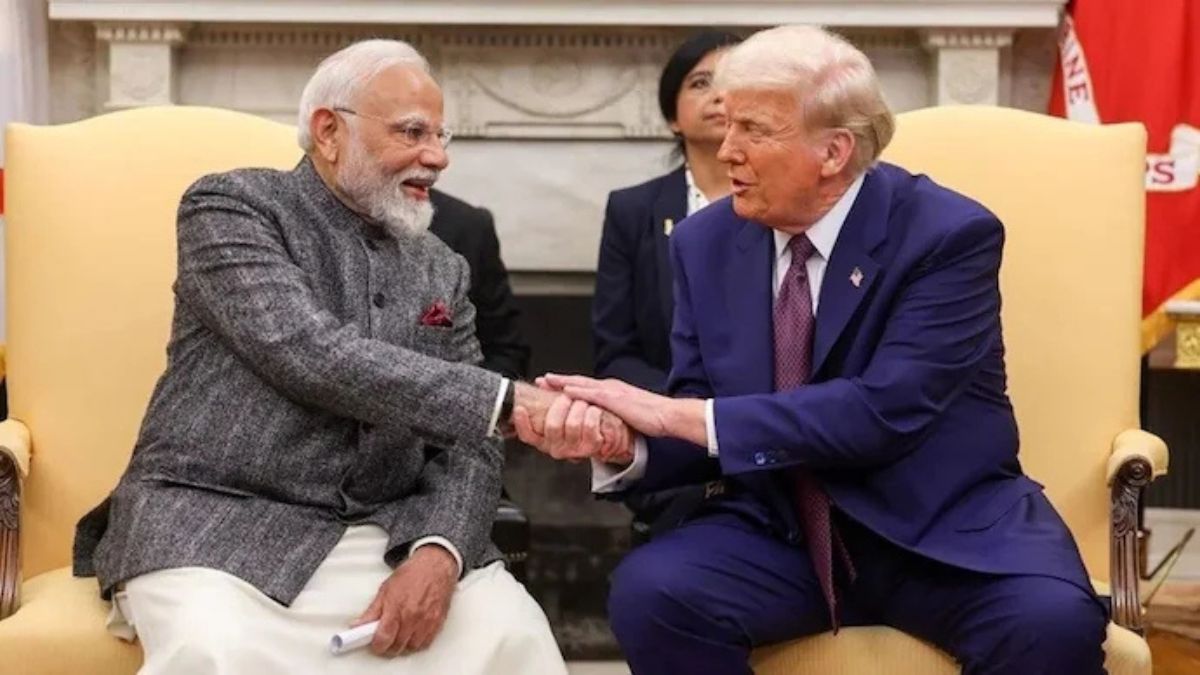
We must continue to improve commercial (and other) relations with India to encourage New Delhi to contribute to Indo-Pacific security, the document said. Image courtesy: RNA

Trade disputes, reciprocal tariffs, H-1B uncertainties and a charged anti-immigrant atmosphere under President Donald Trump have strained the economic side of India–US ties. Yet, Washington’s latest National Security Strategy (NSS) 2025 makes one thing unmistakably clear: India remains central to America’s long-term strategic architecture.
Since the start of 2025, when Donald Trump assumed office as the 47th President of the United States, India and US relations have seen a rough patch, which Trump has tried to smoothen by citing his friendship and relationship with Prime Minister Narendra Modi several times.
At a time when both the countries are engaged in the highly anticipated trade talks, with a US delegation already on a visit to India, the NSS 2025 report casts New Delhi, along with the Quad, as a core pillar of US plans to counter China’s assertiveness across the Indo-Pacific.
The US sees the region as the epicentre of global competition and identifies India as a country capable of helping maintain strategic balance without relying on cumbersome multilateral structures.
What does the NSS 2025 say about India’s role?
The document bluntly states that Washington must “continue to improve commercial and other relations with India” to strengthen Indo-Pacific security. This means that even amid tariff battles, the US views economic engagement with India as a strategic investment, not just a trade calculation.
Released on December 4, 2025, the document calls for deeper defence cooperation, expanded technology sharing, enhanced economic linkages, and stronger Quad-based military and diplomatic collaboration. “America should similarly enlist our European and Asian allies and partners, including India, to cement and improve our joint positions in the Western Hemisphere,” it added.
The aim is clear: create a rules-based regional order that prevents coercion, implicitly signalling China’s assertive actions in the South China Sea and beyond.
How does the Quad fit into Washington’s gameplan?
The Quad, including India, the US, Japan and Australia, gets a major upgrade in the NSS. No longer just a diplomatic platform, the grouping is framed as a practical security instrument that boosts maritime surveillance, supply-chain resilience and military interoperability. The strategy highlights coordinated naval and air exercises; technology and critical-minerals partnerships; shared Indo-Pacific monitoring mechanisms.
The NSS uses some of the toughest language against Beijing in recent years. It warns that China’s expanding navy, militarised outposts and coercive tactics could threaten global commerce, democratic norms and key supply chains. The US flags the Indo-Pacific’s economic stakes: half of the world’s PPP-based GDP, one-third of global nominal GDP.
Given these numbers, Washington believes that failing to counter Chinese dominance would have global consequences. It also added that going forward, the US will rebalance America’s economic relationship with China, prioritising reciprocity and fairness to restore American economic independence.
Could the strategy lead to a new phase in US–India relations?
The NSS hints at the possibility of a future trade agreement, especially once strategic cooperation deepens further. It also positions India as a long-term partner in joint military production, defence industrial collaboration, space and emerging technologies, along with secure semiconductor supply chains.
Even as tariff tensions persist, Washington’s messaging is unmistakable: strategically, India is irreplaceable. Simply put, when it comes to Indo-Pacific security, the US sees India as a partner—not a problem.