Greenland’s Sea Routes Trigger High-Stakes Geopolitics After Trump Announces Tariffs On Europe
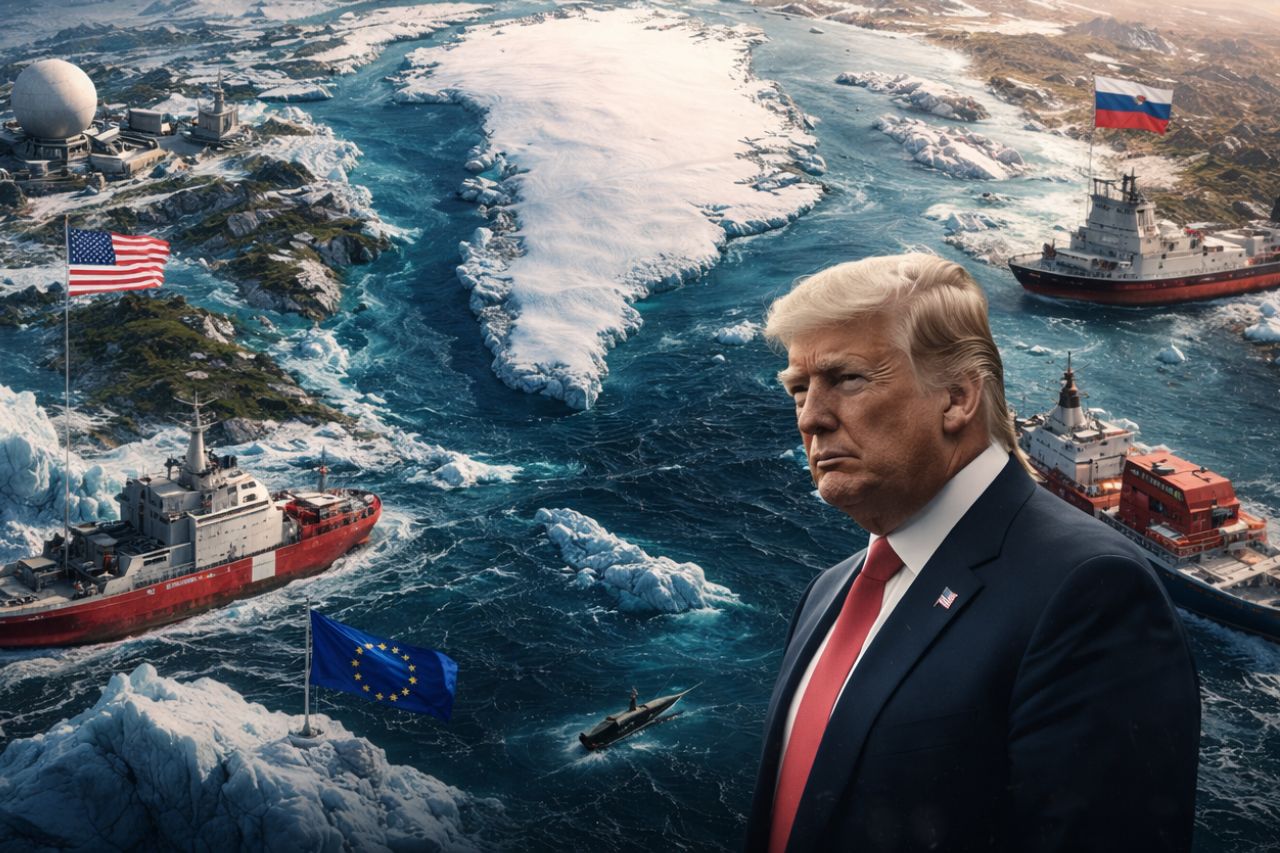
Greenland’s emerging sea routes are reshaping Arctic geopolitics as melting ice and President Trump’s tariff threats push the region into high stakes global competition. Image courtesy: AI generated picture via DALL-E.

The intense climate change is reshaping the Arctic geopolitics, and Greenland is now the critical battleground. Geographically situated between the United States and Russia, the vast, ice-covered island territory is governed by Denmark.
But a battlefront has been opened, shaped by melting ice, commercial sea lanes, and power politics that are colliding, and involved not just the United States and Russia, but European nations, and even distant China.
How is Greenland’s ice melt shaping Arctic geopolitics?
Global warming is melting the Greenland ice sheet, while the larger Arctic Ocean is becoming more navigable. In the last 5 years, the Arctic Ocean’s ice cover has fallen to 4.6 million sq km, down from the 27 percent average it recorded between 1981 and 2010.
The ice cover loss is said to be the size of Libya. As the ice cover gives way to navigable waters, the Arctic Ocean is no longer a frozen barrier, and all seafaring powers in the region want to control the sea lanes there.
How is the Arctic thaw impacting global trade and geopolitics?
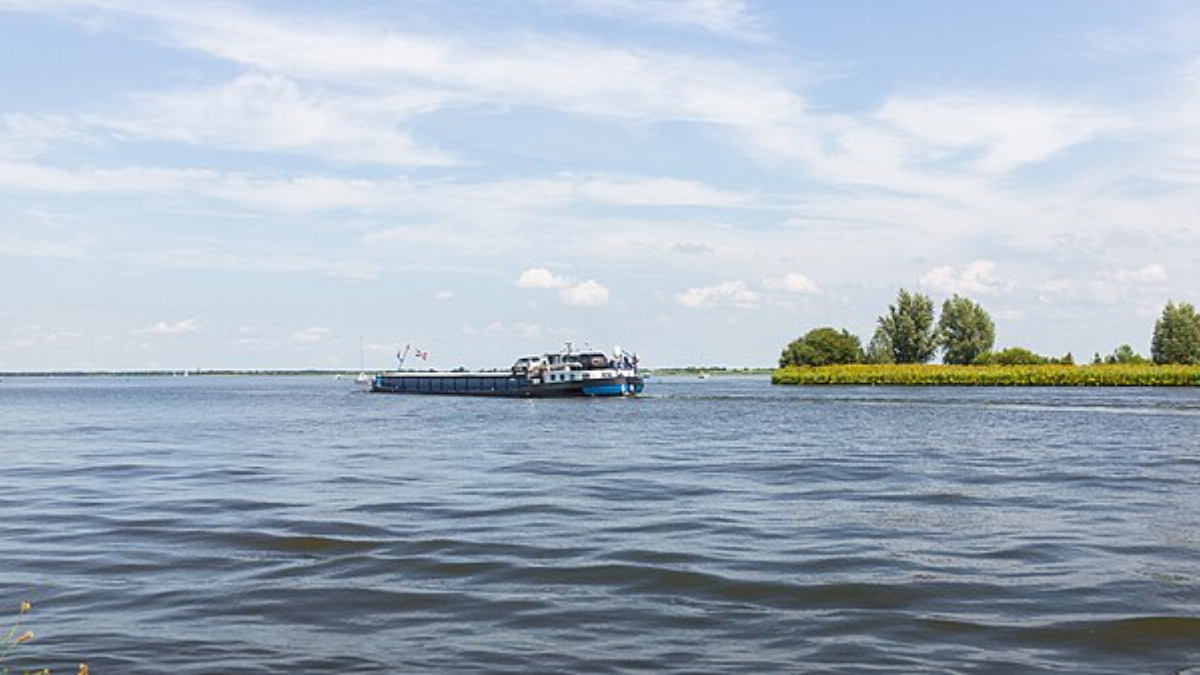
The ice that melts in the Arctic, particularly around Greenland, is now redrawing the sea lanes in the region. The shipping corridors that were navigated with the deployment of icebreakers are now increasingly available for commercial exploitation for longer periods each year than in the past.
The Northern Sea Route, the most viable, is within Russia’s Arctic coastal reach. This is the basis for Moscow’s claims and links to Europe and Asia. In the West, though, the Northwest Passage through Canada’s Arctic archipelago and the central route across the North Pole are being fought for as a long-term strategy.
What is the implication of the Arctic ice melting?
These newly available commercial sea lanes are growing in numbers, and these offer alternative strategic chokepoints, such as what we sea in the Suez Canal or the Malacca Straits earlier.
These new sea lanes in the Arctic Ocean can bring down the sailing time between western Europe and east Asia by almost half that it takes to navigate through the Indian Ocean.
Last year, the container ship Istanbul Bridge was in the news, as it became the first liner vessel to sail from China to Europe through the Northern Sea Route. It completed the Ningbo to Flixstowe voyage in just 20 days.
In 2024, the shipping traffic through the Bering Strait went up to 665 transits, reportedly a 175 percent growth since 2010.
Why do the dangers of navigating the Arctic continue?
The Arctic region still is an unpredictable navigational territory. Reports of ships getting trapped in ice keep flowing. Even the summer months aren’t risk-free.
Yet, Russia has been investing more and more in deploying nuclear-powered icebreakers to push the shipping traffic through the Arctic year-round. NATO nations, not wanting to be left behind, have been increasing their naval deployment in the region and expanding their icebreaker fleet.
Why is Greenland strategically critical for Arctic navigation?
Greenland is the most strategically important land mass for Arctic navigation. The US already operates the Pituffik military base in northwest Greenland, where it deploys missile warning systems, air defence batteries, and a space operations control centre, meant for use by both the American and NATO.
Russia, on its part, has reopened Soviet-era bases in the Arctic region, while China has declared it is now a “near-Arctic” state. In 2024, China deployed three icebreakers in the Arctic to gain experience in operating in the difficult region.
How are European nations viewing the Arctic battlefield?
While Finland and Sweden have joined NATO in recent years, this has only heightened concerns for Russia, as it reshapes the security landscape of the region and intensifies Russian military focus on the Nordic region, too.
How are Greenland’s resources causing a global race?
Over and above the sea lanes and military geopolitics, it is Greenland’s critical resources that are triggering this global race for control of the island territory.
With the world’s eighth-largest rare earth reserves, Greenland is estimated to possess 1.5 million tonnes. Its Kvanefjeld and Tanbreez deposits have attracted global attention, including from far-off China.
While mining is made difficult by the ice cover and inaccessibility, the recently retreating glaciers have opened up the possibilities for the extraction of these rare earth deposits for commercialisation.
How is the US tariff on NATO nations increasing tensions?
With US President Donald Trump voicing interest in buying out Greenland from Denmark, justifying it with security concerns in the Arctic region, he has threatened to impose a 10 percent tariff from February 1, 2026, and raise it to 25 percent by June, on Denmark and other European Union nations, to force a decision in the US’s favour.
Meanwhile, NATO Secretary-General Mark Rutte spoke to Trump about Greenland and Arctic security, as the latter has cited national security threats from Russia and China, and the need for US control over Greenland in view of these concerns. Rutte also intends to meet with Trump in Davos this week in this regard.