Inside Khamenei’s Killing: On Watch For Years, How Israel And US Tracked, Eliminated Iran’s Supreme Leader
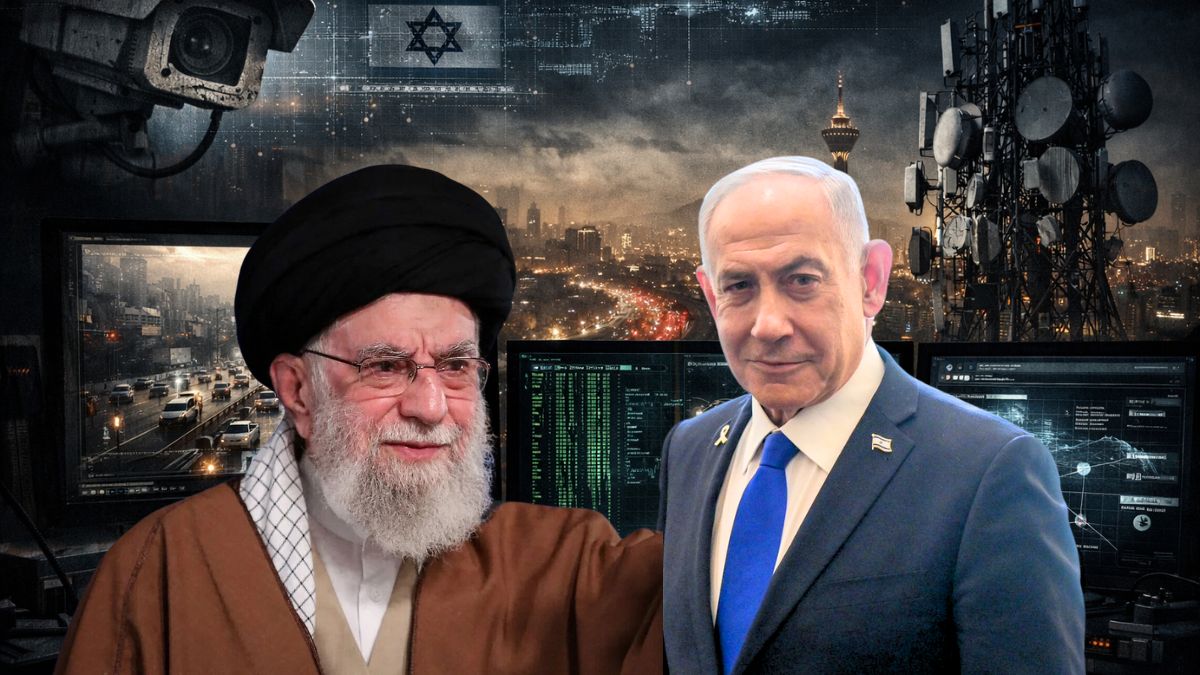
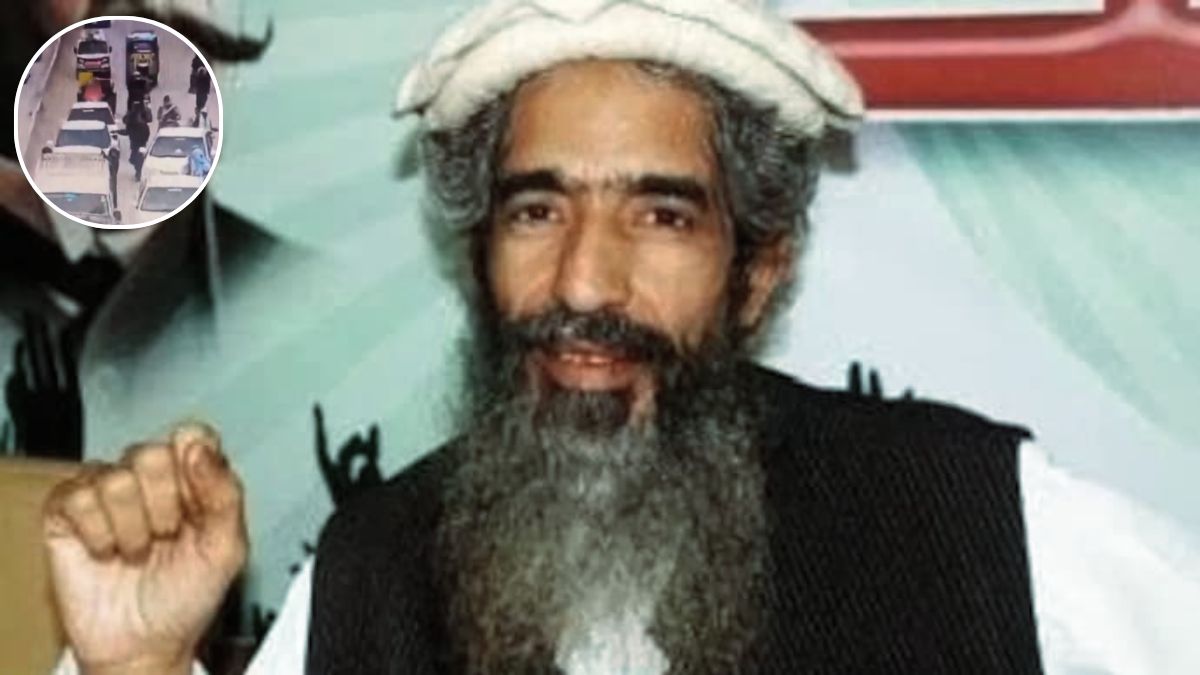
Tracking real-time traffic data was one of the many ways Israel and the CIA were able to determine when Khamenei would be in his offices. Image courtesy: RNA

“Iran for 47 years has been chanting ‘Death to America’… They spread a worldwide web of terror. This is a regime committed to destroying the United States of America,” Israel Prime Minister Benjamin Netanyahu recently said while justifying the strikes on Iran, which led to the killing of it’s Supreme Leader Ayatollah Khamenei.
Killing a country’s Supreme Leader is anything but a simple task, which is precisely why it took years for Israel to achieve what it did on Saturday. The literal hunt for Khamenei is a case study in itself, which is now being described as one of the most sophisticated intelligence operations in modern Middle Eastern history.
Israel and the United States reportedly spent years infiltrating Tehran’s surveillance grid and telecommunications networks, ultimately enabling the pinpoint strike that killed Iran’s Supreme Leader Ayatollah Ali Khamenei. A detailed report by the Financial Times, citing multiple intelligence sources, outlines a long-running covert campaign that culminated in the targeted elimination of Iran’s most powerful figure.
How did Israel and the US pinpoint Khamenei’s location?
According to the report, Israeli intelligence agencies systematically hacked Tehran’s traffic camera network over several years, gaining near-total access to real-time citywide surveillance footage. The compromised system allegedly captured encrypted live feeds from traffic cameras across Tehran, tracked convoy patterns and security movements.
It further monitored changes in the travel routes of senior Iranian officials, integrated mobile phone network access to map communication flows. By correlating camera feeds with telecommunications data, intelligence services were able to monitor Khamenei’s movements and those of his security detail with precision.
Sources cited by the Financial Times say the operation allowed US and Israeli forces to determine the exact location of the Iranian leader during a high-level meeting, enabling a coordinated strike.
Inside Israel’s hunt for Khamenei
For years, Iran’s traffic cameras had been hacked by Israel, tracking the movement and activities of senior Iranian officials, who came to work near Pasteur Street in Tehran. This is the location where Ayatollah Ali Khamenei was killed in a US-Israeli air strike on Saturday (February 27, 2026).
As per the report in the British publication, it was one camera angle that proved rather crucial, giving Israel a window into the workings of a monotonous part of the closely guarded compound. Sophisticated algorithms added details to dossiers on members of these security guards that included their addresses, hours of duty, routes they took to work.
Using this real-time traffic data, Israel and the CIA were able to determine exactly what time the supreme leader would be in his offices on Saturday morning and those who would be joining him. “The intelligence picture of the arch-enemy’s capital was the result of laborious data collection, made possible by Israel’s sophisticated signals intelligence Unit 8200, the human assets recruited by its foreign intelligence agency Mossad,” the report said.
How long was this operation?
Intelligence officials described the cyber-surveillance effort as a multi-year project designed to map the internal architecture of Tehran’s security ecosystem.
Rather than relying solely on satellite imagery or human intelligence, the operation leveraged urban infrastructure, traffic systems and telecom networks, turning the Iranian capital’s own monitoring grid into a tracking tool. Experts say the episode marks a defining evolution in modern warfare: the fusion of cyber intrusion, signals intelligence and precision strike capability.
“We took their eyes first,” the report added, quoting an intelligence official.
How did Israel justify the strike?
Israeli PM Netanyahu defended the operation in an interview with Fox News, describing Iran’s leadership as an existential threat to both Israel and the United States. “Iran for 47 years has been chanting ‘Death to America’… They spread a worldwide web of terror. This is a regime committed to destroying the United States of America,” he stated.
Israeli officials have maintained that the strikes were pre-emptive and targeted key leadership and missile infrastructure to degrade Iran’s military capabilities.
Why did Washington back the operation?
US Vice President JD Vance said President Donald Trump made a strategic calculation that the Iranian regime was nearing nuclear weapons capability. “The president wanted to make sure that Iran could never have a nuclear weapon,” Vance told Fox News. “He saw that the regime was weakened… and decided to take action to protect national security.”
Secretary of State Marco Rubio argued that the operation was necessary to prevent Iran from expanding its ballistic missile and drone arsenal to levels that would make future deterrence impossible.
“Look at the damage they’re doing now — and this is a weakened Iran. Imagine a year from now,” Rubio said, suggesting the strikes were meant to permanently reduce Iran’s strike capacity.
How has Iran responded?
Iran’s leadership has strongly rejected US and Israeli claims. Foreign Minister Syed Abbas Araghchi accused Washington of entering a “war of choice” on Israel’s behalf and denied that Iran posed any imminent threat. “There was never any so-called Iranian threat,” Araghchi wrote on X, calling the conflict a political decision by Washington and Tel Aviv.
On the battlefield, Tehran has launched retaliatory missile and drone strikes targeting US bases and allied infrastructure across the Gulf, while vowing further escalation.
A new era of intelligence-driven warfare?
The alleged hacking of Tehran’s traffic cameras underscores how urban infrastructure can become a battlefield in hybrid warfare. Military analysts note that the operation demonstrates deep cyber penetration of adversary systems, integration of AI-assisted surveillance analytics, real-time targeting through multi-domain intelligence fusion, long-term strategic patience before kinetic action.
The West Asia conflict continues to intensify, with Iranian strikes on Gulf states and American assets raising fears of wider regional war. Washington has warned that “harder hits” could follow if Tehran escalates further.