
Three Indians Killed in Iran Strikes as Delhi Puts Warships on Alert and Rubio Says American Soldier Dead
Three Indians Killed in Iran Strikes

At least three Indians were killed in Iranian retaliatory strikes all over West Asia in retaliation for US-Israel attacks that killed Supreme Leader Ayatollah Ali Khamenei in Tehran.
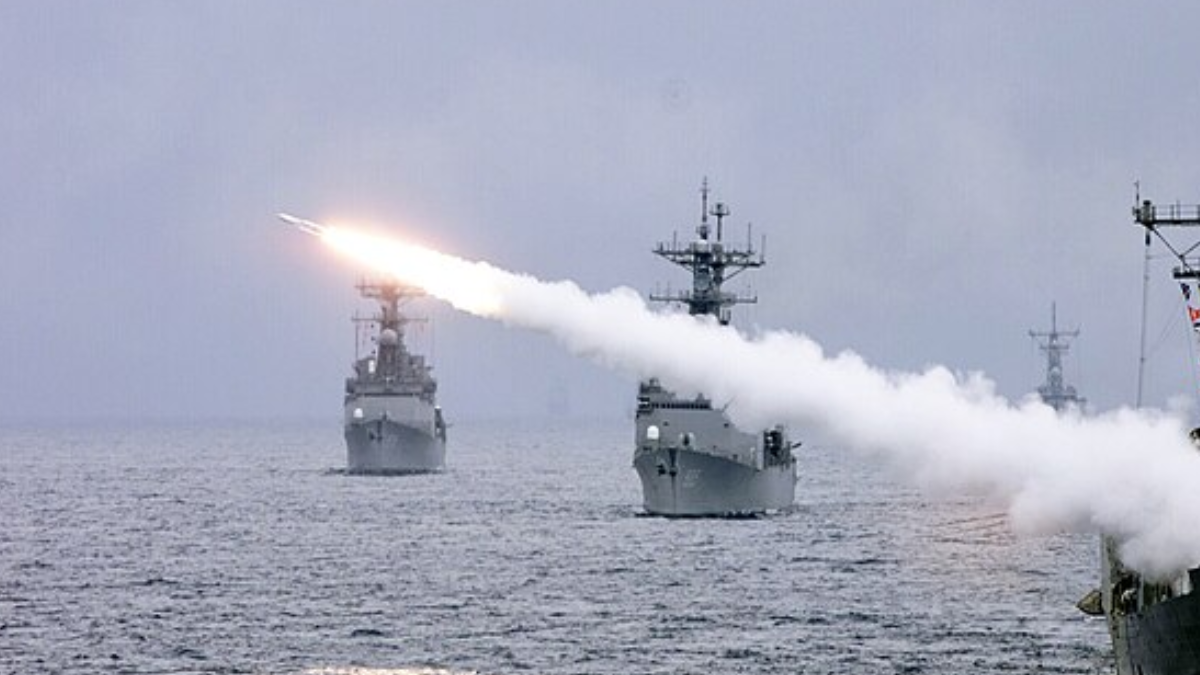
In response to the West Asian military crisis, India put its warships now operating in the Gulf of Aden on anti-piracy roles on alert to safeguard Indian merchant vessels transiting the region.
Meanwhile, American Secretary of State Marco Rubio said the US operations against Iran aimed to eliminate its nuclear and missile capabilities, even as the Trump administration confirmed six US soldiers were killed in Iranian retaliatory strikes.
How Indian Sailors Lost Their Lives in West Asia
The Indian lives were lost when Iran targeted two cargo ships transiting the Omani waters, with another 20 injured in the missile and rocket hits, according to officials with knowledge of the matter.
The attacks took place on Monday (March 2, 2026), and the Indian embassy in Oman confirmed the “tragic demise of an Indian national onboard MKD Vyom” in a social media post.
The embassy was coordinating with Oman authorities to “facilitate the safe and early repatriation of our nationals on board the vessel”.
An Iranian drone boat targeted MKD Vyom, flying the flag of the Marshall Islands, about 52 nautical miles off the coast of the Muscat governorate.
A fire broke out on the merchant vessel as a result of the Iranian attack, and an explosion occurred in the main engine room, causing the death of an Indian, according to Oman.
Two more Indians, who were part of the crew of a Palau-flagged oil tanker Skylight, were killed when Iran hit them in Omani waters off the Musandam peninsula over the weekend, the officials said.
Another three Indians among the Skylight’s crew were injured in the Iranian attacks. Of the 21 crew members on the oil tanker, 16 were Indians, they said.
One more Indian was critically injured in an Iranian attack on LCT Alyh, a cargo vessel, they said.
A total of 20 Indians were injured in Iranian attacks across West Asia, including 13 in the United Arab Emirates, when Iranian missiles hit civilian facilities there. Most of the injured in the UAE were out of danger, they added.
India is closely monitoring the emerging situation in West Asia, as Prime Minister Modi spoke to heads of eight West Asian states in the last three days, till Tuesday (March 3, 2026).
Meanwhile, India ordered its naval warships deployed in the Gulf of Aden on anti-piracy missions to remain alert to safeguard Indian-flagged merchant vessels and other cargo ships carrying Indian crew members under Operation Sankalp it launched after the West Asia military crisis exploded on Saturday (February 28).
The Indian Navy ships were asked to be on standby for possible humanitarian assistance and disaster relief (HADR) operations if the West Asia crisis escalated, officials with knowledge of the matter said.
The Modi-led Cabinet Committee on Security (CCS), which met on Monday (March 2, 2026) to review the West Asian military situation, expressed serious concern for the Indian nationals living and working in the region.
The CCS directed all of the Indian government’s ministries to be ready to assist Indians in West Asia, including expats, students, and tourists stranded there due to the military operations, as air and sea traffic were disrupted due to the war.
While India’s Chief of Defence Staff General Anil Chauhan held a review meeting with all arms of the armed forces for a rescue mission when needed, the possibility of sending civilian aircraft to carry out an evacuation of Indians was also being considered, the officials said.
The CCS also reviewed the air traffic disruptions that resulted in several Indians stranded in West Asia, including those working there, students, tourists, and travellers in transit.
Meanwhile, Dubai Airports began limited operations, as several international carriers announced the gradual resumption of select services, even as broader suspensions remain in place across West Asia due to ongoing restrictions triggered by escalating regional tensions.
In indications of things to come in West Asia, US Secretary of State Marco Rubio said the American and Israeli operations against Iran were aimed at eliminating the nuclear and missile threats from Tehran.
Meanwhile, the Trump Administration confirmed that six American soldiers were killed in Iranian retaliatory strikes on military facilities in West Asia.
Rubio said the campaign’s “clear objective” is to neutralise Iran’s missile programme and the risks posed to US and allied naval assets in West Asia.
The strikes, he said, were launched “pre-emptively” after the US learned Israel planned to attack, arguing that failing to act first would have resulted in higher American casualties.
“We knew that if we didn’t pre-emptively go after them before they launched those attacks, we would suffer higher casualties,” Rubio was quoted as saying by the American media.
Describing the threat as imminent, the US Secretary of State said allowing Iran to continue developing short-range ballistic missiles was an “unacceptable risk” and said the operation was undertaken while Tehran was at its “weakest point.”
Separately, US Central Command said the American death toll grew to six after two previously unaccounted soldiers were recovered from the rubble at a facility that was struck by Iran in its initial retaliatory attacks in West Asia.