India Asks France To Indigenously Manufacture Weapons For Rafale Through Tie-Ups With Domestic Firms
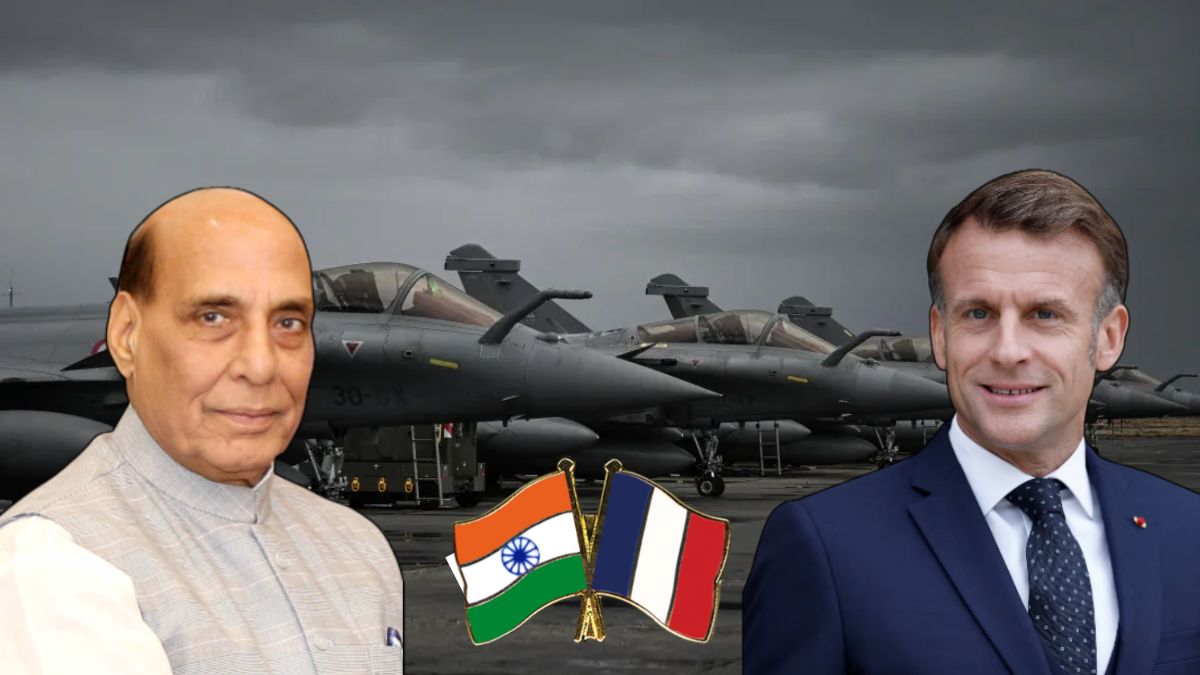
India pushes for a stronger Make in India component in the proposed 114 Rafale aircraft deal, seeking indigenous production of key weapons systems as part of deeper defence cooperation with France. Image courtesy: RNA

India wants France to not just build the Rafale jets in India, but also indigenise the weapons package, as part of multi-billion dollar project for 114 aircraft for the air force.
This was conveyed by India’s Defence Minister Rajnath Singh to his French counterpart during their bilateral meeting earlier this month, when French President Emmanuel Macron was in New Delhi for a summit meeting with Prime Minister Narendra Modi.
In their one-on-one meeting, India’s defence minister told his French counterpart that a larger ‘make in India’ component for the Rafale deal would be required.
Indian media reports cited unnamed sources with knowledge of the discussions that the indigenous content package could include a significant amount of weapons systems mounted on the Rafale aircraft.
These weapons suite could include the Meteor, SCALP, and Mica missiles, besides other weaponry on the fighter aircraft, the report said, citing the sources mentioned above.
India has previously cleared a Rs 3,200-crore contract for additional SCALP air-to-ground missiles that came in handy for the Indian Air Force to precisely strike at targets inside Pakistan during the May 2025 Operation Sindoor.
India, the sources said, was interested in the weapons for Rafale to be produced domestically, considering the large-scale need of the aircraft fleet over the next three decades.
While these 114 Rafales would also have Indian weapons as part of its arsenal, there would be a large amount of European weapons too that would be imported by India.
India has in recent years been insisting on producing cutting-edge weapons within the country. A joint venture agreement was signed during the French president’s visit this month between Safran and Bharat Electronics Limited to produce the highly agile modular munition extended range (HAMMER) smart precision guided air-to-ground weapon system in India.
The HAMMER model of producing weapons in India could be the preferred means to acquire capabilities to manufacture other weapons systems too that would arm the Rafale aircraft in the IAF’s and Indian Navy’s service, according to the sources mentioned earlier.
Through such partnership, Indian companies would gain valuable technology for manufacturing modern weapons. At present, the Indian companies are only producing the India-made weapons developed by the research agency Defence Research and Development Organisation (DRDO).
The Indian companies would also get integrated into the global supply chains for these weapons, as there is a growing demand for such systems in the global market, including in Europe, where nations have hiked their defence spending in recent years.
With a Free Trade Agreement with the European Union in place already, India would pitch itself as a reliable partner in defence technology and manufacturing by making use of European expertise in military research and development to strengthen its own industrial base and diversify supply chains.