India Breaks Silence On Khamenei’s Killing In US-Israel Strikes: Foreign Secretary Signs Condolence Book
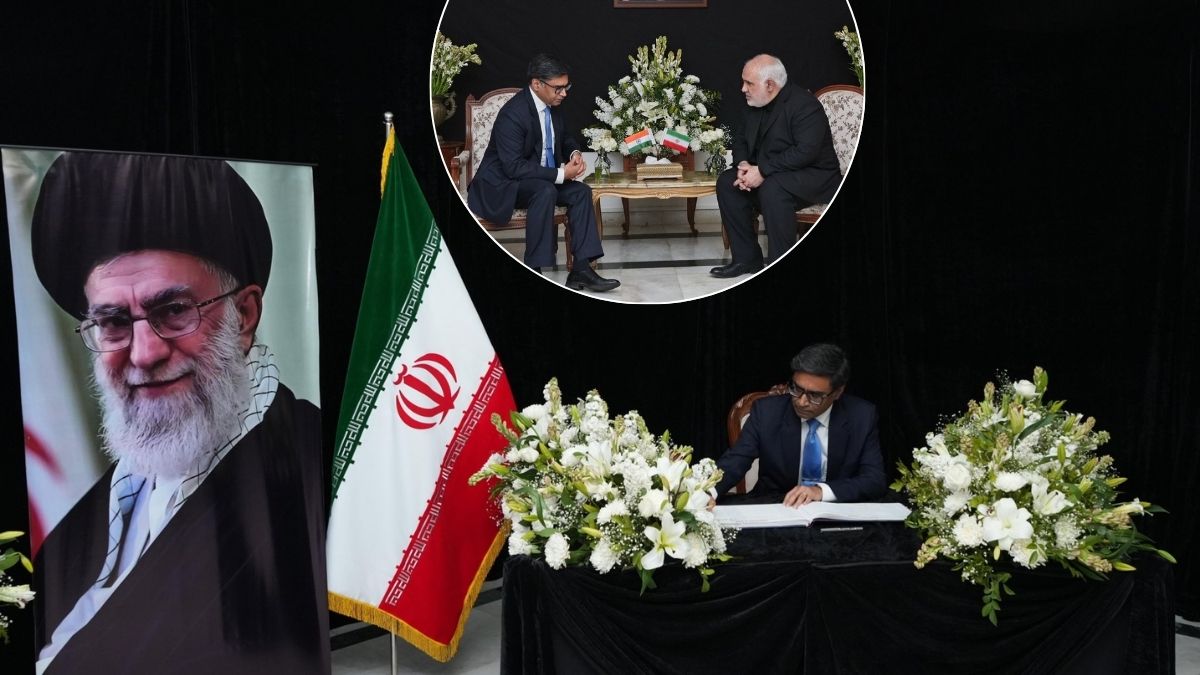
Vikram Misri's action came as part of India's first reaction to the Supreme Leader's death. Image courtesy: RNA

In its first visible diplomatic gesture following the outbreak of the Iran war last week, India conveyed condolences to Tehran after Iran’s Supreme Leader Ayatollah Ali Khamenei was killed in joint US-Israel military strikes. Foreign Secretary Vikram Misri visited the Embassy of Iran in New Delhi on Thursday (March 5, 2026) and signed the condolence book opened by the Iranian mission.
Misri also expressed sympathy on behalf of the Government of India. During the visit, the Foreign Secretary also met Iran’s Ambassador to India Mohammad Fathali, conveying India’s message of grief over the deaths caused by the strikes.
The condolence book was opened for diplomats, officials and members of the public to pay respects following the killing of Khamenei, who had led the Islamic Republic for more than three decades.
How did Iran mark the Death of its Supreme Leader in India?
As part of the mourning observances, the Iranian Embassy in New Delhi lowered its national flag to half-mast. The mission also announced that the condolence book would remain open on March 5, March 6 and March 9, allowing visitors to record their messages of tribute.
“The condolence book has been opened on the occasion of the martyrdom of His Eminence Grand Ayatollah Imam Khamenei,” the embassy said in a statement on X.
Visitors can sign the book between 10:00 am and 3:00 pm on the designated days.
Iran war: What is the situation right now?
Khamenei’s killing came during massive joint US-Israel strikes on Iranian territory, which targeted military and strategic facilities across multiple cities, including Tehran. The operation triggered one of the most serious escalations in West Asia in decades.
In retaliation, Iran launched waves of drones and ballistic missiles targeting American military bases and Israeli-linked assets across the region. Iranian strikes have also hit several Gulf states, raising fears of a wider regional war.
Israel has continued its military operations against Iranian targets and has expanded strikes to Lebanon, targeting the Tehran-backed Hezbollah militia. The conflict has now entered its sixth day, with tensions continuing to intensify across the Middle East.
What has India said on the West Asia crisis?
Even as the conflict widens, India has maintained a carefully balanced diplomatic position. Earlier this week, the Ministry of External Affairs (MEA) expressed deep concern over the escalating violence in Iran and the Gulf region, urging all sides to exercise restraint.
“We had expressed our deep concern at the commencement of the conflict in Iran and the Gulf region on February 28. India had urged all sides to avoid escalation and prioritise the safety of civilians,” the MEA spokesperson said. The ministry also called for dialogue and diplomacy to resolve the crisis.
“India strongly reiterates its call for dialogue and diplomacy and raises its voice clearly in favour of an early end to the conflict,” the statement added.
Meanwhile, the escalating crisis in West Asia has major implications for India, which has deep economic and strategic ties across the region. Millions of Indian expatriates live and work in Gulf countries, while the region also remains critical for India’s energy security and trade routes.