India–Russia Defence Ties Deepen Ahead of Putin Visit as Moscow Ratifies Key Military Logistics Pact
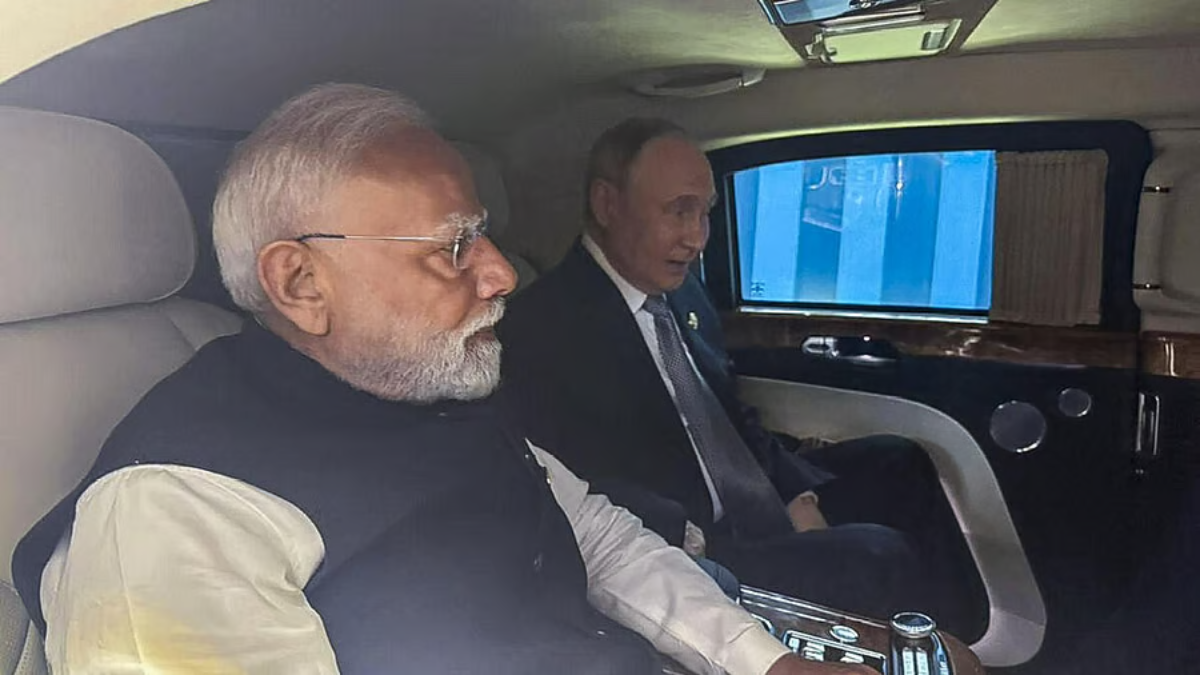
Representational Image

India and Russia have taken a major step toward strengthening their long-standing defence partnership just hours before President Vladimir Putin arrives in New Delhi for a two-day visit on December 4, 2025.
On Tuesday (December 3), Russia’s State Duma, the lower house of parliament, ratified the long-pending Reciprocal Exchange of Logistic Support (RELOS) agreement with India, clearing the path for seamless military cooperation at a time of shifting geopolitical alignments.
State Duma Speaker Vyacheslav Volodin described the pact as another milestone in a “strategic and comprehensive” relationship, underscoring the importance Moscow places on its defence ties with New Delhi.
The ratification follows a draft submitted last week by Prime Minister Mikhail Mishustin, signalling high-level political backing in Russia ahead of the summit.
What the RELOS agreement does
At its core, the RELOS agreement allows military aircraft, naval ships, and other formations from both nations to access each other’s bases for refuelling, repairs, berthing, resupply, and joint activities such as training exercises, humanitarian missions, and disaster-relief operations.
It covers not only the movement of personnel and equipment but also the full logistical chain that sustains such deployments.
This means Indian and Russian warships and aircraft will be able to operate in each other’s territories without bureaucratic delays, ensuring faster response times during emergencies. Both sides will also gain access to each other’s airspace, ports, and maintenance facilities.
A unique feature, and a strategic breakthrough for India, is access to Russian naval infrastructure along the Arctic and the Northern Sea Route, where Moscow maintains extensive military facilities.
Think-tanks such as ORF note that such agreements save “enormous time” by replacing case-by-case clearances with rolling settlement mechanisms.
Why RELOS matters for India
India has signed similar logistics pacts with the US, France, Australia, Japan, the UK, Singapore, South Korea, and Vietnam. However, the Russia agreement holds special significance.
First, India’s armed forces rely heavily on Russian-origin hardware, from Sukhoi fighters and T-90 tanks to the S-400 air defence system. A logistics accord allows easier access to spare parts and maintenance support, especially during long-distance operations.
Second, access to the Arctic enhances India’s naval reach into a region where it lacks experience but has growing scientific and strategic interests.
The Manohar Parrikar Institute for Defence Studies and Analyses notes that RELOS will give India the ability to use Russian ports from Vladivostok to Murmansk, improving operational exposure in polar waters.
Third, as defence analysts say, the pact could serve as the “logistical backbone” for India’s ambitions to build a truly global naval presence.
With the Indian Navy deploying 12 to 15 warships across the Indo-Pacific on multi-mission patrols, such agreements reduce dependence on dedicated support vessels and enable operations across extended stretches of ocean.
Why RELOS matters for Russia
For Moscow, the agreement offers strategic depth at a time when Western sanctions have restricted its global footprint. With access to Indian ports and facilities in the Indian Ocean, Russia can maintain naval influence in Asia without investing in expensive overseas bases.
This also gives Moscow a means to balance China’s expanding maritime footprint, while deepening a historic partnership with India that predates the Cold War.
The RELOS agreement has been under discussion since at least 2019 and was expected to be signed during Prime Minister Narendra Modi’s visit to Vladivostok.
After years of delays, drafts were finally approved by both sides in mid-2024. Its ratification on the eve of Putin’s trip signals intent: India and Russia are preparing to bring their defence cooperation into a new era, even as both navigate complex global headwinds.
With the pact now cleared in Moscow, its formal signing during the summit would add yet another layer to an evolving partnership anchored in logistics, interoperability, and strategic access.