


India–New Zealand FTA: 0 Duty On 100% Indian Exports, $20 Billion FDI Commitment – Modi–Luxon Deal Highlights
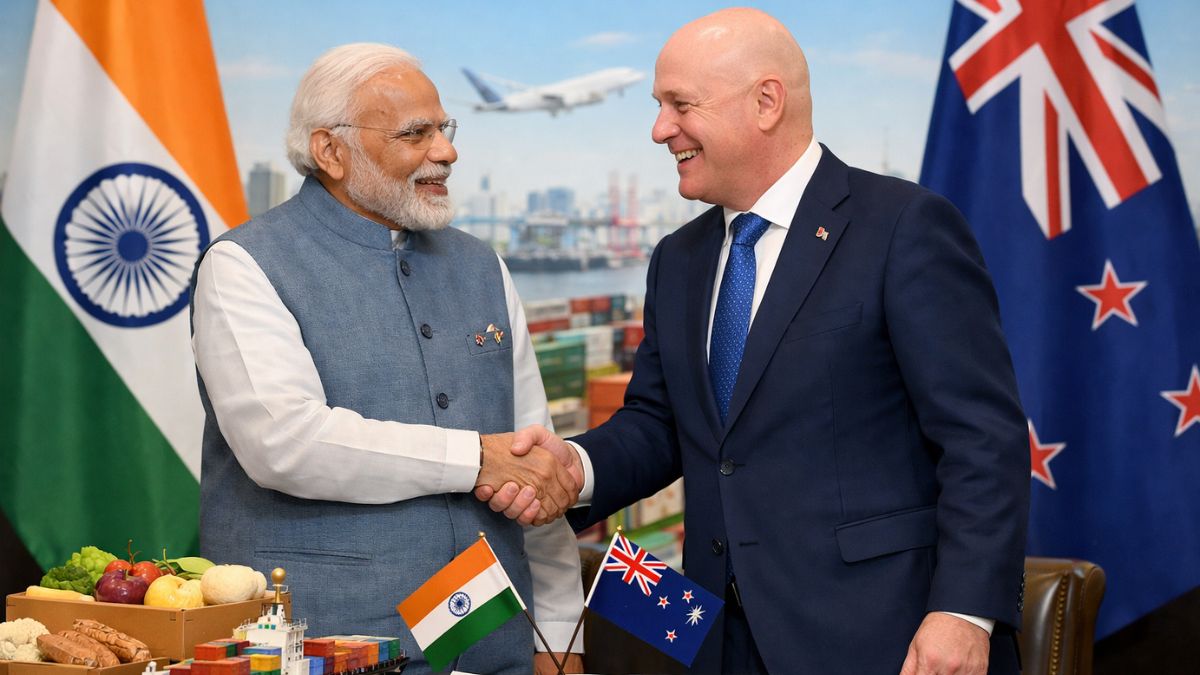
India and New Zealand merchandise bilateral trade increased from $855 million in 2015-2016 to $1298 million in 2024-2025. The exports increased by 130% whereas imports only increased by 7.21% in 10 years. Image courtesy: AI-generated picture via Sora

Negotiations that started just around 9 months back in March 2025 with New Zealand PM Christopher Luxon’s India visit, have finally yielded fruit. India and New Zealand on Monday (December 22, 2025) sealed a historic Free Trade Agreement (FTA), marking a major political and economic victory and underscoring India’s growing clout.
India currently ranks as New Zealand’s 12th largest goods and services export market, representing 1.5% of New Zealand’s exports. With this new trade deal, the trade ties between the two countries are set to get another major boost as the FTA eliminates duty on 100% of Indian exports.
The agreement, concluded in a record nine months, was formally announced after a telephone conversation between Prime Minister Narendra Modi and New Zealand Prime Minister Christopher Luxon. Both leaders described the pact as ambitious, mutually beneficial and future-focused, saying it would act as a catalyst for deeper cooperation.
India-New Zealand FTA: Why the deal matters for India
The India–New Zealand FTA comes at a time when India is positioning itself as one of the world’s fastest-growing major economies and a key alternative supply-chain hub in the Indo-Pacific. The agreement significantly improves market access for Indian goods and services, strengthens India’s services exports, one of its biggest economic strengths.
“Following the conclusion of the landmark India–New Zealand Free Trade Agreement, my friend PM Christopher Luxon and I had a very good conversation,” PM Modi said, hailing the deal as a turning point in bilateral ties.
Fast-tracked negotiations signal strong political will
Negotiations were launched during PM Luxon’s visit to India in March this year. The swift conclusion, within just nine months, reflects strong political backing at the highest level and a shared ambition to elevate bilateral relations beyond traditional trade. Luxon, welcoming the agreement, said it would deliver more jobs, higher wages and new opportunities for New Zealanders, while also giving Kiwi businesses access to India’s 1.4 billion-strong consumer market.
Trade set to double in 5 years
Both governments are confident the FTA will double bilateral trade within five years, driven by improved tariff regimes, services liberalisation and greater investment flows. The pact is expected to create new opportunities for MSMEs, startups, farmers, professionals, students and young entrepreneurs in both countries.
India-NZ FTA: Major investment boost for India
A key economic win for India is the $20 billion investment commitment from New Zealand over the next 15 years, strengthening capital inflows into priority sectors and supporting India’s long-term growth ambitions. India has offered market access in 70.03% of the tariff lines while keeping 29.97 % tariff lines in exclusion.
Services and Mobility: Big win for Indian professionals
Services and mobility form the backbone of the agreement as market access has been secured in 118 services sectors and sub-sectors. India will get Most Favoured Nation (MFN) treatment in 139 services sectors. There would be enhanced opportunities for Indian professionals, service providers and businesses in New Zealand.
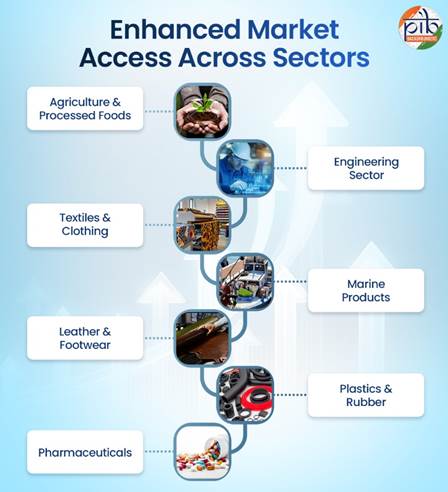
This significantly boosts India’s competitive edge in high-value services exports, including IT, professional services and education-linked sectors.
Healthcare and Traditional medicine: A first for New Zealand
In a notable breakthrough, the FTA includes a dedicated annex on health and traditional medicine services, the first time New Zealand has signed such an arrangement with any country. The move opens new avenues for Indian healthcare providers and traditional medicine practitioners, further expanding India’s soft power and services footprint.
Jobs and professional visas
Temporary employment entry visa for 5,000 Indian professionals. It covers AYUSH practitioners, yoga instructors, chefs, music teachers Includes IT, engineering, healthcare, education and construction 1,000 work and holiday visas annually. Additionally, a Working Holiday Visa arrangement will allow 1,000 young Indians to travel to New Zealand each year.
Tariff cuts to unlock new export opportunities
The agreement delivers deep tariff liberalisation as 95% of New Zealand’s tariff lines will see elimination or reduction, one of the highest coverages in any Indian FTA. 57% of New Zealand exports to India will be duty-free from day one. Duty-free access also increased to 82% once the agreement is fully implemented.
The remaining 13% will benefit from significant tariff reductions These measures are expected to lower costs, boost competitiveness and expand two-way trade volumes.
The FTA also has strong emphasis on agriculture. Indian farmers are expected to gain improved access to New Zealand’s market for products such as fruits, vegetables, coffee, spices, cereals and processed foods.
India-NZ FTA beyond trade Beyond economics, both leaders welcomed progress in defence cooperation, education, sports, innovation and people-to-people ties, signalling that the FTA is part of a broader strategic reset in India–New Zealand relations. The two prime ministers agreed to remain closely engaged as the partnership enters its next phase.