New Delhi Ramps Up West Asia Engagements: Targets $5 Billion Trade with Jordan in Five Years; Sets New Agenda with UAE for 2026
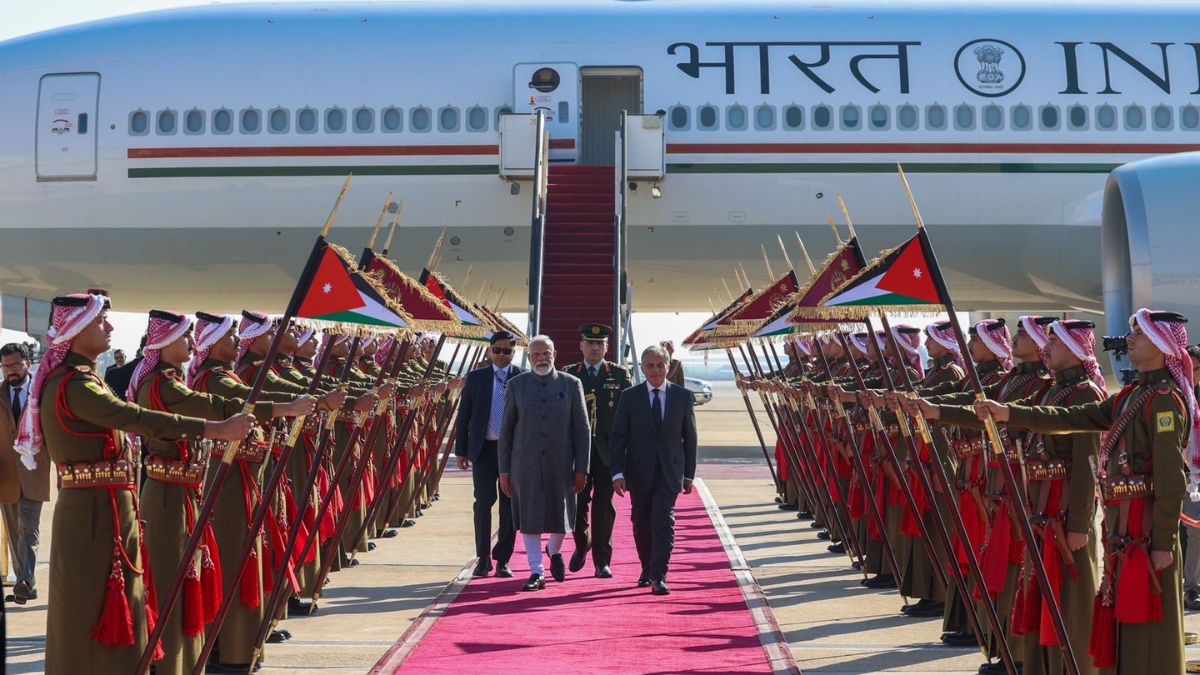
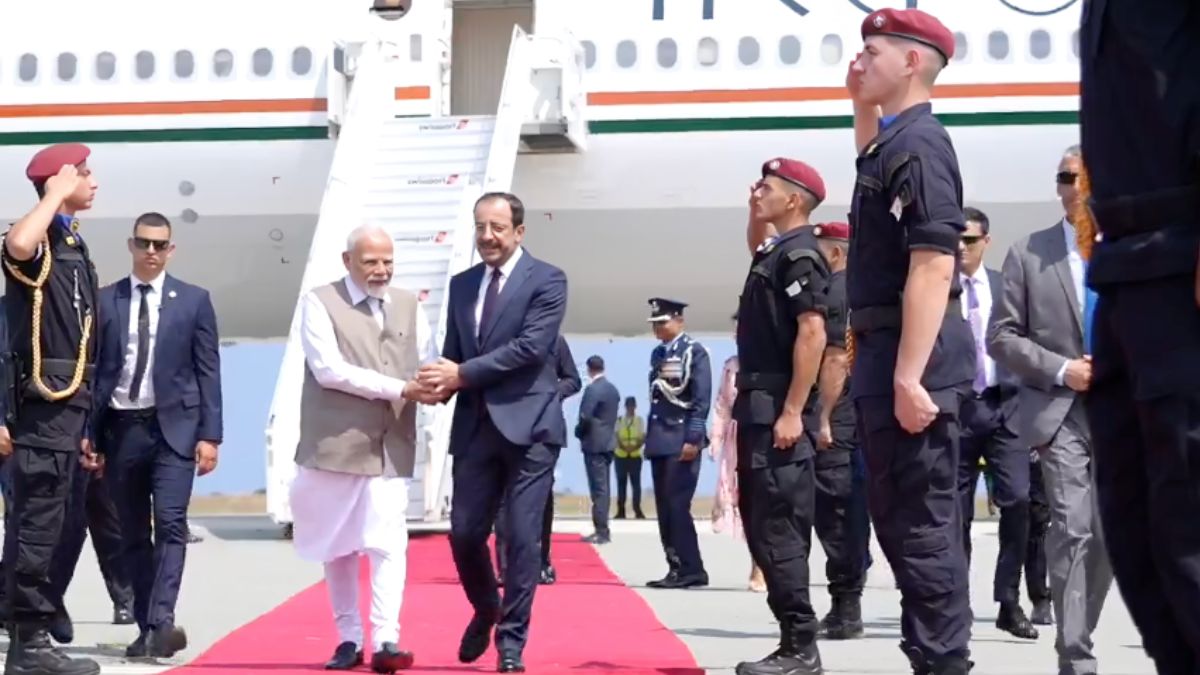
India steps up its engagement in West Asia as New Delhi and Jordan set ambitious trade goals and India and the UAE agree on a new agenda to deepen their strategic partnership. Image Courtesy: X.com/@narendramodi

New Delhi is intensifying its diplomatic and economic engagement across West Asia, with India and Jordan setting an ambitious target to double bilateral trade to $5 billion over the next five years, while India and the United Arab Emirates (UAE) have agreed on new initiatives and an action-oriented agenda to deepen their comprehensive strategic partnership through 2026.
The twin developments underscore India’s expanding footprint in the region, blending economic diplomacy, security cooperation and connectivity initiatives at a time of heightened geopolitical churn in West Asia.
What did PM Modi do in Jordan?
Announcing the outcomes of Prime Minister Narendra Modi’s visit to Jordan, the Ministry of External Affairs (MEA) said the two countries had agreed to significantly scale up trade and cooperation in key sectors, particularly fertilisers, with a strong focus on phosphates.
MEA Secretary (South) Neena Malhotra described the visit as “historically significant,” noting that it was the first full-fledged bilateral visit by an Indian Prime Minister to Jordan in 37 years and coincided with the 75th anniversary of diplomatic relations between the two nations.
What were the focus of ties with Jordan?
Security and counter-terrorism cooperation featured prominently in the talks. Malhotra said there was strong convergence between India and Jordan on key security concerns, with the Jordanian leadership conveying firm support for India’s fight against terrorism and condemning terrorism in all its forms.
Prime Minister Modi, she added, commended King Abdullah II’s leadership on de-radicalisation and his role as a voice of moderation in the Islamic world.
How will economic cooperation progress from here?
Economic cooperation formed the core of the discussions, with fertilisers emerging as a strategic pillar. Jordan is a major producer of phosphates, a critical input for India’s agricultural sector.
Modi proposed doubling bilateral trade to $5 billion within five years, alongside expanding collaboration in energy, water management, digital technology and culture.
What were the agreements signed with Jordan?
Several memoranda of understanding and agreements were finalised during the visit, covering energy, digital cooperation, water management, culture and people-to-people ties.
Cultural diplomacy also received a boost with the signing of a Cultural Exchange Programme for 2025–29 and a landmark Twinship Agreement between Jordan’s Petra and Maharashtra’s Ellora Caves.
The twinship aims to promote tourism, cultural exchanges and closer social relations. India and Jordan also agreed to collaborate on sharing successful digital solutions through a letter of intent.
What was Jaishankar’s purpose of engaging with UAE?
Parallelly, India’s engagement with the Gulf deepened as external affairs minister S Jaishankar and UAE foreign minister Sheikh Abdullah bin Zayed Al Nahyan co-chaired the 16th India-UAE Joint Commission Meeting and the fifth Strategic Dialogue in Abu Dhabi.
The two sides reviewed cooperation across trade, investment, energy, defence, security, connectivity, technology, health and education.
What did India and UAE plan for the future?
Expressing satisfaction with the depth of the comprehensive strategic partnership, the two ministers agreed on new initiatives and an action-oriented agenda for the coming year, aimed at further strengthening ties across priority sectors.
They also discussed regional and global developments, reaffirming their shared interest in promoting peace, stability and prosperity in West Asia.
How would India collaborate with UAE on regional connectivity?
A key focus of the discussions was enhanced coordination on regional connectivity and the Global South. Both sides reiterated their commitment to implementing the India-Middle East-Europe Economic Corridor (IMEC), seen as a transformative initiative linking India with Europe via West Asia.
Sheikh Abdullah also conveyed the UAE’s support for India’s upcoming AI Impact Summit in February 2026 and for India’s presidency of the BRICS grouping in 2026.
What did Jaishankar do in UAE?
During his visit, Jaishankar met UAE Vice President and Deputy Prime Minister Sheikh Mansour bin Zayed Al Nahyan, National Security Adviser Sheikh Tahnoun bin Zayed Al Nahyan, and Mubadala CEO Khaldoon Mubarak, highlighting the centrality of investment and strategic trust in bilateral ties.
He also participated in the Sir Bani Yas Forum, engaging with global leaders on geopolitical, security and technological challenges.
From Abu Dhabi, Jaishankar is set to travel to Israel for bilateral consultations, reinforcing India’s multi-vector engagement in West Asia.
Together, the Jordan and UAE engagements signal New Delhi’s calibrated push to deepen economic integration, strategic cooperation and regional connectivity across the Middle East.