India-Ethiopia Strategic Partnership: 8 MoUs Signed, PM Modi Invites Counterpart For BRICS Summit – All That Happened
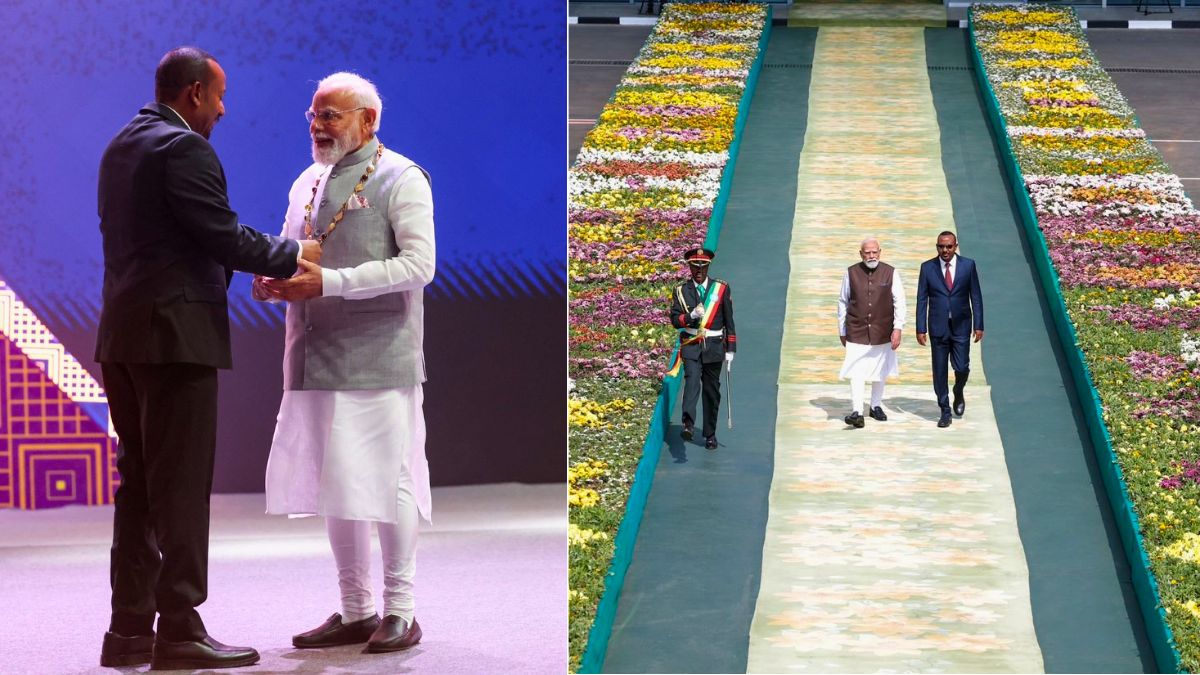
Ethiopian PM conferred the highest award of Ethiopia the ‘Great Honor Nishan of Ethiopia’ upon PM Modi. Image courtesy: RNA

The friendship between India and Ethiopia dates back to over 2000 years ago when trade thrived in the time of the Axumite Empire (1st century AD). During this period, Indian traders traded silk and spices for gold and ivory through the ancient port of Adulis in the 6th century AD. While they have been partners for long, formal diplomatic ties between the India and Ethiopia were established in 1950.
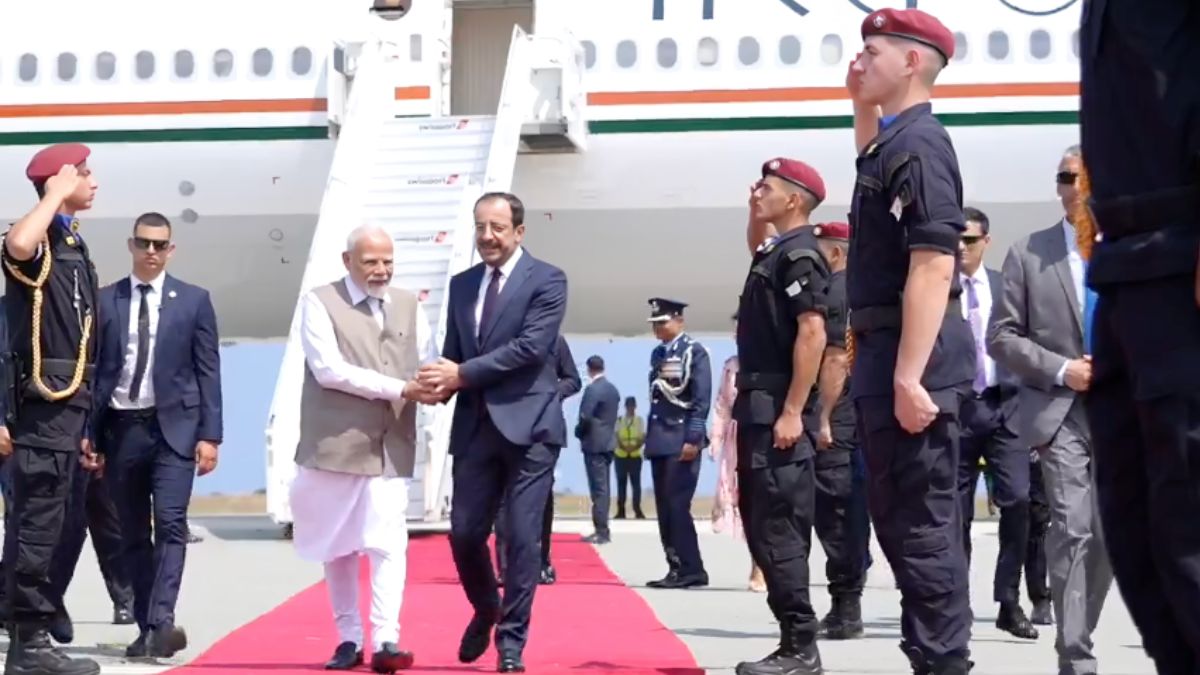
Now, in yet another boost to the bilateral ties, India and Ethiopia have formally elevated their relationship to a Strategic Partnership, signalling a major push by New Delhi to strengthen its footprint in Africa and the Global South. The decision was announced during PM Narendra Modi’s visit to Addis Ababa, where he held wide-ranging talks with Ethiopian PM Abiy Ahmed Ali and addressed a joint session of the Ethiopian Parliament.
Calling the two nations “natural partners”, PM Modi underlined Ethiopia’s strategic location at the crossroads of Africa and India’s central role in the Indian Ocean, arguing that the partnership is vital for regional peace, security and connectivity.
PM Modi Ethiopia Visit: Key takeaways
Ethiopian PM Dr. Ahmed conferred their highest award – the ‘Great Honor Nishan of Ethiopia’ – upon PM Modi for his exceptional contribution towards strengthening bilateral partnership and for his visionary leadership as a global statesman.
PM Modi thanked Ethiopia for its solidarity in the wake of Pahalgam terror attack and for supporting the global fight against terrorism.
The two Prime Ministers reaffirmed their commitment to working together to voice the concerns of the Global South.
He was conferred with ‘Great Honor Nishan of Ethiopia’ country’s highest honour during Addis Ababa visit.
India and Ethiopia have elevated their bilateral ties to a Strategic Partnership, marking a new phase of cooperation.
India, Ethiopia signed eight MoUs, agreements, including that for establishing a Data Centre at Ethiopia’s Ministry of Foreign Affairs and for debt restructuring under the G20 Common Framework.
Over 675 Indian companies are registered with the Ethiopian Investment Commission, with total investments over $6.5 billion, especially in key sectors of manufacturing and pharmaceuticals, creating over 75,000 local jobs.
India–Ethiopia total trade stood at $ 550.19 million in FY 2024–25. Indian exports are $ 476.81 million and imports $ 73.38 million.
India-Ethiopia Strategic Partnership: What does it mean for bilateral ties?
The Strategic Partnership expands India–Ethiopia cooperation beyond traditional diplomacy into defence, technology, trade, clean energy, food security, innovation and capacity building. According to PM Modi, this upgraded framework will unlock the economic and strategic potential of both countries and provide a long-term roadmap for cooperation across multiple sectors.
It also places Ethiopia among a select group of African nations with which India has forged high-level strategic relationships.
How is defence and security cooperation being strengthened?
A key pillar of the partnership is the Defence Cooperation Agreement signed earlier this year. PM Modi said the agreement focuses on closer military collaboration, including cybersecurity, defence industries, joint research and training, and capacity building.
The two leaders also reaffirmed their shared commitment to combating terrorism. PM Modi thanked Ethiopia for its solidarity with India following the Pahalgam terror attack and for its firm stance on zero tolerance towards terrorism “in all its manifestations”.
India’s economic role in Ethiopia
India has emerged as one of Ethiopia’s most significant economic partners. PM Modi highlighted that Indian companies have invested over $5 billion across sectors such as textiles, manufacturing, agriculture and healthcare, creating more than 75,000 jobs.
Under the Strategic Partnership, both sides aim to expand cooperation in mining, clean energy, technology, innovation and food security, aligning economic growth with sustainability.
What new agreements were signed during the visit?
Several Memoranda of Understanding were exchanged during the visit, reflecting the widening scope of bilateral ties. These include agreements on customs cooperation, training for United Nations peacekeeping missions, and the establishment of a data centre at Ethiopia’s Ministry of Foreign Affairs.
India and Ethiopia also signed an MoU on debt restructuring under the G20 Common Framework, highlighting growing coordination on financial and economic issues.
How is India supporting Ethiopia’s development priorities?
India has offered to share its development experience in agri-technology, natural farming, digital health and technology-driven healthcare delivery. New Delhi also committed to supporting capacity augmentation at the Mahatma Gandhi Hospital in Addis Ababa, particularly in maternal and neonatal healthcare.
In the education sector, PM Modi announced the doubling of ICCR scholarships for Ethiopian students and offered short-term courses in Artificial Intelligence under the ITEC programme, strengthening long-term people-to-people ties.
What is the significance of AI and BRICS diplomacy?
As part of the visit, PM Modi invited his Ethiopian counterpart to participate in the AI Impact Summit scheduled to be held in India in February next year. He also extended an invitation to the BRICS Summit, which India proposes to host in 2026, when New Delhi will assume the chairship of the grouping.
MEA officials said the invitations underline Ethiopia’s growing importance in India-led multilateral initiatives and South–South cooperation platforms.
How does this partnership reflect India’s Global South vision?
PM Modi framed the India–Ethiopia partnership within a broader vision for the Global South – one focused on equity, sovereignty and shared prosperity. He reiterated India’s proposal for a Global Development Compact, prioritising technology sharing, affordable finance, capacity building and sustainable trade.
Both leaders reaffirmed their commitment to advancing a more inclusive, equitable and rule-based global order, and to amplifying the collective voice of developing nations.
Moreover, the visit was also rich in symbolism. PM Modi laid a wreath at the Adwa Victory Monument, paid respects at the Adwa Museum, and planted a sapling at the Ethiopian Parliament under India’s ‘Ek Ped Maa Ke Naam’ initiative, aligned with Ethiopia’s Green Legacy programme.
He was also conferred Ethiopia’s highest civilian honour, the Grand Honour Nishan of Ethiopia, becoming the first global Head of State or Government to receive it. PM Modi said the award belonged to the people of India and reflected the deep-rooted civilisational ties between the two countries.