
US Ops In Venezuela Can’t Be Replicated In Iran: American Forces Quit Qatar Fearing Full-Scale War
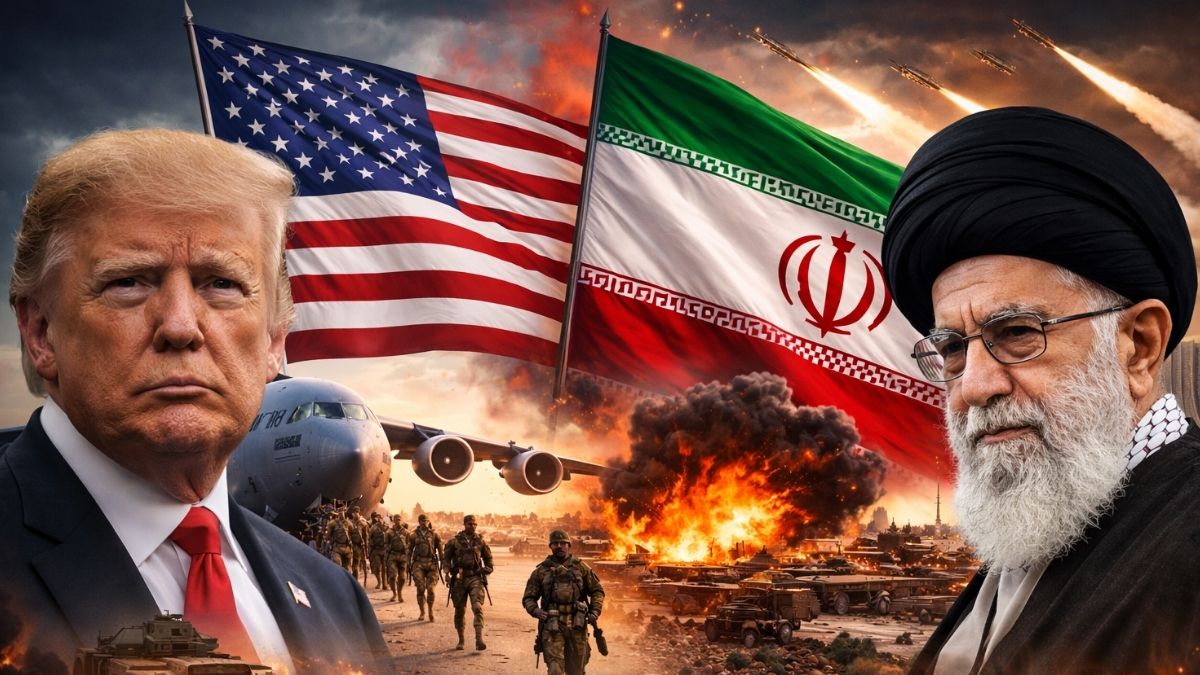
As fears of a US-Iran war rise, American forces move out of Qatar, underscoring why a Venezuela style US operation cannot be replicated against Iran. Image courtesy: AI generated picture via DALL-E

The US and Iran are, in all probability, going to war in West Asia, and this has triggered a massive exodus of American forces from its military base in nearby Qatar.
The US and Iran have been blowing hot in recent days as Tehran has been cracking down on domestic protestors, voicing their grievances over governance failures. The fallout has been the American troops being repositioned out of the massive Al Udeid air base in Qatar.
This panic reaction from the US forces in West Asia came about following Iran’s serious warning that it would strike American military and cargo positions in the region if the American leadership unleashed its firepower on Iranian leadership or its critical infrastructure.
The US, though, described the military troops exiting Qatar as a precaution rather than a permanent withdrawal.
What are the US troops withdrawing from the Qatar base?
The US asked some of its troops and civilians to move out of the Qatar base within this week, as it saw a potential military attack on Iran and a retaliatory action by Tehran, as both sides have previously warned of their intent.
Iran had earlier this week told its neighbours that they would have to brace for strikes on US troop positions inside their territory if Tehran comes under an American military strike.
The American troops in the Qatar base have previously faced danger when Iranian missiles had struck the Al Udeid air base following the US missiles hitting Iranian nuclear sites in 2025. That missile strike by Iran was a clear indication of the vulnerabilities faced by US assets in the region.
How would a US hit on Iran differ from Venezuela operations?
In Venezuela, the US had carried out an overnight military operation to capture President Nicolas Maduro. The US had built a narrative that it was targeting a failing administration through sanctions, drone operations, the unleashing of military assets, and the capture of the political leadership to be tried in the US on drug-running charges.
The Venezuela-style operation by the US forces cannot be replicated in Iran, fundamentally because of the differences between the two nations.
Iran is a far more advanced nation in terms of its military capabilities, including its missile force and defence infrastructure, which are geographically dispersed, than Venezuela’s.
Iran also has a layered air defence system, apart from ballistic and cruise missiles in its inventory, as well as asymmetric warfare capabilities. Striking Iran would have been done using complex aerial, naval, and cyber warfare tactics and strategy, whereas in Venezuela, the US could achieve its military targets with a limited action.
Tehran also possesses missile capabilities and proxy warfare networks that could come in handy to quickly retaliate against the US military assets and bases in the region in case it comes under attack. The exit of US soldiers from Al Udeid is a case in point. But such an opportunity did not exist for Venezuela.
What could be the fallout of a US attack on Iran?
Iran is also geographically in an advantageous position, sitting astride the Hormuz Strait, a key maritime chokepoint in the Gulf through which roughly one-fifth of global oil flows.
This would mean that a military conflict in the region not only impacts Iran, but it would also affect the energy security concerns of all other big nations of the world. Venezuela did not have this geographical advantage, and its crude oil flow disruptions were more localised.
The Gulf geopolitics, too, would come into play if the US attacks Iran, as its allies, such as Israel, could come under retaliatory attacks from Iran and the non-state actors operating in the region. In the case of Venezuela operations, the US had to only endure a diplomatic pushback from other nations globally.