


US Pushes Europe To Assume Majority Of NATO’s Conventional Defense By 2027, Raising Feasibility Concerns
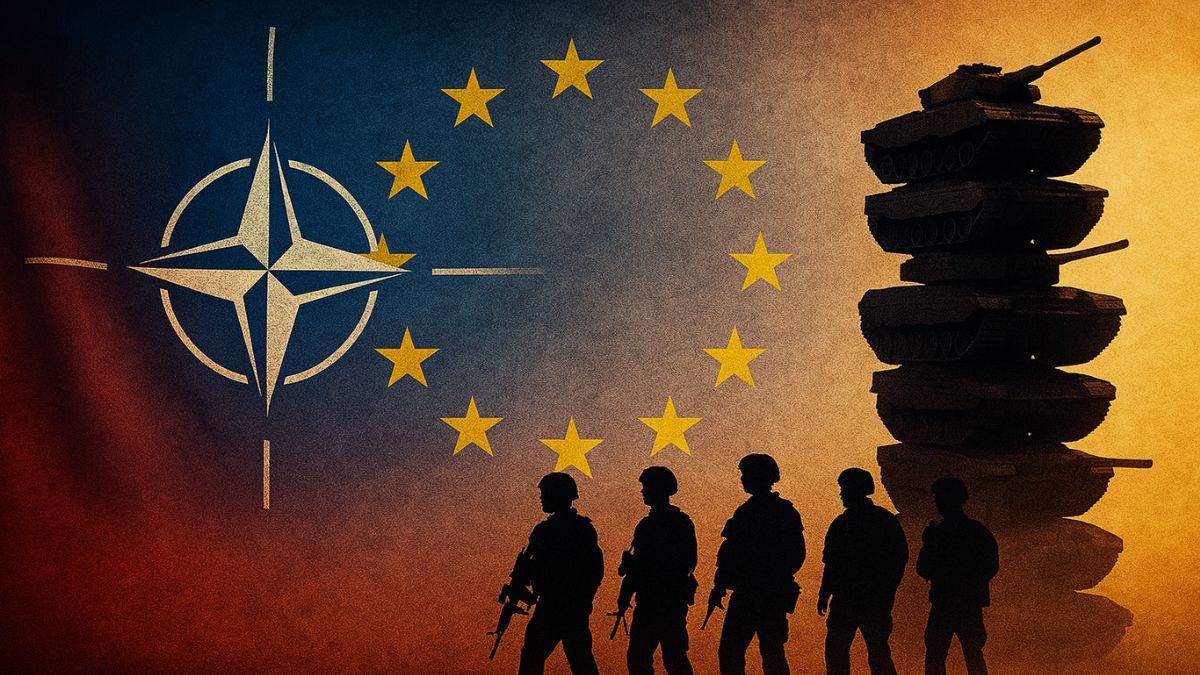
A growing push from Washington has opened a difficult discussion inside NATO, as European capitals weigh the implications of assuming far greater defence responsibilities by 2027.Image courtesy: AI generated image via DALL-E

The United States has privately urged European allies to assume the bulk of NATO’s conventional defence responsibilities by 2027, a dramatic shift that many European officials view as unrealistic given current capability gaps and production bottlenecks.
The message, delivered during high-level discussions in Washington this week, underscores growing pressure from the Trump administration for Europe to take far greater responsibility for its own security as the war in Ukraine stretches into its fourth year.
What did the US tell Europe about NATO?
According to multiple diplomatic sources familiar with the talks, Pentagon officials told visiting European delegations that Washington expects Europe to take over most NATO conventional defence functions — from intelligence and surveillance to missile systems and troop deployments — within just three years.
If Europe falls short, US officials reportedly warned that Washington may scale back participation in certain NATO coordination mechanisms, a move that could reshape the alliance’s operational structure.
How is the US stance on NATO significant?
The proposal marks one of the most significant potential shifts in NATO burden-sharing since the alliance’s founding in 1949.
While European nations have accelerated defence spending since Russia’s full-scale invasion of Ukraine in 2022, Pentagon officials signaled that progress has not been sufficient.
Some US lawmakers have also expressed concern about the pressure campaign, fearing it could fracture transatlantic unity at a critical moment.
How did Europe respond to US pressure on NATO?
European officials, speaking anonymously, said the 2027 target is not viable. Even with record defence budgets and strengthened political will, the continent lacks the industrial capacity to quickly replace advanced US capabilities.
Many key systems, from air defence platforms to precision munitions, face long production queues, while high-end US intelligence and reconnaissance assets cannot be replicated with short-term investment.
What are Europe’s difficulties with NATO operations?
Europe is also still grappling with chronic shortages in drones, cyber warfare tools, command-and-control networks, and missile stockpiles.
The European Union has set its own goal of making the continent capable of defending itself by 2030, but internal assessments suggest even that timeline is highly ambitious.
Has the Pentagon confirmed the NATO deadline?
The Pentagon has not publicly confirmed the 2027 deadline, and it remains unclear whether it reflects a formal Trump administration policy or the position of senior defence officials.
Washington itself is divided over the future US role in NATO: while some in the administration favor a reduced footprint focused on competition with China, others warn that weakening NATO risks emboldening Russia at a dangerous time.
What was NATO’s response to the developments?
NATO, responding cautiously, said only that European allies are “taking more responsibility” and have recognised the need to shift more of the conventional defence burden away from the United States.
Pentagon press secretary Kingsley Wilson reiterated that Washington expects Europe to “lead in the conventional defence of Europe,” stressing that the US remains committed to working through NATO mechanisms to strengthen the alliance.
How has Europe increased NATO spending?
Europe has already pledged significant increases in military spending, and at the 2025 NATO Summit, allies agreed, under strong US pressure, to raise the alliance’s defence-spending target to 5% of GDP.
Yet despite this political momentum, many European leaders worry that Washington’s accelerated timelines could destabilise the alliance and weaken deterrence against Moscow.
How has the US pushed Europe on NATO?
US Deputy Secretary of State Christopher Landau, addressing NATO foreign ministers this week, said it was “obvious” that Europe should take primary responsibility for its defence, adding that while previous administrations had made similar appeals, the current one “means what it says.”
As Washington and European capitals digest the implications of the 2027 benchmark, the debate over NATO’s future and burden-sharing is set to intensify, just as the war in Ukraine continues to test the alliance’s resolve and resources.