
US Submarine Sinks Iranian Frigate off Sri Lanka, Brings the West Asian Conflict to South Asia and Beyond
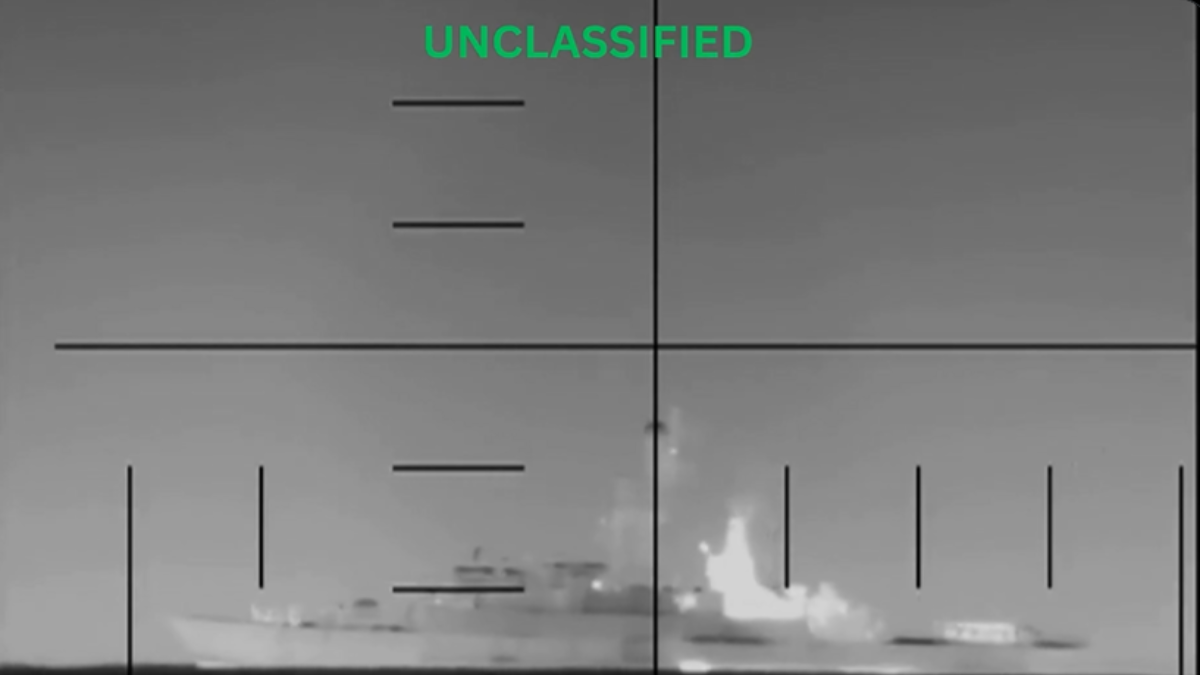
US Sub Sinks Iranian Frigate Near Sri Lanka. Image courtesy: X/ @DeptofWar

An Iranian frigate traversing through the Indian Ocean in international waters was sunk by a US submarine in a torpedo attack off southern Sri Lanka, reports on Wednesday (March 4, 2026) said, in indication of the West Asia conflict expanding closer to South Asian nations, putting a major strain on the Indian government led by Narendra Modi.
The Iranian warship, IRIS Dena, was on its voyage from India’s Visakhapatnam after participating in the International Fleet Review and the Milan maritime exercises in the Bay of Bengal held in the middle of February 2026, when the US submarine attacked it, a first since World War II that the Americans sank an enemy warship using torpedoes.
The attack on the frigate left almost 80 Iranian sailors dead, and many more missing, while the Sri Lankan Navy sent its warships to rescue approximately 30 sailors in distress. There were 180 Iranian sailors on board the ill-fated frigate, the reports suggested.
The rescued sailors were taken to the Karapitiya Hospital in Galle port for medical attention, even as rescue operations continued through the day, including an aerial survey of the area for survivors. The Sri Lankan aid to the Iranian sailors was part of the duties for Search and Rescue mandated under the United Nations Convention on the Law of the Seas (UNCLOS).
The US submarine attack on the Iranian frigates is the closest that the West Asia war has come close to India, which has taken a neutral stand in the US-Israel and Iran military conflict that unfolded with the US-Israel aerial strikes on Iran, including hit on Tehran, one of which killed the Iranian Supreme Leader Ayatollah Ali Khamenei on Saturday (February 28, 2026).
Since the Saturday (February 28) US-Israel strikes, Iran has retaliated with missiles and drones fired at US and Israeli military assets all over the West Asian region, including in the US, Bahrain, Qatar, Saudi Arabia and other nations, leading to several casualties, including civilian lives.
The US submarine attack on IRIS Dena came as a surprise, as nobody in the South Asian region expected the West Asian conflict spill over closer home. The attack also indicated that the US military presence in the Indian Ocean region and the alert status of the American naval fleet in the region, which waited and targeted the Iranian warship, as it voyaged through the Indian Ocean.
The location of the US attack on the Iranian warship came under the direct control of the Fifth Fleet of the US Navy operating 30-plus warships, including carrier strike groups, in the Persian Gulf, Arabian Sea, Red Sea, and the western part of the Indian Ocean, with headquarters in Bahrain.
The US attack on the Iranian warship immediately elicited reactions from Iranian diplomats. The Iranian Ambassador to Sri Lanka, Alireza Delkhoish, sought an explanation from the US for the IRIS Dena sinking off the Sri Lankan coast.
In a CNN-News18 interview, Iran’s Assistant Minister and Director General for South Affairs Mohammad Raza Bahrami argued that the current West Asia conflict was not a sudden, isolated flare-up but an outcome of deeper geopolitical faultlines.
Bahrami charged the US with imposing a war on Iran that Tehran did not initiate. “This is a war that has been imposed upon us,” Bahrami said.
“It must be understood not as a temporary crisis or a bilateral dispute with the United States, but as the intersection of major structural shifts in the international system,” he added.
Bahrami also argued that the great power competition, geopolitical restructuring in West Asia, and the gradual transition from a unipolar to a multi-polar world order were converging into military conflicts, where diplomacy was the casualty. He pointed out that the US-Iran negotiations on the latter’s nuclear programme were progressing well when the US, jointly with Israel, attacked Iran.
“Escalation at such a critical juncture raises serious questions about strategic priorities,” Bahrami noted, adding, “For the second time in ten months, diplomatic processes were interrupted mid-course.” Bahrami reiterated that nuclear weapons “have no place” in Iran’s declared defence doctrine. “Our defence posture is grounded in conventional deterrence and territorial defence,” he said. “Iran has posed no direct threat to US territory or national security.”
Iran also accused the US of fuelling global conflicts to retain its position as the most powerful nation in the world today. Iran’s Supreme Leader’s Special Representative to India, Abdul Majeed Hakeem Ilahi, speaking to ANI, said the US-Israel war on Iran was aimed at preventing India and China from rising as superpowers and maintaining its dominance on the world order.
“In the near future, the world’s most powerful nations will be India, China, Russia, and the United States. However, America does not want any partners; it does not want to see India or China emerge as powerful peers. Consequently, they instigate these wars to prevent this shift and maintain their global dominance,” he told the Indian news agency.
“They (US-Israel) are the ones attacking us and bombing our civilians; we are simply defending ourselves,” he said, adding that since the US was the one to start the war, they should be the ones to end it as well. “Once they do [stop the war], we will stop as well,” said Ilahi.
The US-Israel war on Iran entered the sixth day on Thursday (March 5, 2026), as the West Asian military conflict threatened to engulf the neighbouring regions of South Asia and Northern Africa, even as the Iranian retaliation has antagonised its West Asian neighbours, such as the UAE, Bahrain, Qatar, and Saudi Arabia.