Bilateral Engagements, IOR Maritime Security Discussed In 13th Edition Indian Navy, Sri Lanka Navy Staff Talks
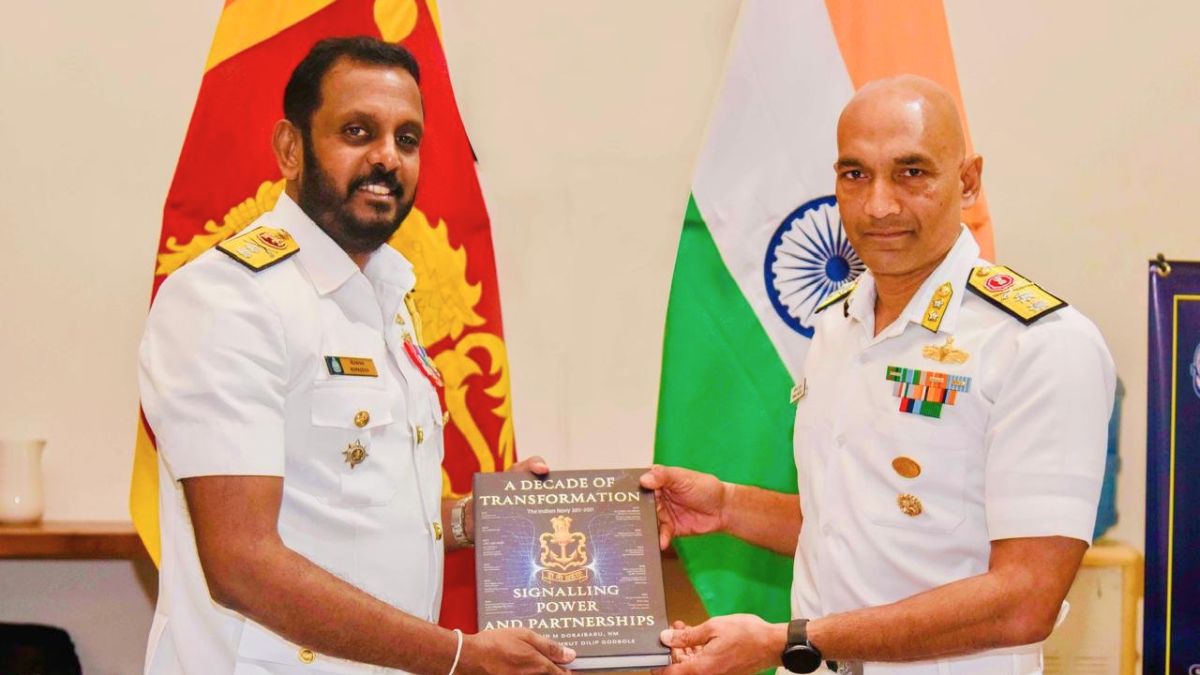
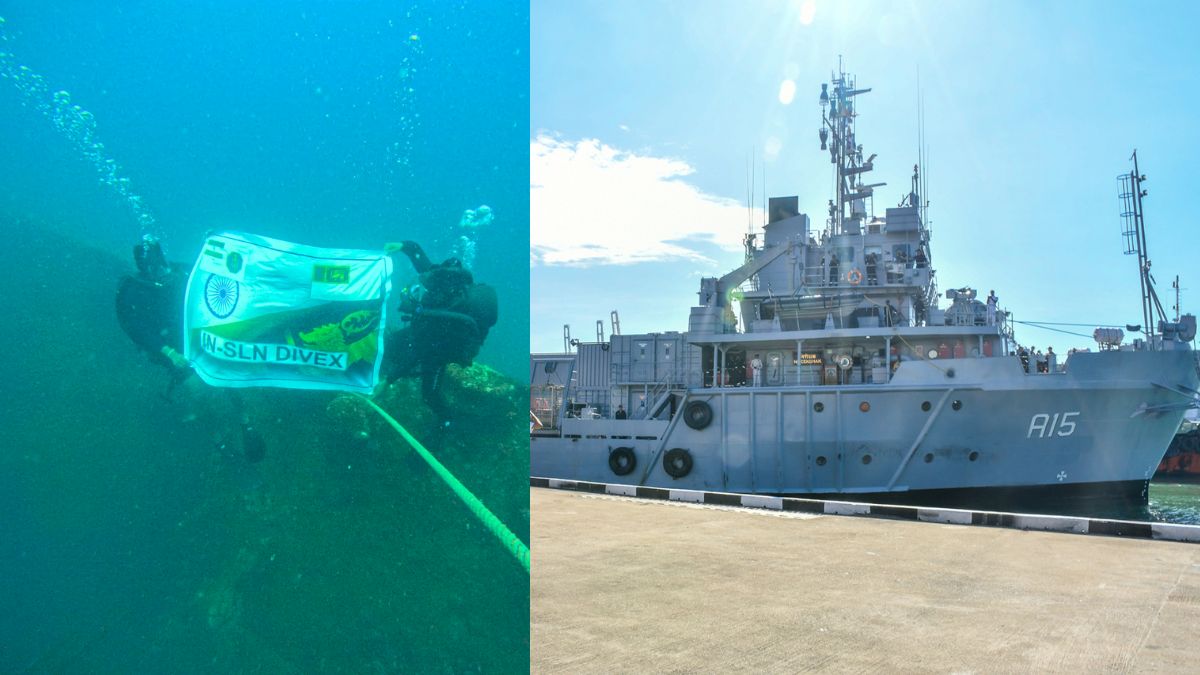
Their talks focused on strengthening strategic ties, expanding joint military training. Image courtesy: X.com/@indiannavy

India and Sri Lanka aren’t just coaster neighbours but also key partners in the Indian Ocean Region (IOR). Both the countries recently concluded the 13th edition of the Indian–Sri Lankan Navy Staff Talks in Colombo, reaffirming their shared commitment to maritime security and stability in the Indian Ocean Region.
Indian Navy on Thursday (January 15, 2026) informed that the discussions focused on strengthening established bilateral engagements, enhancing ongoing cooperation and expanding collaborative pursuits to address emerging maritime challenges. The talks were co-chaired by Rear Admiral Srinivas Maddula, Assistant Chief of Naval Staff (Foreign Cooperation and Intelligence), and Rear Admiral Ruwan Rupasena, Director General Training of the Sri Lankan Navy.
Worth mentioning here is that the latest round of talks comes just a few days after Chief of the Army Staff General Upendra Dwivedi paid a visit to India’s coastal neighbouring, not jusr furthering defence ties but also putting India’s Neighbourhood First Policy into noticeable action.
Why talks matter in the Indian Ocean Region
The staff talks come at a time when the Indian Ocean has emerged as a critical geopolitical and economic artery, witnessing increased naval activity, non-traditional security threats, and strategic competition. India and Sri Lanka, neighbours linked by geography and shared security concerns, view close naval coordination as essential to safeguarding sea lanes, countering illegal activities, and ensuring regional stability.
The Ministry of External Affairs has consistently underlined that defence cooperation with Sri Lanka spans training, joint exercises, supply of military equipment, high-level visits, and regular goodwill deployments by Indian Navy and Coast Guard ships.
India-Sri Lanka expanding defence engagements beyond Navies
Latest naval talks between the two countries are part of a broader intensification of India–Sri Lanka defence engagement. On January 8, 2026, COAS General Dwivedi visited Sri Lanka and held high-level discussions with Sri Lanka’s Dy Defence Minister Maj Gen Aruna Jayasekara (Retd) and Secretary of Defence Air Vice Marshal Sampath Thuyacontha (Retd).
The meetings focused on advancing military-to-military ties, expanding joint training, and assessing the evolving geostrategic environment in the region. Both sides reaffirmed their shared commitment to regional peace and stability, with particular emphasis on humanitarian assistance and disaster relief (HADR) cooperation.
Army-to-Army talks and interoperability push
General Dwivedi’s visit followed the India–Sri Lanka Army-to-Army Staff Talks held earlier at the Headquarters Integrated Defence Staff in New Delhi. These discussions centred on enhancing interoperability between the two armies, strengthening defence ties, and deepening the overall defence partnership to address shared security challenges.
Both nations agreed to sustain momentum through regular engagements, training exchanges and coordinated responses to regional contingencies.
As part of his official visit, General Dwivedi laid a wreath at the Indian Peace Keeping Force (IPKF) Memorial in Colombo, paying tribute to Indian soldiers who laid down their lives during Operation Pawan. The gesture underscored the deep historical and emotional bonds that continue to shape defence ties between the two countries.
India’s HADR role in Sri Lanka following Cyclone Ditwah
Following Cyclone Ditwah, India extended swift humanitarian assistance to Sri Lanka, deploying relief material, assets and support to affected areas. This reflected the expanding defence and naval cooperation showcasing India’s role as a first responder in the region.
Meanwhile, the conclusion of the 13th Navy Staff Talks, coupled with recent high-level army engagements, signals a comprehensive approach to India–Sri Lanka defence cooperation which spans maritime security, joint training, disaster response and strategic dialogue.