
Indian Navy Revives A Lost Seafaring Legacy As Stitched Ship INSV Kaundinya Sets Sail On Ancient Trade Routes
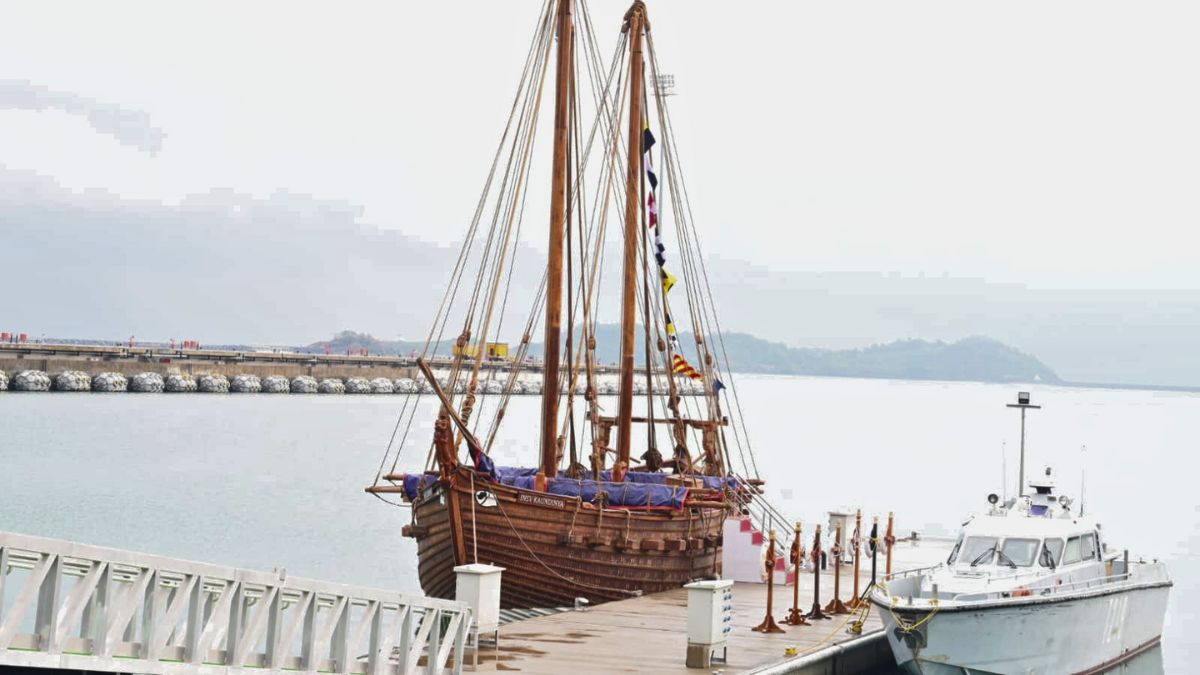
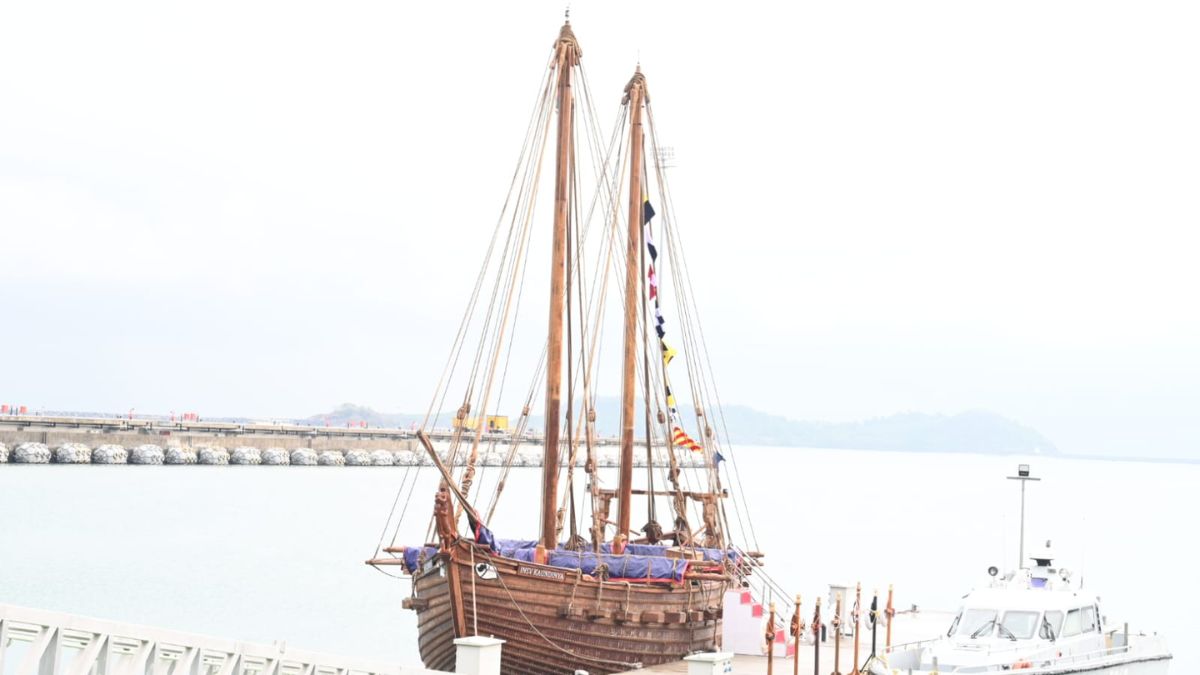
INSV Kaundinya's sails display motifs of the Gandabherunda and the Sun, her bow bears a sculpted Simha Yali. Image courtesy: PIB

The Indian Navy has embarked on a rare voyage into history with the sailing of Indian Naval Sailing Vessel (INSV) Kaundinya, a meticulously recreated stitched ship that reconnects modern India with its ancient maritime past. Sailing from Naval Base Karwar to Porbandar, the vessel is preparing for a landmark ocean passage to Oman, retracing trade routes that once linked the Indian subcontinent with West Asia and Southeast Asia centuries ago.
INSV Kaundinya is not a combat platform but a floating classroom of history. The project reflects the Indian Navy’s effort to revive and showcase India’s indigenous shipbuilding traditions that dominated the Indian Ocean long before the arrival of European naval powers.
Indian Navy had formally inducted and named the Ancient Stitched ship as INSV Kaundinya earlier this year in May at a ceremonial event held at Naval Base, Karwar. INSV Kaundinya is a stitched sail ship based on a 5th century CE ship depicted in the paintings of Ajanta Caves.

Why is the Navy sailing a ‘stitched ship’ in the 21st century?
By undertaking an operational sea voyage, the Navy aims to demonstrate the seaworthiness, navigational knowledge and maritime confidence of ancient Indian sailors. The initiative also underlines India’s civilisational links with the wider Indian Ocean Region, reinforcing cultural diplomacy alongside naval outreach.
The vessel is modelled on a fifth-century ship depicted in the Ajanta cave paintings and built entirely using the traditional stitched-ship technique. Unlike modern ships that rely on metal fasteners, Kaundinya has been assembled using coconut fibre stitching, wooden joinery, coir ropes and natural resins.
It is powered by cotton sails, replicating the technology available to ancient mariners. Constructed by traditional shipwrights and artisans from Kerala, the vessel blends archaeological research with living craftsmanship.
Why is INSV Kaundinya’s voyage to Oman historically significant?
From Porbandar, INSV Kaundinya will sail to Oman on December 29, following maritime routes that once formed the backbone of trade between India, Arabia and East Africa, an official told The Indian Express. These routes carried spices, textiles and ideas, shaping economic and cultural exchanges across the Indian Ocean.
The voyage serves as a reminder that India was not merely a coastal civilisation but a confident maritime power with deep overseas connections long before the age of gunpowder navies.
INSV Kaundinya was inducted into the Indian Navy in May 2025 and underwent extensive sea trials at Karwar before being cleared for its long-distance voyage.
How has the Navy prepared for this unconventional mission?
A 16-member Indian Navy crew has undergone specialised training to operate the ancient-style vessel. Harbour training included sail handling, rigging, carpentry and maintenance under the guidance of traditional artisans, ensuring the crew could adapt to techniques vastly different from those used on modern warships.
According to officials, the ship is expected to reach Porbandar within 8–10 days before commencing its international leg to Oman.
What do the symbols on INSV Kaundinya represent?
Every element of the ship carries historical meaning. The sails feature the Gandabherunda, the two-headed eagle that was the royal insignia of the Kadamba dynasty which once ruled the Konkan coast, along with motifs of the Sun. The bow bears a Simha Yali, a mythical guardian figure, while a Harappan-style stone anchor adorns the deck, symbolising continuity across millennia of Indian seafaring.
The ship is named after Kaundinya, a legendary Indian mariner believed to have sailed across the Indian Ocean to Southeast Asia nearly 2,000 years ago.
Who was Kaundinya and why does his story matter today?
Legend holds that Kaundinya, an Indian merchant, once sailed along the Mekong Delta when his vessel was attacked by pirates and forced ashore. There, he encountered Queen Soma of a local Naga clan. Their union led to the founding of the ancient kingdom of Funan, one of Southeast Asia’s earliest civilisations.
By naming the vessel after Kaundinya, the Indian Navy highlights India’s long-standing cultural and maritime influence across Asia, long before modern nation-states emerged.
Why did stitched ships disappear from naval history?
Despite their flexibility and durability at sea, stitched ships gradually fell out of favour after European colonisation of the Indian Ocean. The decisive factor was the advent of naval artillery. Stitched hulls could not withstand the recoil of cannons fired from onboard, making them unsuitable for gun-based naval warfare.
INSV Kaundinya therefore represents a pre-cannon era of naval power, when trade, navigation and seamanship defined dominance at sea.