The Indian Navy Has Been Busy: The Year Gone By—And What’s Next
Exercise TROPEX

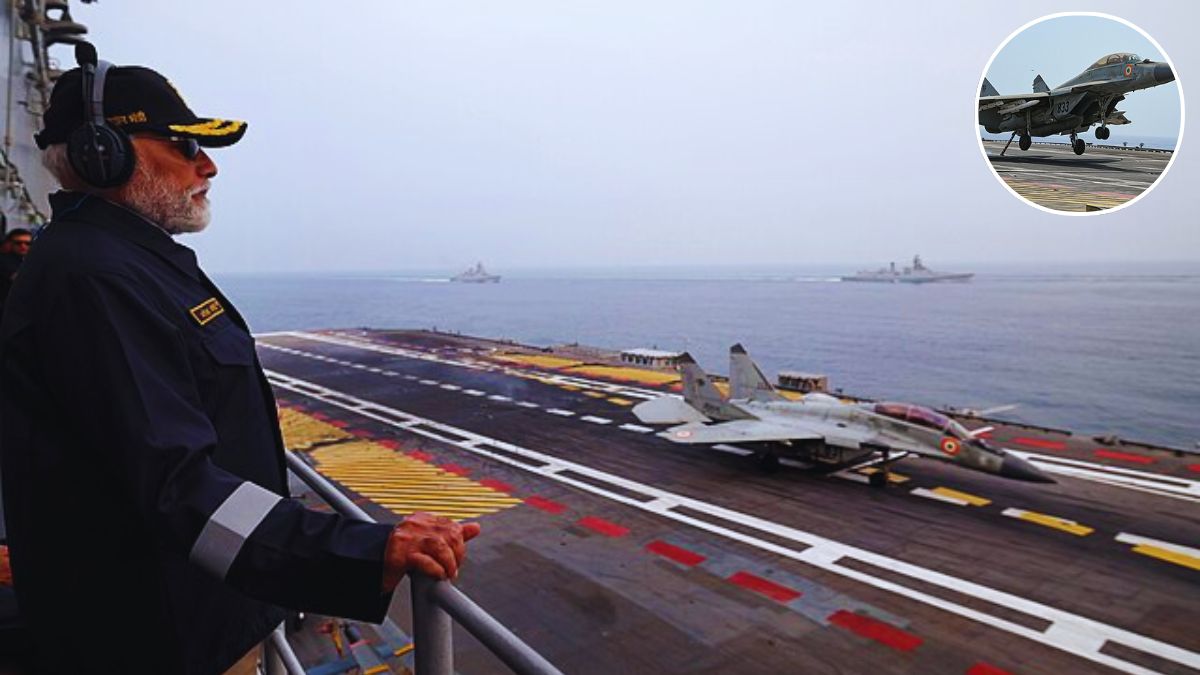
If Operation Sindoor and the deployment of India’s carrier-led armada grabbed headlines this year, that’s understandable. But spend a moment beyond the banner stories and you’ll see the Indian Navy doing much more—quietly, persistently and at scale. Over the last 12 months, the Indian Navy has juggled high-intensity operations, broad diplomacy through exercises, and a steady cadence of shipbuilding and modernisation. That mix of day-to-day constabulary work and long-term capacity building is what sets the tone for 2026.
Operational highlights: keeping the sea lanes open
The Navy continued to press home against maritime crime. On 31 March 2025, INS Tarkash, supported by a P-8I maritime patrol aircraft, intercepted a dhow in the Western Indian Ocean and seized about 2,500 kg of narcotics. That was only the beginning. Constabulary duties remained a steady drumbeat: escorting merchantmen under Operation Sankalp, conducting boardings, anti-piracy patrols and on-call rescues. These tasks may lack glamour compared to carrier operations, but they are essential: they keep trade flowing and raise the economic and strategic cost of maritime lawlessness.
Providing Succour in Distress
One of the year’s major HADR efforts was Operation Brahma, launched after the 7.7-magnitude Myanmar earthquake in March 2025. The Navy deployed multiple ships—including INS Satpura, INS Savitri, INS Karmuk, LCU-52 and INS Gharial—delivering several hundred tonnes of relief material, medical supplies and emergency stores to affected areas. Coordinated with IAF airlifts and Army medical teams, the mission underscored India’s standing as the region’s first responder and the Navy’s ability to move aid at scale and speed. Search-and-rescue (SAR), medical evacuations, and HADR missions were also prominent. Helicopters and ships carried out life-saving winch lifts, including the evacuation of crew from MV Heilan Star. The Navy mounted multi-platform responses to shipboard emergencies as well: naval teams combatted fires aboard MT Yi Cheng 6 in the Gulf of Aden, and responded to container ship incidents involving vessels such as MSC Elsa 3 and MV Wan Hai 503 near the Kerala coast. These missions demonstrated a core truth: the Indian Navy is simultaneously a war fighter and a first responder.
Exercises–Consolidation to Collaboration
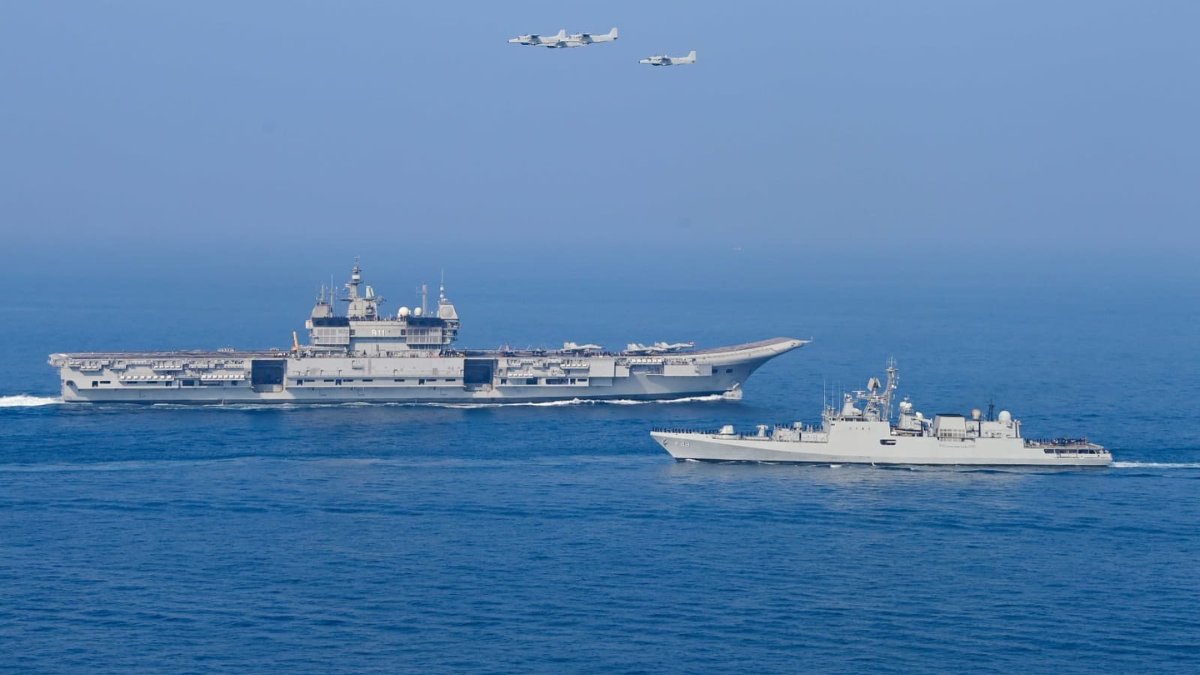
The year began with TROPEX-25, a gruelling warfighting exercise that many now see as a timely preparation for Operation Sindoor. Beyond internal drills, however, the Navy also deepened engagement with external partners, reinforcing interoperability and trust across regions. Exercise KONKAN-25 saw INS Vikrant operate with the UK Carrier Strike Group centred on HMS Prince of Wales, alongside navies from Norway and Japan, showcasing carrier interoperability. Samudra Shakti 2025, conducted with Indonesia, focused on anti-submarine warfare, air defence, boarding drills and maritime surveillance. Forty-four naval personnel from nine friendly nations embarked an Indian naval ship as part of Mission Indian Ocean Ship (IOS) SAGAR, reinforcing India’s commitment to regional maritime security and international cooperation. A landmark moment in the IOS SAGAR journey was the maiden India–Africa multilateral exercise ‘AIKEYME’, named after the Sanskrit word for “Unity”. Malabar, conducted off Guam, brought together the Quad navies for high-end warfighting, while the French-led La Pérouse exercise convened nine navies to secure strategic sea lines of communication. Bilateral exercises during the year included Varuna with France, Bongo Sagar with Bangladesh and JIMEX with Japan, while multilateral platforms featured Sea Dragon, SIMBEX and Malabar. During Pacific Reach 2025 in Singapore, India showcased its submarine-rescue expertise through INS Nistar, reinforcing its regional role in submarine safety operations. At home, apart from TROPEX-25, Exercise Trishul conducted in November 2025 integrated amphibious, cyber and intelligence drills. Jal Prahar honed beach-landing tactics, while Tiger Triumph with the US Navy sharpened tri-service HADR and evacuation planning. Together, these exercises not only built tactical proficiency but also enabled interoperability and cemented India’s image as a reliable maritime partner in the Indo-Pacific.
Building for the Future: New Teeth
The Indian Navy has been an early practitioner of Atmanirbharta. While the stealth frigate INS Tamal, commissioned in Russia, became the last ever ship to be acquired from a foreign shipyard, 2025 saw the Indian Navy double down decisively on indigenous inductions. Among the notable additions were INS Surat, a Visakhapatnam-class destroyer, and INS Nilgiri, INS Himgiri and INS Udaygiri, the first three vessels of the Nilgiri-class stealth frigates. The Navy also inducted INS Vagsheer, the final boat of the Kalvari-class submarine series. In the shallow-water ASW segment, INS Arnala, INS Androth and INS Mahe were inducted as part of a 16-vessel programme. INS Nistar, the first indigenously designed diving support vessel, joined the fleet, along with INS Nirdeshak and INS Ikshak, the second and third ships of the survey ship large category. Warship construction continues to fuel the development of niche technologies within the country, some of which have civilian applications of national consequence. It also generates downstream employment opportunities at scale, reinforcing the broader industrial ecosystem.
Why do the above matter—for India and the region?
Taken together, these developments build strategic heft in tangible ways. The Navy’s constabulary operations ensure safe commerce and deter smuggling. Exercises and port calls reinforce India’s role as a security provider and a dependable partner. HADR missions such as Operation Brahma demonstrate India’s capacity for rapid, large-scale response beyond its borders. Indigenous shipbuilding strengthens the defence industrial base, supporting self-reliance and strategic autonomy.
Final thoughts
The Navy’s story in the preceding paragraphs offers only a glimpse. The year gone by was not defined by headline moments alone, but by real, measured, deepening substance: major drug interdictions, life-saving rescues, multinational interoperability, and a shipbuilding pipeline increasingly rooted in domestic talent and industry. Away from the media glare for much of the year, the Indian Navy remained engaged year-round in operations of national consequence, safeguarding sea lanes that carry the bulk of India’s trade and energy flows.
February 2026’s International Fleet Review and MILAN-26 will provide a stage to display these capabilities, offering a visible affirmation of the MAHASAGAR vision—India as a collaborative, stabilising maritime hub.
With a new warship expected to be inducted roughly every one and a half months in the year ahead, this momentum will continue, fuelling the economy as naval muscle is steadily built.
Through anti-piracy patrols, maritime security missions, coastal surveillance and rapid crisis response, the Indian Navy ensures uninterrupted commerce and protects offshore assets. Its deterrence posture, multinational exercises and HADR deployments stabilise the wider Indo-Pacific, reducing risks to markets and supply chains. In doing so, the Navy directly underwrites India’s economic growth and regional credibility. Modern maritime power is a long game—equal parts ships, sailors, doctrine and diplomacy—and India’s Navy has been playing it with passion and precision.