


How China Pushes Its Domestic Narrative Into International Forums
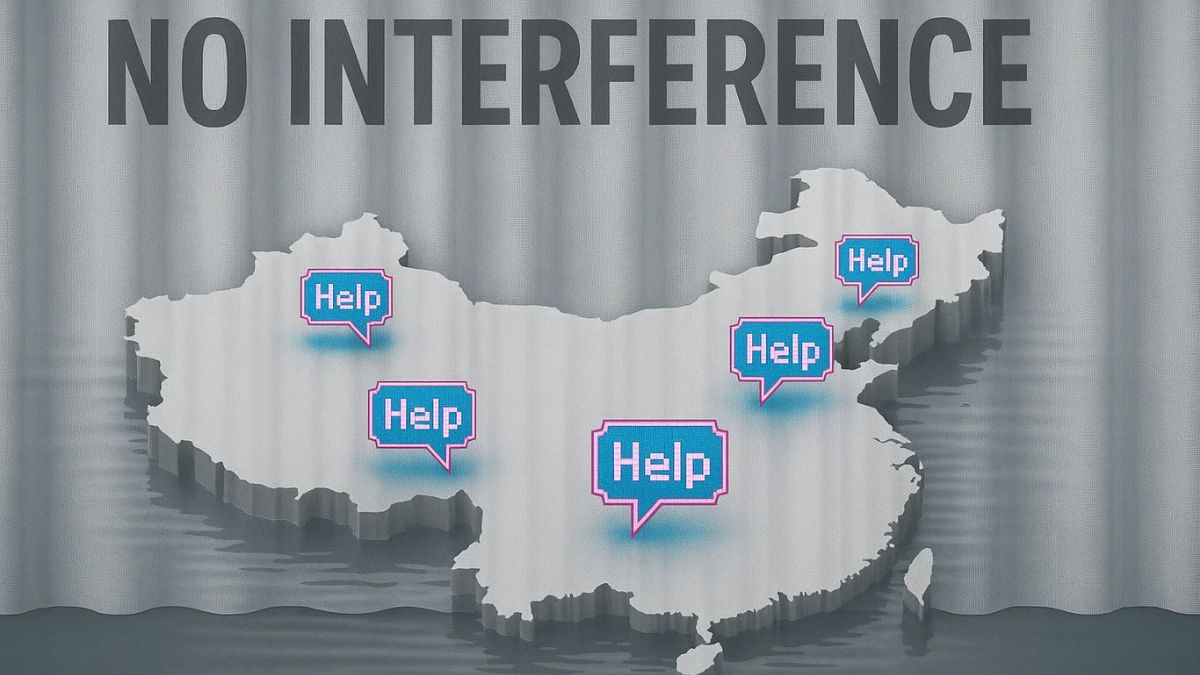
China has made several attempts to hide cries for help from repressed people at home behind arguments of sovereignty and no interference. Image courtesy: AI-generated picture via Sora

China’s management of civic expression does not end at its borders. The same principles that guide crackdowns in cities such as Shanghai — rapid control, strict narrative discipline and minimal transparency — shape Beijing’s conduct in multilateral organisations. Whether in the United Nations (UN) Human Rights Council or other global forums, China works actively to ensure that discussions of internal repression remain contained.
Shanghai’s tightly managed response to public gatherings offers insight into the broader communication strategy. Domestic incidents are neutralised quickly, leaving little material for global scrutiny. This absence of visible evidence then becomes a tool in Beijing’s diplomatic engagements, allowing it to challenge criticism and promote its preferred narratives.
How does China translate domestic control into diplomatic strategy?
China’s position in international forums reflects its internal emphasis on stability. When civic expression in cities such as Shanghai vanishes from the public record within minutes, Beijing can argue that no significant unrest exists. This portrayal of domestic calm forms the basis of its diplomatic approach, presenting China as a “stable” society unfairly targeted by external critics.
In the UN Human Rights Council, China frequently emphasises sovereignty and development, discouraging discussions that reference civic suppression. State-linked organisations participate in sessions to counter independent testimony. They challenge reports that document censorship, surveillance or detentions, often framing such accounts as inaccurate or politically motivated.
This coordinated strategy mirrors the domestic model: control the information environment, then shape the narrative built around it.
What mechanisms does China use to influence global perception?
China employs several mechanisms to limit scrutiny. The first is narrative reframing. Terms such as “public disturbance”, “extremism” or “security risks” are used to describe incidents that, in practice, involve peaceful civic expression. This language is then echoed in its multilateral statements.
The second mechanism involves participation through government-organised non-governmental organisations (GONGOs). These groups hold consultative status at the UN, enabling them to speak in discussions and dilute criticism from independent organisations. Their interventions question the legitimacy of concerns raised about censorship or repression.
Finally, China leverages economic partnerships. Countries with significant trade or infrastructure ties may be reluctant to support resolutions critical of Beijing’s domestic policies. This creates a diplomatic environment where scrutiny is softened and discussions are redirected towards development, cooperation and non-interference.
How does this affect global accountability for civic repression?
China’s approach reduces the visibility of civic suppression in global forums. When incidents in Shanghai or other cities are erased digitally, rights groups struggle to present verifiable evidence. With fewer documented cases, discussions in multilateral bodies become less grounded, making it easier for China to deny or downplay concerns.
This dynamic also shapes broader international expectations. Governments that wish to question Beijing’s domestic practices must navigate diplomatic sensitivities and economic interests. As a result, global accountability becomes uneven, depending heavily on the willingness of individual states to raise issues related to civic space.
Shanghai’s example shows that domestic and diplomatic strategies are intertwined. By controlling information at home, China strengthens its ability to control the conversation abroad.