


China Plays Catch-Up With US In Reusable Rocket Race But It’s Falcon 9 Rival Zhuque-3 Fails Recovery
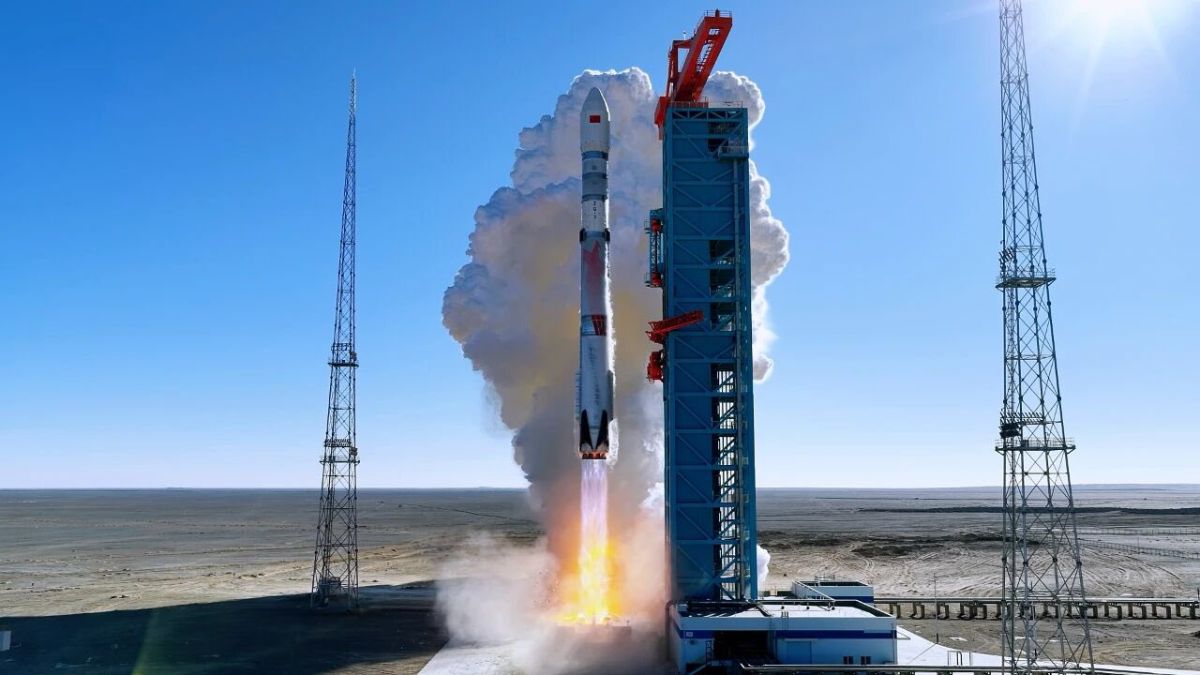
China claims the Zhuque-3’s performance on paper beats SpaceX’s Falcon 9 on several metrics. Even Elon Musk acknowledged the design advances. Image courtesy: X.com/@LandSpace_Tech

Asian dragon China wanted to master a technology that only the United States (US) has been able to do so as of now. While India too is working on this, China had its eyes set on launching its first-ever resuable rocket, however, its dreams were shattered as the Zhuque-3 in the historic attempt.
Beijing-based commercial space company LandSpace on Wednesday (December 3, 2025) launched the country’s first reusable rocket Zhuque-3, from the Jiuquan Satellite Launch Centre. While it successfully reached orbit, it crashed near the planned recovery site. The attempt was aimed at catching up with American rivals like SpaceX.
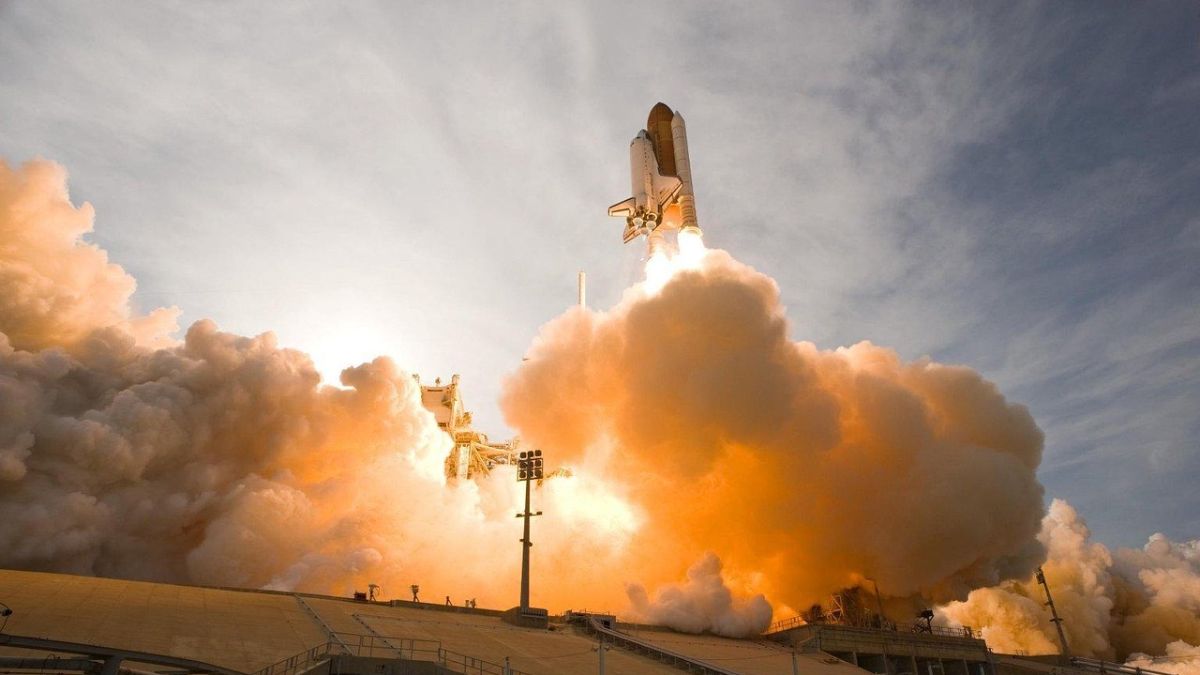
So far, world’s richest person Elon Musk’s SpaceX is the only firm that has managed to land and fly again the main stage of an orbital rocket. Its Falcon 9 rocket has landed more than 500 times and the company has launched previously flown boosters more than 450 times. SpaceX describes Falcon 9 as a reusable, two-stage rocket for the reliable and safe transport of people and payloads into Earth orbit and beyond.
Reusable rockets: What went wrong with China’s attempt?
China’s push toward reusable launch technology took a major step forward on Wednesday as LandSpace’s Zhuque-3, the country’s first fully reusable rocket, successfully reached orbit on its maiden flight. But the high-stakes mission ended with a setback: the booster failed to land safely and crashed near its designated recovery pad.

China’s attempt positions it firmly in the global race to challenge US dominance in low-cost, rapid-turnaround space launch capability. Despite the failed recovery, Beijing hailed the mission as a major technical milestone that validated the rocket’s launch, separation, and orbital systems.
Launched from the Jiuquan Satellite Launch Centre in northwestern China, the 66-meter-tall Zhuque-3 performed as expected until the final and most critical phase: the powered descent of its reusable first stage. LandSpace said the booster “experienced an anomaly” and failed to achieve a controlled touchdown.
The rocket’s stainless-steel stage, powered by nine Tianque-12A methane-oxygen engines, crashed on the edge of the recovery pad after appearing to catch fire mid-air. The cause of the failure is now under investigation. Chinese state media insisted that the mission still proved the “correctness and rationality” of the rocket’s full flight plan.

What is China trying to achieve with reusable rockets?
Beijing’s objective is clear that it aims to dramatically reduce launch costs, scale up flight frequency, and build its own massive internet satellite constellations to rival SpaceX’s Starlink.
The Zhuque-3, capable of carrying 18 tonnes to low-Earth orbit in reusable mode, forms the backbone of this ambition. The rocket is designed for at least 20 reuses, a standard pioneered by SpaceX’s Falcon 9 fleet.
Notably, China is planning multiple megaconstellations, including the government-backed Guowang and Shanghai-funded Qianfan systems, each expected to deploy up to 10,000 satellites for global communications dominance. Reusable rockets are essential to making such projects economically viable.
How does China’s Zhuque-3 compare to SpaceX’s rockets?
China claims the Zhuque-3’s performance on paper beats SpaceX’s Falcon 9 on several metrics. Even Elon Musk acknowledged the design advances, though he noted that SpaceX’s next-generation Starship remains “in another league.” In October 2025, he shared that Zhuque-3 had surpassed the Falcon 9 on multiple key metrics.
However, SpaceX’s decisive advantage is its near-decade of practical experience in recovering orbital boosters, a feat China has yet to replicate.
What’s next in China’s reusable rocket race?
Zhuque-3 is just one piece of a broader national sprint toward reusable launch capability. Upcoming Chinese reusable rockets include:
Space Pioneer’s Tianlong-3: Private-sector competitor, preparing for launch
Long March 12A: State-owned, methane-powered reusable variant gearing up for a launch this month
Long March 12: Existing kerosene-based launcher for internet satellites, however, has now been upgraded to run on methane
China’s Zhuque-3 reusable rocket: Why this launch matters?
It is no secret that China sees space as a field of strategic competition, and so wants to send as many satellites as possible, to create a space network as big as its own size on Earth. Reusable rockets directly influence military satellite deployment rates, global internet infrastructure control, China’s ability to match US space launch dominance, among other things.
Moreover, reusable rockets are viewed as a significant development as they can significantly lower the cost and turn-around time of rocket launches. This would only benefit nations in the longer run as global giants race to build out satellite networks and eye a future space travel industry.
They also provide a strategic advantage for a country as space increasingly becomes a domain linked to military power and defense capabilities on Earth.
And with more Chinese reusable rockets lining up for first flights, this competition is only accelerating.