India-EU Relationship Has Most Room To Grow: EAM Jaishankar At First India-Weimar Format Meeting
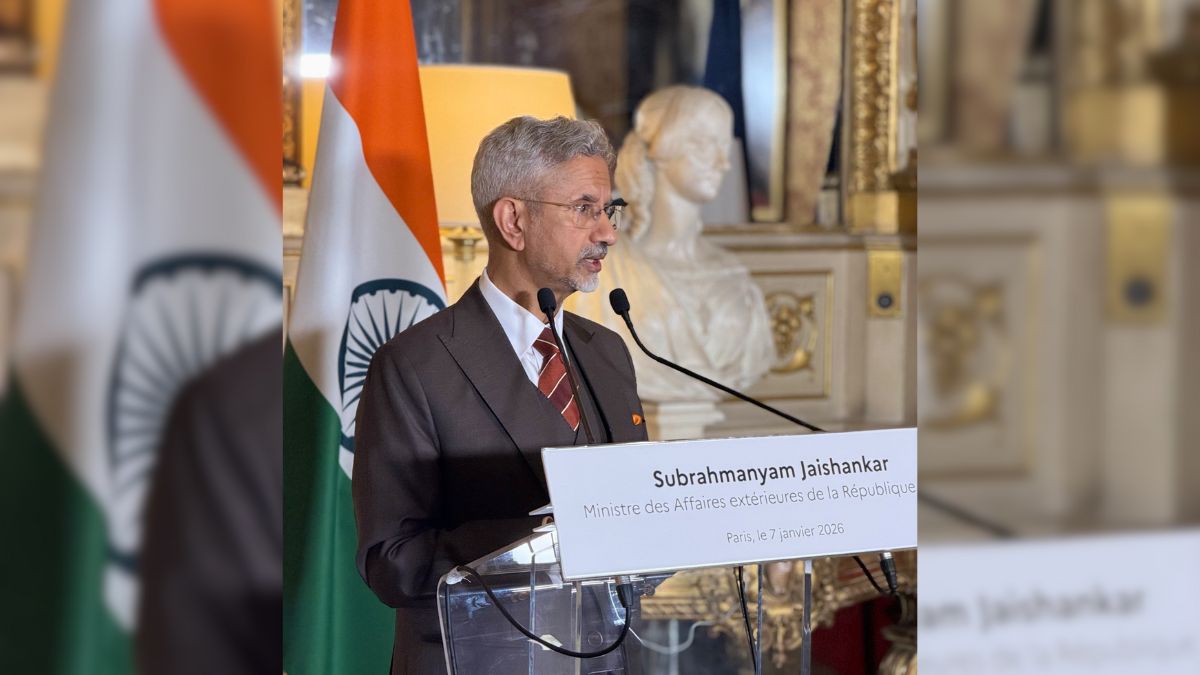
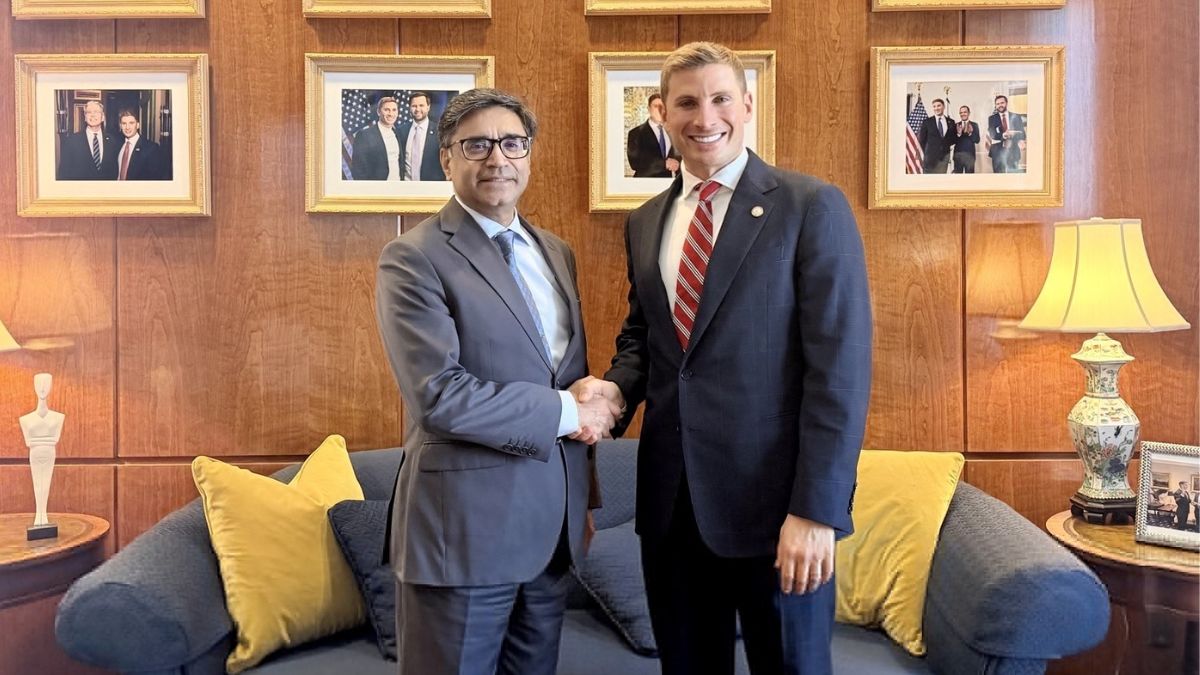
EAM Jaishankar said India–Europe ties hold the “greatest unrealised potential” as New Delhi joined the Weimar Triangle. Image courtesy: X.com/@DrSJaishankar

As global geopolitics enter a phase of heightened uncertainty, India is stepping up its diplomatic engagement with Europe, positioning the partnership as a key pillar for stability in the international economy and world politics. External Affairs Minister S Jaishankar, currently on a high-level visit to France and Luxembourg, underlined this strategic recalibration during talks in Paris on Wednesday (January 7, 2025).
Notably, his strategic visit also comes at a time when India is engaged in negotiations for the long-pending India-EU Free Trade Agreement (FTA) reach what officials describe as a “historic juncture”. Against the backdrop of the same and to further boost ties with the European nations, Jaishankar embarked on a six-day visit to France and Luxembourg.
Speaking after discussions with French Foreign Minister Jean-Noël Barrot, Jaishankar said India’s engagement with Europe was a “very conscious choice”, reflecting New Delhi’s belief that ties with the continent are poised to grow to the next level.
India-Europe ties: Jaishankar explains why they matter
EAM Jaishankar’s remarks come amid rising global unease following the US military operation in Venezuela, strained India–US trade ties after Washington imposed a 50% tariff on Indian goods, broader debates over the future of the global order.
“Europe is such an important player in global politics. It is necessary that India strengthens its relationship with it,” Jaishankar said, adding that India and Europe together can inject greater stability into both global politics and the international economy. He noted that India-Europe ties have the most room to grow today.
Jaishankar met his French, German and Polish counterparts for the India-Weimar Triangle meeting in Paris, where he highlighted why he chose Europe to kick-start the year. The EAM is of the view that the two sides could bring stability to the international economy and global politics. “Why did I come to Europe? It was a choice which reflected our belief that this relationship with Europe is really poised to grow, grow to the next level,” he said.
What are the key areas of cooperation with Europe?
Jaishankar pointed to an increasingly substantive India–Europe agenda, noting that in recent weeks New Delhi has held internal deliberations on the long-pending India–EU Free Trade Agreement (FTA); technology and semiconductors; railways, defence and aviation; along with strategic industrial and supply-chain cooperation.
“These are not abstract conversations. There is much more that can be done,” the EAM said, highlighting the depth and potential of the partnership.
How central is France to India’s European strategy?
France remains a cornerstone of India’s Europe outreach. Jaishankar described Paris as India’s oldest strategic partner in Europe, stressing that sustained dialogue is vital to nurturing the relationship. The EAM and Barrot focused on preparing the ground for French President Emmanuel Macron’s visit to India next month, where he is expected to participate in the AI Summit.
“India and France working together has become important to stabilise global politics,” Jaishankar said, situating the bilateral relationship within a wider global context.
Jaishankar referred to what he called a phase of “considerable global uncertainty”, arguing that strategic partners must consult closely. He noted that India is chairing BRICS this year; France is leading the G7. Both countries are active members of the G20. “As two nations committed to multipolarity, working together is important not just for ourselves, but for stabilising global politics,” he underlined.
What’s next in India–Europe engagement?
The visit to France and Luxembourg is part of a broader surge in high-level Europe–India diplomacy. Jaishankar confirmed that in the coming weeks India will host German Chancellor Friedrich Merz, French President Macron, and other senior leaders from the European Union.
These back-to-back engagements signal India’s determination to anchor Europe more firmly in its foreign policy calculus, especially as negotiations on trade, technology and global governance gather pace.
As Jaishankar put it, strengthening India–Europe ties is not just about bilateral gains, but about shaping a more stable and balanced global future.