

No Forgiveness This Time: Rajnath Singh Warns Of Stronger Retaliation If Pakistan Persists, Says Op Sindoor Is On
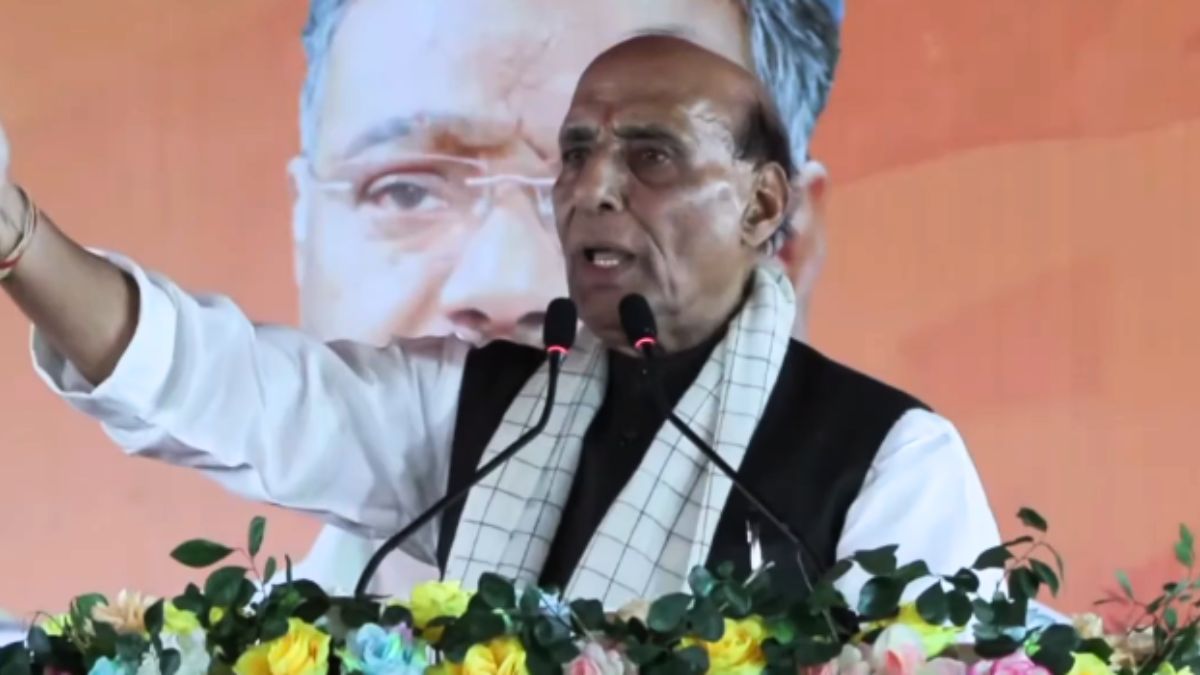
If Pakistan does not stop its actions, then today, as Defence Minister, I want to say again, this time we will give such a response, such a response that the world will be stunned, Rajnath Singh said. Image courtesy: AI-generated picture via Sora

While it has often be said that Operation Sindoor is not over and that Pakistan will face even grave consequences if it attempts any misadventure this time, Defence Minister Rajnath Singh has once again issued a stern warning to Islamabad. He has declared that Operation Sindoor is still on.
Just a few days after Western Command GOC Rajesh Pushkar stated that Operation Sindoor 2.0 was ongoing, and it would be harsher and strong this time, Singh has echoed a similar view on India’s cross-border military response to the April 2025 Pahalgam terror attack.
Saying Operation Sindoor is still ongoing, Defence Minister has warned Islamabad of “a response that will stun the world” if it fails to rein in anti-India terror networks. Speaking at the ‘Parivartan Yatra’ rally, Singh underscored that India’s retaliation against Pakistan-based terror infrastructure was not a one-off strike but part of a sustained security posture.
Why did Rajnath Singh say Operation Sindoor is still on?
Recalling the April 2025 Pahalgam terror attack that killed 26 civilians, Singh said the Indian government had taken a decisive call at the highest level to respond militarily. “Some Pakistani terrorists came to India and killed innocent civilians in Pahalgam. After that, the Prime Minister called a meeting, and it was decided that we would take revenge,” Singh said.
He noted that Indian armed forces carried out precision strikes not on Indian soil but “on the other side of the border,” targeting terror infrastructure in Pakistan and Pakistan-occupied Kashmir (PoK).
“That operation was called Operation Sindoor. Operation Sindoor has not stopped yet,” he asserted.
What did Operation Sindoor target?
Following the Pahalgam attack, Indian forces launched calibrated cross-border strikes on nine major terror launchpads linked to Lashkar-e-Taiba (LeT), Jaish-e-Mohammed (JeM), Hizbul Mujahideen. Defence sources had described the strikes as “precise and intelligence-led,” aimed at degrading operational capabilities without escalating into full-scale conventional conflict.
Singh said the operation “successfully eliminated a large number of people,” referring to militants operating from launchpads across the Line of Control (LoC).
What is the warning to Pakistan now?
Singh issued a direct message to Islamabad, “If Pakistan does not stop its actions… this time we will give such a response that the world will be stunned. This time, there will be no forgiveness under any circumstances.”
The language reflects a hardened deterrence doctrine, indicating that future provocations could invite deeper or broader military action. Strategically, the remarks reinforce India’s post-2016 and post-2019 template of cross-border punitive strikes in response to major terror attacks.
Defence Minister Singh’s remarks come amid heightened global instability, including escalating hostilities in West Asia following US-Israel strikes on Iran and Tehran’s retaliation across the Gulf. Drawing a contrast, Singh positioned India as a “champion of peace” despite maintaining military readiness.
He cited India’s evacuation efforts during the Russia-Ukraine war, noting that diplomatic engagement secured a temporary ceasefire window to evacuate Indian nationals. While highlighting India’s peace-first diplomacy, Singh made clear that counter-terror operations remain uncompromising.