
China Commissions Fujian Aircraft Carrier: A Milestone In Its Naval Power Ambitions
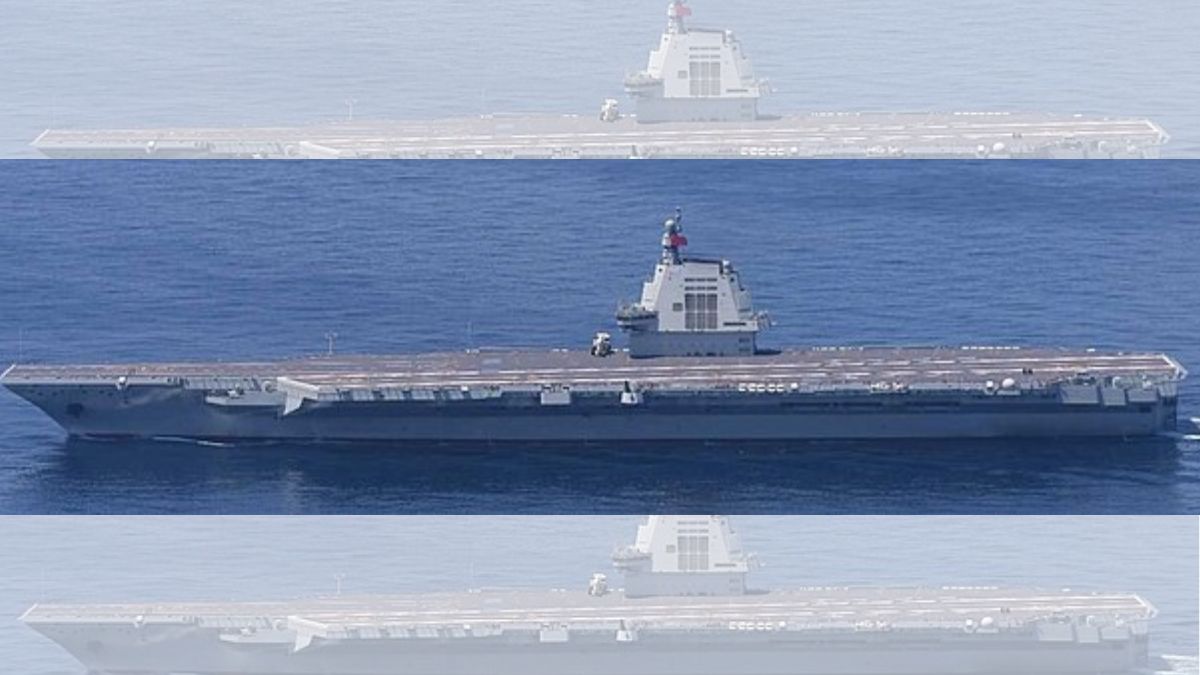
China has officially commissioned the Fujian, its third aircraft carrier. Image courtesy: Wikimedia Commons

China has officially commissioned the Fujian, its third aircraft carrier and the first to be both designed and built entirely at home, a landmark moment in Beijing’s quest to build a blue-water navy that can rival the United States.
The commissioning ceremony, personally overseen by President Xi Jinping at Hainan, underscored the political and strategic weight of the project in China’s long-term military modernisation drive.
Unlike China’s earlier carriers, Liaoning and Shandong, which rely on ski-jump ramps for launching aircraft, the Fujian is equipped with three electromagnetic catapults, a cutting-edge system similar to the US Navy’s Gerald R. Ford-class carriers.
This new system enables faster, heavier, and more frequent aircraft launches, dramatically improving the ship’s combat efficiency. However, unlike the American nuclear-powered carriers, the Fujian uses conventional propulsion, which may limit its operational range and endurance, according to a Financial Times report.
How is China Expanding Its Reach?
The Fujian’s commissioning is part of a broader naval buildup aimed at transforming the People’s Liberation Army Navy (PLAN) into a “world-class” force by 2049, in line with Xi’s vision.
Beijing is already working on a fourth carrier, and Chinese military writings suggest that more will follow. The goal: project power far beyond the “first island chain” — the arc stretching from Japan to the Philippines — and secure China’s growing global economic interests.
What is the Strategic Context of Disputed Waters and Taiwan?
China’s rapid naval modernisation is also driven by its territorial ambitions. Beijing claims sovereignty over Taiwan, vowing to reunify it by force if necessary.
It also asserts control over most of the South China Sea, despite overlapping claims by Southeast Asian nations and rulings against its position under international law.
The US maintains “strategic ambiguity” over Taiwan’s defence, prompting the PLA to train for scenarios that include countering US intervention in a Taiwan conflict.
What are China’s Power and Perception Projections?
While modern anti-ship missiles and drone warfare have made aircraft carriers more vulnerable, Beijing views them as potent symbols of national power.
For China, carriers are not just military assets; they are diplomatic and psychological tools signaling parity with US naval dominance in the Indo-Pacific.
From the refurbished Liaoning in 2012 to the domestically built Shandong in 2019, and now the Fujian, China’s carrier evolution has been remarkably swift.
The PLA Navy has even begun simultaneous carrier operations and has, for the first time, ventured beyond the second island chain, edging closer to key US bases in Guam and Hawaii.
Despite still lagging behind the US Navy in operational experience, China is closing the gap fast. The Fujian’s commissioning cements Beijing’s intent to reshape the Indo-Pacific maritime balance, and challenge Washington’s long-held naval dominance.