
China’s First Bomber Patrol Over South China Sea Deepens Regional Tensions With Philippines, Japan
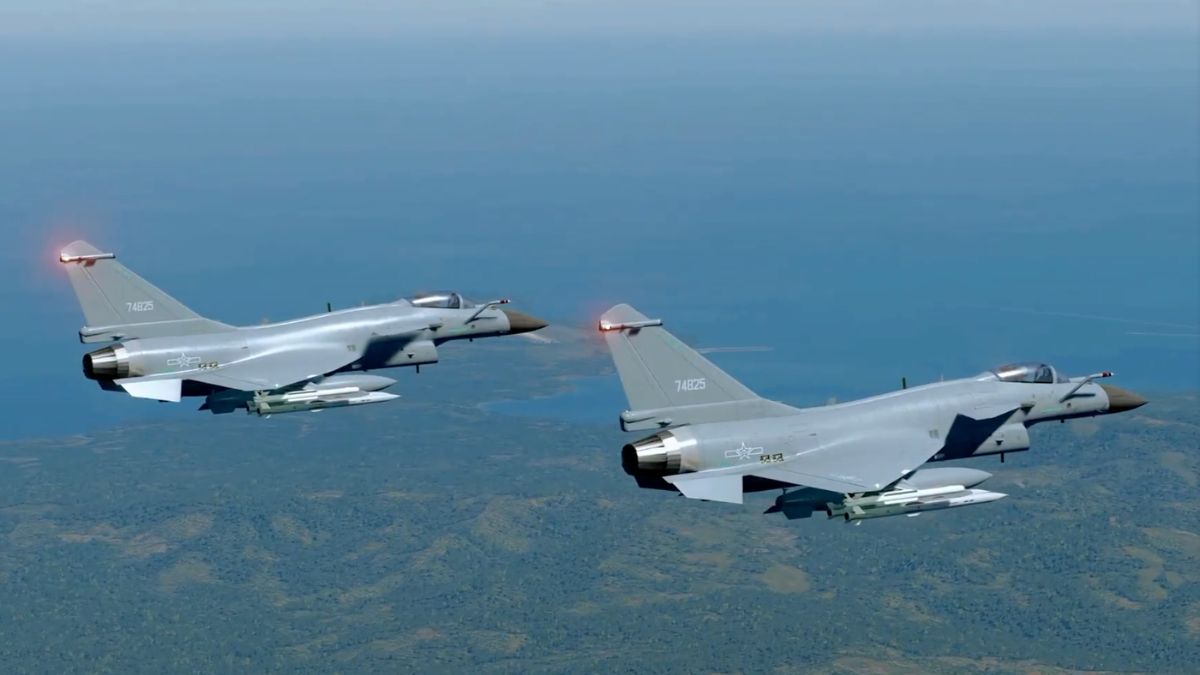
China, already at odds with Japan and US over Taiwan, carried out patrols to send a warning to Philippines. Image courtesy: X.com/@

China’s military has taken a major escalatory step in the South China Sea by deploying a “bomber formation patrol” over contested waters, its first publicly announced mission of this kind.
The operation, carried out on November 16, 2025, was framed bluntly as a warning to the Philippines after Manila completed joint maritime patrols with the United States and Japan.
What is the background to the South China Sea conflict?
The South China Sea has long been one of Asia’s most volatile flashpoints. China claims nearly the entire waterway, putting it at odds with the Philippines, Vietnam, Malaysia, Brunei and Taiwan.
But the latest confrontation reflects a sharper turn: Beijing is now pairing aggressive military activity with increasingly confrontational rhetoric toward its neighbours and US allies.
What did the PLA accuse Manila of?
The PLA’s Southern Theatre Command accused Manila of “colluding with external forces” and destabilising the region—its standard rebuke for countries working with Washington or Tokyo.
Senior Colonel Tian Junli warned the Philippines against “provoking incidents” and vowed that any attempt to “stir up trouble will never succeed.”
Chinese military commentators said bombers were chosen precisely because of their ability to deliver saturation strikes, signalling what Beijing views as its upper hand in any naval clash.
Is there a pattern in China’s behaviour?
The move comes amid a worsening pattern of collisions, water-cannoning and confrontations between Chinese and Philippine vessels around disputed reefs. Manila’s deepening defence coordination with the US and Japan has only hardened Beijing’s posture.
But China is now facing a second front of rising tensions — its long-strained relationship with Japan.
Tokyo’s new Prime Minister Sanae Takaichi has taken an unusually explicit stand on Taiwan, saying a Chinese attack could constitute a “survival-threatening situation” for Japan and trigger collective self-defence.
Her remarks — popular at home, with approval ratings jumping to nearly 70% — unleashed a furious backlash from Beijing.
How did China react to Japan?
State media and the PLA’s official newspaper warned that Japanese intervention in a Taiwan conflict could turn “the entire country into a battlefield.”
China also moved beyond rhetoric. Its Coast Guard sailed into the waters of the Senkaku/Diaoyu islands, and military drones flew close to Japan’s southwestern islands, signalling displeasure and capability at the same time.
Tokyo lodged formal protests, while China escalated with travel warnings and advisories urging students to “reconsider” studies in Japan—a pressure tactic reminiscent of earlier diplomatic disputes.
How do these overlapping conflicts impact the region?
These overlapping crises, one with the Philippines in the South China Sea and the other with Japan over Taiwan, fold into Beijing’s broader strategic aim: deterring any regional coalition that might block its ambitions in disputed waters or on the Taiwan question.
But the effect is the opposite. The US, Japan, the Philippines, and even Taiwan have responded with increased coordination.
China’s first bomber patrol is therefore more than a warning shot. It marks the convergence of two separate tension arcs: South China Sea frictions and the Taiwan-Japan standoff into a single, more combustible regional flashpoint.