

China Escalates Row With Japan to UN, Accuses Tokyo of “Armed Intervention” Threat Over Taiwan
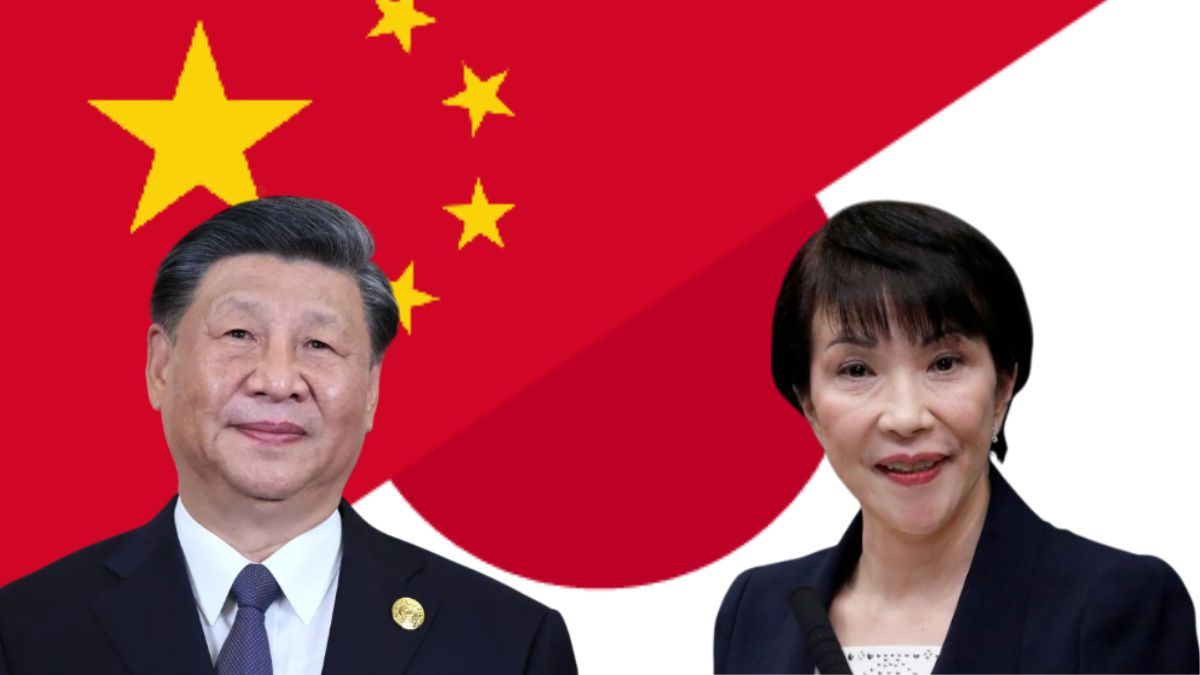
The escalating rhetoric between China and Japan has shown the growing risk that tensions over Taiwan could pull major powers into a broader regional confrontation. Image courtesy: RNA

China has sharpened its diplomatic offensive against Japan, taking an increasingly bitter two-week dispute to the United Nations and accusing Tokyo of threatening “an armed intervention” in the Taiwan Strait.
In a strongly worded letter to UN Secretary-General António Guterres, China’s Permanent Representative to the UN, Fu Cong, warned that Beijing would invoke its right to self-defence if Japan intervened militarily in a Taiwan conflict.
How did the diplomatic spat between China, Japan erupt?
The controversy erupted after newly elected Japanese Prime Minister Sanae Takaichi stated in parliament on November 7, 2025, that a hypothetical Chinese attack on Taiwan could constitute “a situation threatening Japan’s survival.”
Under Japanese law, such a designation empowers the prime minister to deploy military forces, effectively signalling that Tokyo might join a conflict if Taiwan were attacked.
The comment marked a break from Japan’s traditionally cautious and deliberately ambiguous stance on Taiwan, which has long aligned with the United States’ strategic ambiguity.
What did China say in its letter to the UN?
Fu Cong’s letter, released on Friday (November 21, 2025), accused the Japanese prime minister of committing “a grave violation of international law” and of provoking China on one of its most sensitive issues.
“If Japan dares to attempt an armed intervention in the cross-Strait situation, it would be an act of aggression,” Fu wrote. “China will resolutely exercise its right of self-defence under the UN Charter and international law and firmly defend its sovereignty and territorial integrity.”
Beijing claims Taiwan, an island with its own democratic government, military, and constitution, as an inalienable part of Chinese territory and has not ruled out the use of force to bring it under its control.
Taiwan rejects Beijing’s sovereignty claims, asserting that only its citizens can determine its future. The issue remains one of the most volatile flashpoints in Asia, where rising military activity and deepening alliances have raised concerns of miscalculation.
How did Japan respond to China’s letter to the UN?
Japanese officials, including the foreign ministry and the prime minister’s office, did not respond to requests for comment on Saturday (November 22, 2025).
But the backlash from Beijing has widened rapidly. China has said Takaichi’s remarks “severely damaged” bilateral economic cooperation, and concerts by Japanese performers in China have reportedly been cancelled without explanation, signalling that the spat is now spilling into cultural and commercial arenas.
How were China’s complaints against Japan?
Fu Cong demanded that Japan retract its “erroneous remarks” and “stop making provocations,” accusing Tokyo of openly challenging China’s core interests.
His letter also invoked historical grievances, an increasingly prominent element of China’s diplomacy as the 80th anniversary of Japan’s World War II defeat approaches.
Beijing has frequently referenced Japan’s wartime atrocities and its role in shaping the postwar UN system in recent years as it seeks to justify its territorial claims and push for changes in global governance structures.
What international declarations did China invoke on its claims?
China also cited the Cairo and Potsdam declarations, wartime communiqués that asserted territories occupied by Japan, including Taiwan, should be returned to China, as the legal basis for its claims.
However, many countries view these documents as political statements rather than binding treaties. Complicating matters further, the declarations were signed by the Republic of China government, which relocated to Taiwan in 1949 after losing the civil war to Mao Zedong’s Communist Party.
Taiwan held China’s UN seat until 1971, when it was transferred to the People’s Republic of China, deepening long-running disagreements over sovereignty.
The escalating rhetoric underscores the fragility of the China-Japan relationship and the growing risk that tensions over Taiwan could pull major powers into a broader regional confrontation.