UAC Chief Says Su-57 Project With India ‘Closer To Reality Than Any Other’
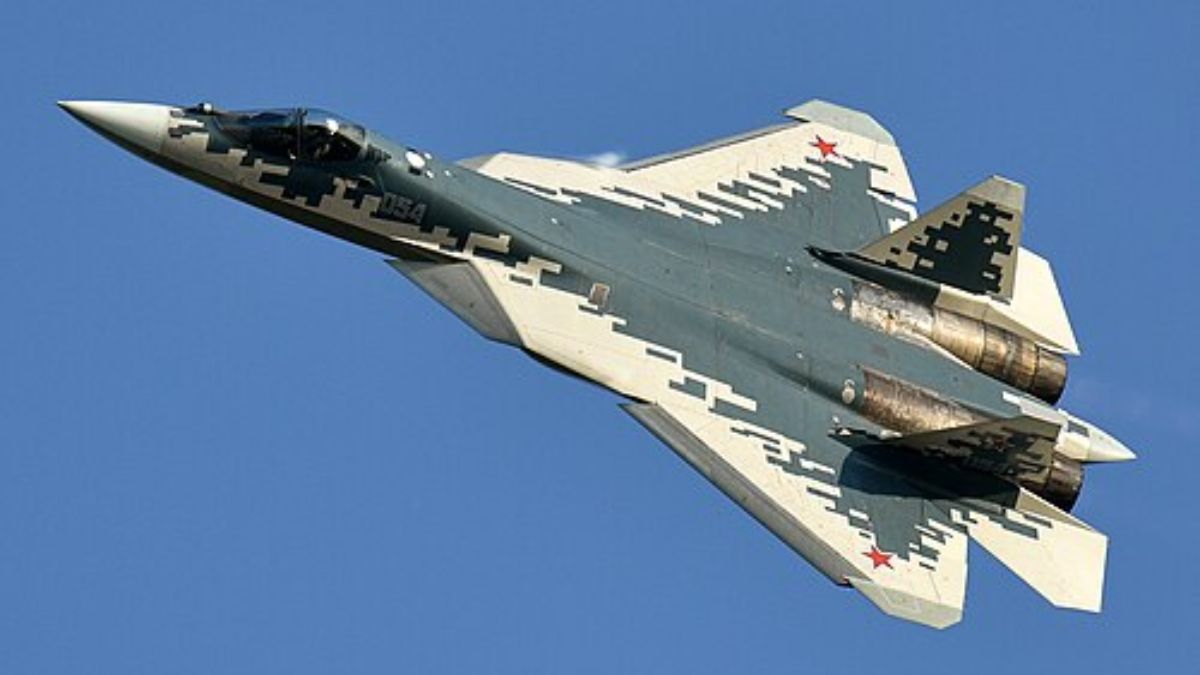
Officials from India and Russia are engaged in talks over potential technology transfer for the advanced Su-57 fighter jet to India. Image courtesy: Wikimedia Commons

The proposed Su-57 fifth-generation fighter programme with India is “much closer” to becoming a reality than any other comparable project, but now rests on a political decision in New Delhi, according to Vadim Badekha, Director General of the United Aircraft Corporation (UAC).
Speaking to Indian media, Badekha said the focus of the discussions was not a simple off-the-shelf purchase, but a long-term technology partnership built around high levels of localisation in India.
“What I may say right now is that the reality of implementation of the project of the fifth generation of that very aircraft is much closer… than in comparison with any other project,” he said, adding that his confidence came from “the experience of very deep technological partnership” that Russia and India have built over decades.
According to Badekha, the “key idea” of the Su-57 proposal is to transfer technologies, not just aircraft. “The main task is to provide technologies of fifth generation to India so that on that basis, India may start their own activities,” he stressed. “For us, this very project is not just a selling-buying project, it is the project of deep technological partnership for many, many years ahead.”
He confirmed that the two sides are currently in the “phase of discussions” and “technical consultations”, and that Moscow is now waiting for New Delhi’s call. “It is the Indian side we expect that will make their decision,” he said.
Badekha made it clear that, while the choice of industrial partner rests with the Indian government, UAC sees Hindustan Aeronautics Limited (HAL) as the natural anchor for any Su-57 collaboration. “From my point of view, HAL corporation is the best choice for this project,” he said.
He pointed to the long track record of licensed Su-30MKI production in India. “We have long partnership with the HAL corporation, which have proved their competencies. They were manufacturing Sukhoi-30 for many years, the licensed production, so they have mastered that,” Badekha noted.
This experience, he argued, feeds directly into a potential Su-57 line in India. “There are similarities with the Sukhoi-57 aircraft that will give the full advantage. Implementation of such a project on the facilities of HAL corporation will definitely reduce the investment part, the budget of implementation of that very project,” he said.
Beyond airframe work, UAC is proposing that India take on design and production responsibilities in complex systems. “Taking into consideration our cooperation, we have been considering the possible production and manufacture and design in India of a number of wide intellectual systems, such as avionics,” Badekha said, adding that the depth of localisation on Su-57 offered to India “will be significantly higher than with any other design and develop of such kind of aircraft”.
He also signalled flexibility on India-specific systems, including sensors. Referring to a question on radar technologies, he said such customisation is “quite acceptable” for Russia to discuss as part of a broader technology partnership, indicating openness to Indian inputs on the aircraft’s mission systems and upgrades.
On propulsion, Badekha underlined that the Su-57 is already in frontline combat service with the Russian Air Force, powered by the AL-41 engine. “Su-57 is equipped with AL-41 engine. It is just with those AL-41 engines that this aircraft is being operated and performs the combat missions in the Russian Air Force. High reliability of the AL-41 engine is the main advantage,” he said.
He described the AL-41 as a deep modernisation of the AL-31 that powers the Su-30MKI, and argued that this continuity is a major advantage for India. “One of the advantages is that it will be quite easy to switch from AL-31 engine manufacture on the facilities of the Indian enterprises to AL-41 engine, so that will be quite an easy process,” he said.
Badekha added that Russia is also nearing completion of a new-generation powerplant for the Su-57, referred to in his remarks as “engine number 177”. “This very engine is in the very final phase of designing, of making that very engine,” he said, noting that it has been showcased in India and again at the Dubai Airshow.
According to him, it will be up to India to decide whether to stay with the AL-41 or adopt the new engine in stages. “It will be just the Indian side who will be deciding, either they will take this engine or they will just replace the previous engine phase-wise, because we understand that 177 engine has all the features which are required for the Indian side. Maybe they will be produced in Indian facilities,” he said.
The UAC chief also highlighted industrial commonality between India’s current Su-30MKI fleet and a future Su-57 line. “The main thing that is in common is the possibility of using the technological equipment that is currently available at the HAL corporation. This equipment can be used in a very substantial amount,” he explained. “That gives the brilliant possibility to switch from production of Su-30 to Su-57 on HAL facilities and venues.”
Badekha described the Su-57 as an aircraft designed to remain in service “for 40 or 50 years”, built around an open architecture that allows continuous upgrades. He said operational experience in Russia’s “special military operation” had already led to “deeply enhanced functionalities” on the fighter, with new features implemented based on combat use.
Regarding the partnership with India, he added, “We are open. We are very open to the partnership with the Indian industries.”
(Image updated.)