

Captured During Operation Sindoor, Pakistan–Turkish Combat Drone Displayed at Army House

The captured drone at Army House in New Delhi

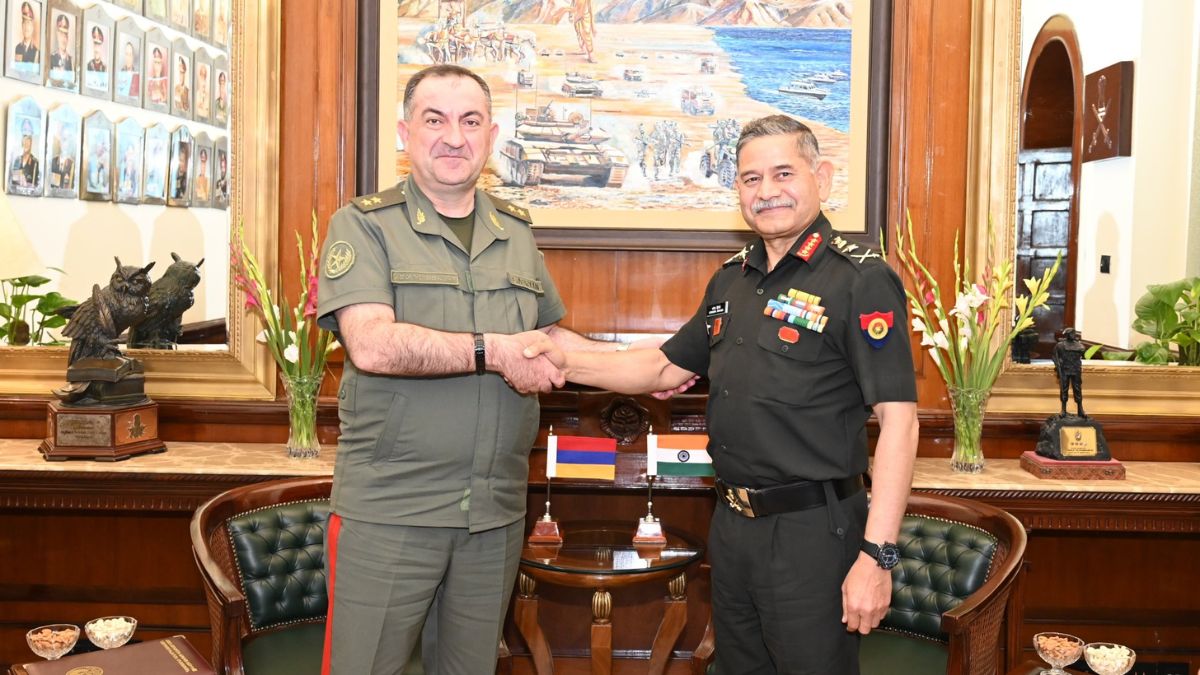
A Pakistan–Turkish origin combat drone captured during Operation Sindoor was put on display at the official residence of the Chief of the Army Staff, General Upendra Dwivedi, in Delhi on Vijay Diwas, highlighting India’s recent operational gains and its ability to counter emerging aerial threats.
The drone on display was identified as a YIHA-III weaponised unmanned aerial vehicle. It was intercepted and shot down by Indian forces on May 10, during the final phase of Operation Sindoor. An Indian Army official present at the event said the drone had been flying at an altitude of around 2,000 metres after being launched from Lahore International Airport. It was intended to strike an Indian Air Force base in the Punjab sector, but was neutralised over Amritsar before it could reach its target.
Following its recovery, Army cyber and technical teams carried out a detailed forensic examination of the drone. Using indigenous analytic tools, analysts were able to reconstruct the complete mission profile, including the exact take-off point, the preferred flight path, the intended destination and the payload configuration. The payload included electro-optical cameras, infrared sensors and radar systems, indicating a sophisticated surveillance and strike mission.
“With the data recovered from the drone, we were able to identify where it was launched from, the route it followed, what it was meant to observe and where it was headed,” an Army official said. “This analysis gives us complete mission details, which helps commanders take informed tactical and strategic decisions and clearly assess the intent of what the enemy was planning.”
Officials said the mission-level intelligence extracted from the drone—including telemetry, GPS tracks and sensor logs—is now being used to refine counter-drone tactics, strengthen air-defence responses and assess adversary operating patterns.
The Indian Army has also highlighted the role of SKYNET-INTEL, an indigenous drone forensics tool developed under the iDEX DISC-9 programme in collaboration with the Army Cyber Group and Indian industry partners, as a key capability that enabled the exploitation of the captured drone. Officials said the system reflects the Army’s early assessment that unmanned aerial vehicles would play a decisive role in future conflicts—an assessment that was borne out during Operation Sindoor, where drones featured prominently in surveillance and strike roles. SKYNET-INTEL allows Army analysts to extract and process mission data from recovered drones, including telemetry, GPS tracks, mission logs, radio-frequency signatures and sensor files, even when the systems are encrypted or partially damaged. Using this tool, analysts were able to reconstruct the drone’s flight path, manoeuvre patterns and payload activity, providing a clear picture of its mission profile. The capability, designed to operate on secure, air-gapped Army networks, enables faster analysis and reporting, turning captured drones into actionable sources of operational intelligence for commanders and supporting both tactical responses and longer-term strategic assessments.
The public display of the drone formed a central part of the Vijay Diwas programme at Army House. Vijay Diwas commemorates India’s victory in the 1971 war and the surrender of Pakistani forces in East Pakistan, a defining moment in India’s military history. Traditionally focused on remembrance, this year’s event carried a distinctly contemporary operational tone, linking past victories with present-day battlefield preparedness.
Operation Sindoor was launched earlier in May following a deadly terror attack in Pahalgam and involved extensive counter-drone and air-defence operations. Military officials said hundreds of Pakistani drones were launched across multiple sectors during the operation, many of which were intercepted, marking what analysts described as a significant phase in drone-centric conflict dynamics.
Alongside the captured drone, the Army also briefly showcased a small number of indigenous systems, including an Indian-developed surveillance drone, an AI-enabled battlefield analytics platform and a robotic firefighting system developed under the iDEX initiative. These were presented as examples of how operational lessons from Operation Sindoor are being translated into domestic technological capabilities.