
Rafale Radar Goes ‘Make in India’: Thales–SFO Deal Marks Big Aatmanirbharta Boost In Defence
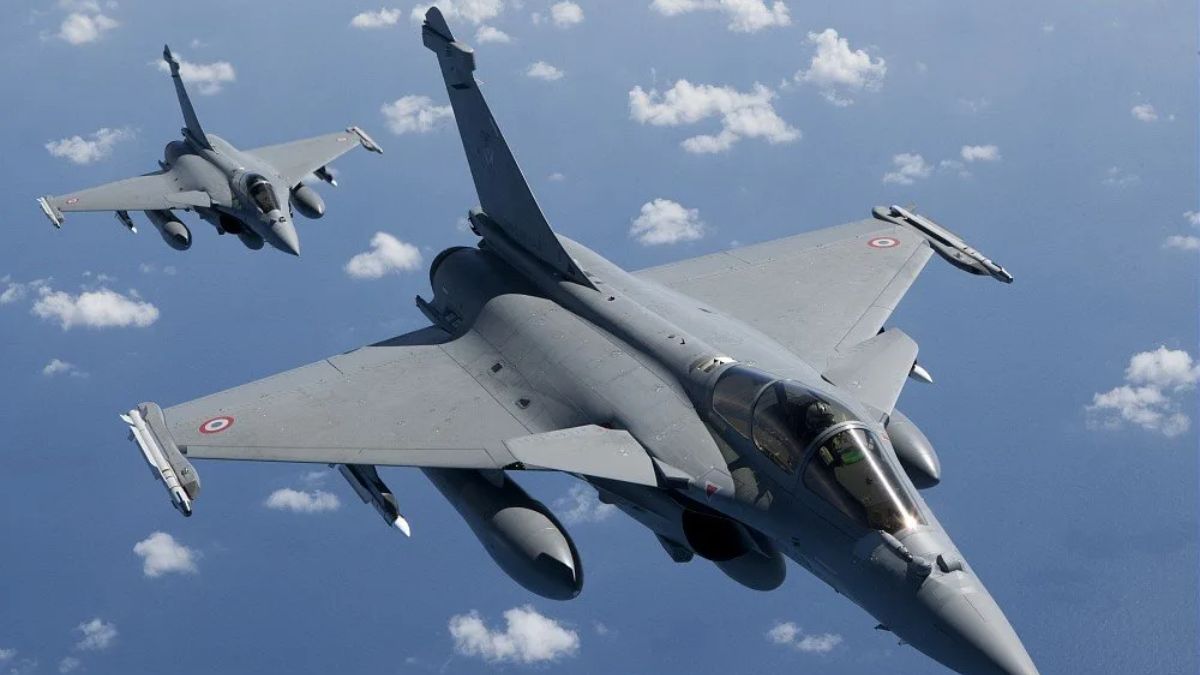
This first order marks an important milestone in Thales’ Make in India strategy for the localisation of advanced radar systems. Image courtesy: Dassault Aviation

In a significant step towards deepening India’s defence self-reliance, French aerospace major Thales has awarded an Indian firm a high-end manufacturing contract for one of the Rafale fighter jet’s most critical sensors. The move not only strengthens the Make in India ecosystem but also underlines India’s growing role in the global supply chain.
This deal marks a major win for India when it comes to advanced combat aircraft, especially at a time when the Rafale fighter jet aircraft have emerged as a key pillar of India’s airpower.
Make in India Rafale deal: Why is Thales–SFO contract a big win for Aatmanirbharta?
Thales has signed a contract with SFO Technologies to manufacture complex wired structures for the RBE2 Active Electronically Scanned Array (AESA) radar used on Rafale fighter jets. This marks a key milestone in the localisation of high-value radar sub-systems under the government’s push for defence self-reliance.
The contract is part of Thales’ broader Make in India strategy and represents the first order under this specific localisation initiative, signalling confidence in Indian industry’s ability to handle advanced aerospace manufacturing.
What exactly will be manufactured in India?
Under the agreement, SFO Technologies will produce technically advanced wired structures that form a critical part of the RBE2 AESA radar, often described as the “eyes” of the Rafale. The project is expected to boost indigenous capabilities in precision machining and assembly; advanced wiring and electronics; microelectronics; complex system integration.
These are core technologies that sit at the heart of modern combat aircraft and are traditionally restricted to a handful of global defence suppliers.
How does this fit into India’s Rafale expansion plans?
Thales’ latest localisation push follows India’s recent order of 26 Rafale fighter jets for the Indian Navy, further expanding the Rafale footprint across the armed forces. Thales said the deal reinforces its long-standing collaboration with Indian defence manufacturing partners and supports the growing needs of the Indian Armed Forces.
With Rafales serving both the Air Force and soon the Navy, creating a domestic industrial base for key subsystems improves supply-chain security, lifecycle support and long-term operational readiness.
“This partnership with SFO Technologies reflects our steadfast commitment to the Make in India initiative. Through decades of strong local collaborations, we have consistently invested in building indigenous capabilities and fostering world-class expertise within the Indian ecosystem,” Thales said on Monday (December 15, 2025)
Why is the RBE2 AESA radar critical to Rafale’s combat power?
The RBE2 AESA radar is a cornerstone of Rafale’s multi-role capability. It enables long-range detection and tracking of multiple air and ground targets, high resistance to jamming, simultaneous air-to-air and air-to-ground operations. Localising components of this radar strengthens India’s ability to maintain, upgrade and potentially co-develop future sensor technologies.
SFO Technologies Chairman and Managing Director N. Jehangir said the project underscores India’s growing role in the global defence supply chain, adding that quality and punctuality would remain top priorities as the company contributes to Rafale production.
How capable are Rafale jets and why do they matter even more after Op Sindoor?
The Rafale has established itself as one of the Indian Air Force’s most capable frontline fighters, combining advanced sensors, electronic warfare systems and precision weapons. During Operation Sindoor, Rafale jets played a critical role in India’s ability to project credible airpower, deter escalation and maintain dominance in contested airspace.
Their performance reinforced the importance of platforms that can operate across roles, ranging from air superiority, deep strike, maritime strike and nuclear delivery, while integrating seamlessly with networked command and control systems.
In parallel with the radar localisation push, India is moving to further enhance the Rafale’s firepower. According to defence sources cited by ANI, a Rs 1,500-crore proposal to procure additional Meteor beyond-visual-range (BVR) air-to-air missiles is at an advanced stage within the Defence Ministry.
Manufactured by European defence major MBDA, the Meteor missile has a strike range of up to 200 km and provides a decisive edge in long-range aerial combat.
What makes the Meteor–Rafale combination so strategic?
The Rafale is currently the only aircraft in the Indian Air Force capable of deploying the Meteor missile, giving it unmatched long-range air combat capability in the region. The IAF inducted Meteors with the original 36 Rafales procured under the 2016 deal, and the missiles are also part of the weapons package for the Navy’s 26 Rafales.
Additional Meteor stocks will significantly boost the IAF’s ability to dominate air battles before adversary aircraft even enter visual range.