India-Israel Ties Now ‘Special Strategic Partnership’: FTA To Historic Knesset Speech, How PM’s Israel Visit Resets Ties
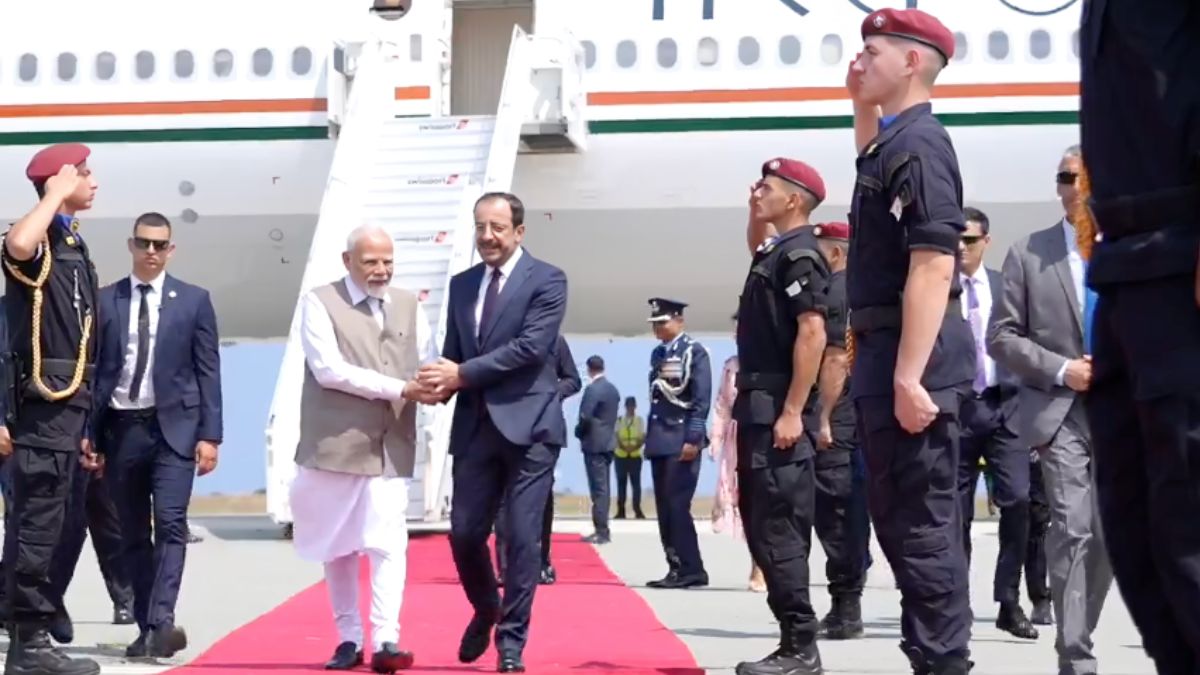
At the joint press meet, PM Modi said a mutual India-Israel FTA will be concluded soon. Image courtesy: RNA

Prime Minister Narendra Modi’s two-day state visit to Israel has elevated the India-Israel relationship to a new pinnacle, with both countries announcing the upgrade of ties to a ‘Special Strategic Partnership for Peace, Innovation and Prosperity’. Both sides reaffirmed their shared vision for a robust special strategic partnership rooted in mutual aspirations for peace, security and prosperity through technological innovations and entrepreneurship.
Nearly a decade after his landmark 2017 visit broke long-standing diplomatic hesitation, PM Modi’s latest trip signals that the relationship has moved from symbolism to structure, from warmth to institutional depth, across defence, critical technologies, trade, and people-to-people engagement.
Underscoring the shared commitment to transform policy priorities into tangible outcomes, PM Modi and his Israeli counterpart Benjamin Netanyahu emphasised the importance of institutionalising bilateral mechanisms across Government-to-Government, Business-to-Business, and People-to-People domains.
Why has India-Israel partnership been elevated now?
The decision to formally upgrade ties reflects what both sides describe as deep political trust and growing strategic convergence in a volatile global environment.
In a joint statement issued after talks with Prime Minister Benjamin Netanyahu, the two leaders said the new framework aligns Israel’s innovation-driven economy with India’s scale, talent base and manufacturing ambitions, particularly under the vision of Viksit Bharat 2047 and Atmanirbhar Bharat.
PM Modi said the discussions with PM Netanyahu were very fruitful. “We’ve taken a historic decision to elevate our time-tested partnership to a Special Strategic Partnership. This decision reflects the aspirations of the people of both countries. We discussed giving new direction and greater momentum to our cooperation.”
The message was clear: this is not merely a bilateral relationship anymore, but a strategic alignment between two democracies navigating an uncertain, technology-driven world order.
What are the big technology and defence breakthroughs?
Defence and advanced technologies formed the core of the visit’s outcomes. Both leaders welcomed the implementation of the November 2025 Memorandum of Understanding on Defence Cooperation, but signalled a decisive shift from traditional buyer-seller dynamics to co-development, joint production and technology sharing.
A major headline announcement was the launch of a new India-Israel initiative on Critical and Emerging Technologies, to be led by the National Security Advisors of both countries. This mechanism is designed to fast-track collaboration in areas such as artificial intelligence, semiconductors, quantum technologies, cybersecurity, biotechnology, space systems and advanced defence platforms.
Cybersecurity cooperation received a structural boost with plans for a multi-year strategic programme, regular cyber exercises and the establishment of an India-Israel Centre of Excellence in Cybersecurity in India.
Can trade finally catch up with strategic ties?
While defence ties have flourished, both sides acknowledged that trade and investment have yet to realise their full potential. PM Modi and Netanyahu welcomed the Bilateral Investment Agreement signed in September 2025 and pushed for expedited negotiations on a Free Trade Agreement.
At the joint press meet, PM Modi said a mutual India-Israel FTA will be concluded soon. “We will work to conclude a mutually beneficial free trade agreement,” he stated.
Financial integration was also strengthened through the launch of an India-Israel Financial Dialogue and plans to link India’s Unified Payments Interface (UPI) with Israel’s fast payment system.
Enhanced direct air connectivity between Tel Aviv and major Indian cities was identified as critical for boosting business, tourism and labour mobility.
How central are agriculture and water to India-Israel partnership?
Long before high-tech cooperation dominated headlines, agriculture and water management formed the backbone of India-Israel ties. The two sides reviewed progress at 35 Centres of Excellence in Agriculture across India, which have trained over a million farmers in Israeli techniques.
Building on this, they announced plans for an India-Israel Innovation Centre for Agriculture, expanded research fellowships and deeper collaboration in fisheries, aquaculture and climate resilience.
PM Modi repeatedly highlighted Israel’s expertise in water conservation and agricultural innovation, noting that several Israeli best practices have already been successfully adapted in India.
India and Israel’s message on security and terrorism
Security concerns featured prominently in discussions with both Prime Minister Netanyahu and President Isaac Herzog. The leaders strongly condemned terrorism in all forms, including cross-border terrorism, and reiterated their commitment to coordinated international efforts against terror networks.
They also discussed regional developments in West Asia, welcomed diplomatic initiatives aimed at ending the Gaza conflict, and underlined the importance of freedom of navigation and regional stability.
PM Modi, while addressing Israeli Parliament – Knesset – underlined that “terror anywhere threatens peace everywhere”. He conveyed India’s “deepest condolences” for lives lost in the October 7, 2023 Hamas attack, saying, “No cause can justify the murder of civilians. Nothing can justify terrorism.”
In a rare honour, the Knesset conferred the ‘Speaker of the Knesset Medal’ on PM Modi and hosted a special plenary session addressed by him, making him the first Indian Prime Minister to do so.
PM Modi’s Israel visit: How did it reflect personal and political symbolism?
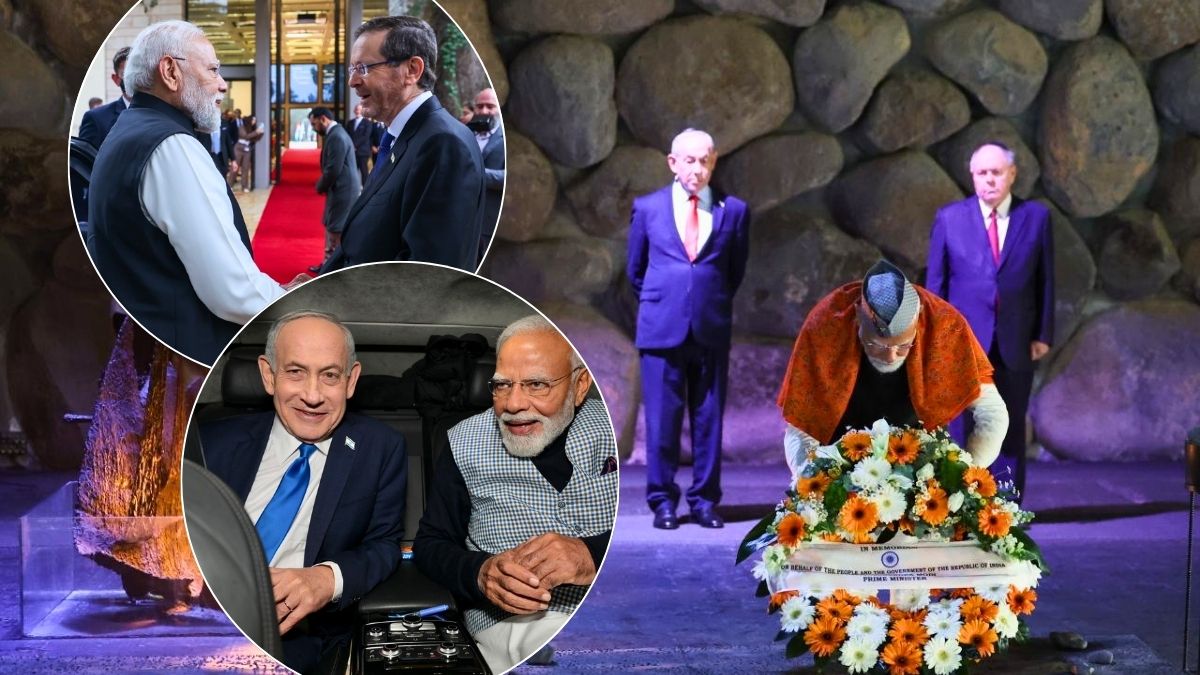
Beyond policy announcements, the visit carried powerful symbolism. PM Modi met President Isaac Herzog in Jerusalem, where both leaders emphasised the growing global relevance of the partnership. Herzog described India as “an essential part of a great future for the Middle East,” while Modi said India and Israel “can be a powerful force for global good.”
In a gesture blending diplomacy and environmental consciousness, Modi planted a sapling under his ‘Ek Ped Maa Ke Naam’ initiative at the Presidential residence.
He also paid homage at Yad Vashem, Israel’s Holocaust memorial, marking his second visit there since 2017. The solemn ceremony reinforced the moral and historical dimensions of the relationship.
What does this signal for India-Israel’s future ties?
The more than dozen agreements and initiatives announced during the visit reflect a partnership that is no longer confined to defence procurement or agricultural cooperation. From critical technologies and cyber resilience to financial connectivity, labour mobility and academic exchanges, the relationship is being re-engineered for the next phase of global competition.
Ending his two-day state visit to the West Asian country, Prime Minister Modi thanked Israel for the warmth and affection, and shared how deeply touched he was that Prime Minister Netanyahu and Mrs. Netanyahu personally came to the airport to see him off. “Confident that the India–Israel partnership will continue to reach new heights in the years to come.”
As both countries position themselves as innovation-driven democracies in a shifting world order, the newly declared ‘Special Strategic Partnership’ suggests that India-Israel ties are entering their most ambitious chapter yet, one defined not just by shared interests, but by shared strategic purpose.