
Afghanistan Claims To Have Destroyed Pakistan’s Kohat Base After Nur Khan Airbase Attack, Civilian Deaths Rise
Pakistan bombed the fuel depot of private airline Kam Air near Afghanistan's Kandahar airport. Image courtesy: RNA

Tensions between Pakistan and Afghanistan have spiralled into their most serious military confrontation in decades, with both sides exchanging airstrikes, drone attacks and artillery fire across the volatile Durand Line. The United Nations on Friday (March 13, 2026) said it had recorded at least 75 civilians killed and 193 wounded in the fighting since February 26.
The latest escalation has seen Pakistan launch strikes on Kabul, Kandahar and other Afghan provinces, while the Taliban administration claims it has carried out retaliatory drone attacks on Pakistani military infrastructure, including installations near the border.
The intensifying hostilities have already resulted in civilian casualties, displacement of thousands and growing fears of a prolonged regional conflict. Apart from the UN, Afganistan’s government claimed that more than 110 civilians have been killed in the clashes, however, Pakistan has dismissed the tolls, saying it targets only militants and support infrastructure.
Afghan authorities claim strikes on Pakistani military bases
Afghan officials say their forces launched retaliatory drone operations targeting Pakistani military infrastructure, including the Kohat Military Fort in Khyber Pakhtunkhwa. According to Afghanistan’s defence ministry, the strikes damaged military installations, ammunition depots, soldiers’ residential facilities.
The ministry described the operation as part of coordinated retaliation for earlier Pakistani air raids inside Afghan territory. The Taliban administration had earlier claimed responsibility for targeting the strategically significant Nur Khan Airbase near Rawalpindi, one of the Pakistan Air Force’s key logistics and command facilities.
The base is located close to Pakistan’s Strategic Plans Division, which oversees the country’s nuclear arsenal, making it one of the country’s most sensitive military locations.
Pakistan’s ‘Operation Ghazb Lil Haq’
Pakistan says its recent airstrikes are part of a broader military campaign called Operation “Ghazb Lil Haq” (Wrath for Truth), launched last month on February 26. According to Pakistan’s Information Minister Ataullah Tarar, the operation was launched after Taliban forces allegedly attacked Pakistani border posts.
Tarar said Pakistani forces have targeted militant camps and logistical infrastructure in Kabul, Paktia and Kandahar, claiming major battlefield successes.
According to official figures released by Islamabad, 663 Afghan Taliban fighters killed, 887 injured, 249 checkpoints destroyed, 70 militant sites targeted in airstrikes. Pakistani officials also said that four key militant installations were destroyed, including a militant training camp, a logistics base, an ammunition storage facility, an oil depot near Kandahar airport.
Kabul reports civilian deaths after Pakistani strikes
Afghan authorities, however, say the attacks have hit civilian areas rather than militant infrastructure. Police in Kabul reported that four civilians were killed and 15 wounded after airstrikes hit residential neighbourhoods in the capital.
Residents described scenes of chaos as explosions struck homes in the Pul-e-Charkhi area, damaging dozens of buildings. “I tried to shout, but dust and smoke had filled my throat,” news agency Reuters quoted Homayoun, a resident whose house was damaged in the overnight strike, as saying.
In Nangarhar province, officials said a Pakistani mortar shell hit a house, killing a woman and a child.
The United Nations Assistance Mission in Afghanistan (UNAMA) confirmed that at least four civilians were killed and 14 injured in Kabul alone.
Fuel depot at Kandahar airport hit
Another flashpoint in the conflict emerged in Kandahar, where Pakistani airstrikes reportedly hit a fuel depot used by the private airline Kam Air. Taliban spokesman Zabihullah Mujahid said the depot supplied fuel to civilian airlines and United Nations aircraft, raising concerns that civilian infrastructure had been targeted.
Pakistan denied targeting civilian facilities, saying its operations were focused solely on terrorist camps and support infrastructure.
Cross-border clashes spread along Durand Line
The conflict has also intensified along the Durand Line, the disputed border separating Pakistan and Afghanistan. Heavy fighting has been reported near several crossing points, including Torkham, where residents reported gunfire and artillery exchanges.
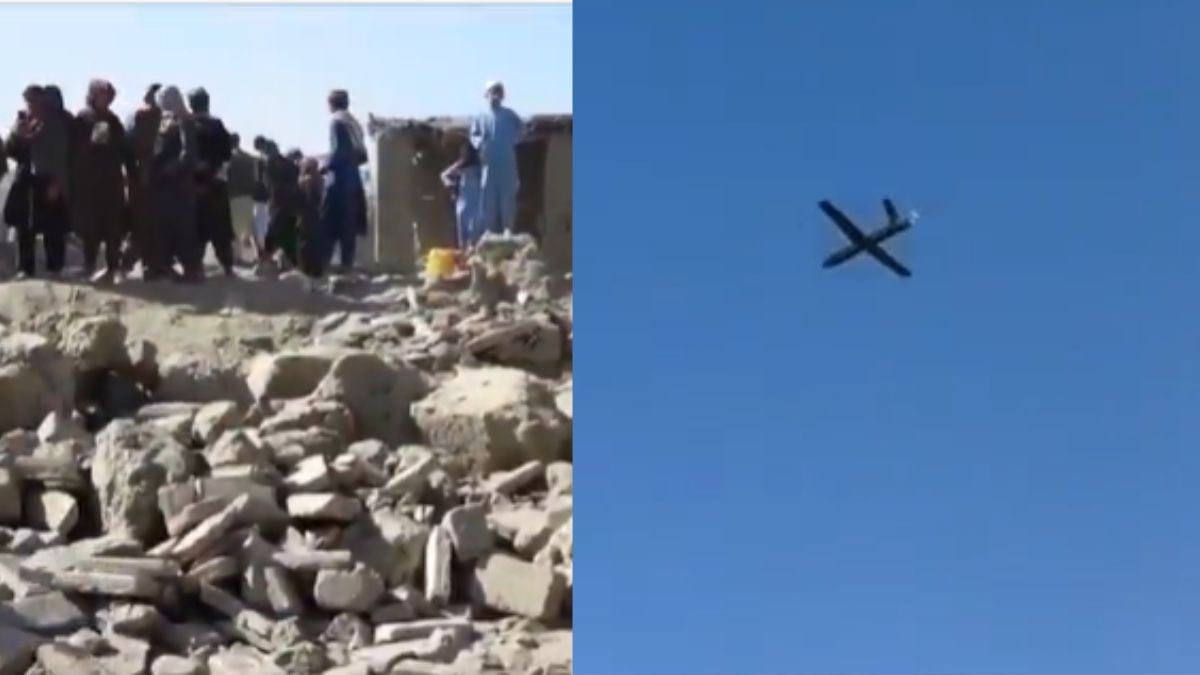
Pakistani officials said they intercepted drones launched from Afghanistan in Khyber Pakhtunkhwa province. Afghan authorities, meanwhile, claimed their forces successfully struck Pakistani military centres in the Kohat region, although Pakistani officials said the drones were intercepted.
Long-standing dispute behind rising tensions
Relations between the two neighbours have remained strained since the Taliban returned to power in Afghanistan in 2021. The main points of dispute include the Durand Line border dispute, pakistan’s demand that Kabul crack down on Tehreek-e-Taliban Pakistan (TTP) militants, rising insurgent attacks inside Pakistan.
Islamabad accuses Afghanistan of allowing TTP fighters to operate from Afghan territory, a claim the Taliban government strongly denies.
Humanitarian impact of Pakistan-Afghanistan conflict
The ongoing clashes have had a severe humanitarian impact. According to the United Nations refugee agency, more than 115,000 people have been displaced by recent fighting. The International Organisation for Migration (IOM) also reported that a transit centre in Torkham used for Afghan deportees from Pakistan was heavily damaged in the clashes.
The UN says that between February 26 and March 5, Pakistani military operations killed at least 56 civilians in Afghanistan, including 24 children.