


Holding The Line: How The Army Foils Infiltration And Keeps Kashmir Secure
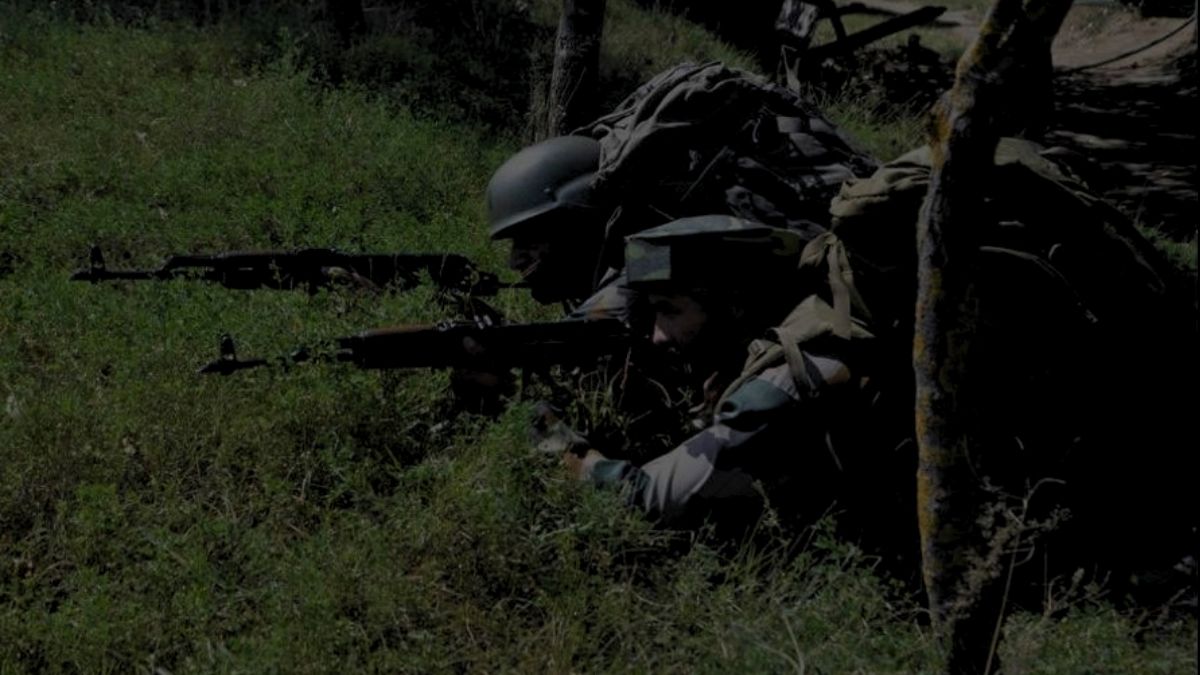
Indian Army is vital to countering incessant infiltration bids into Kashmir. Image courtesy: X.com/@ChinarcorpsIA

Late on the night of 14 October 2025, troops of the Indian Army operating in the Machil sector of the Kupwara district in north Kashmir challenged suspicious movement along the Line of Control (LoC). Two militants attempting to infiltrate were killed.
That single incident is a vivid reminder: for the region to move on from decades of turbulence, one indispensable condition must be met — security.
What is the broader role of the Indian Army in Kashmir?
In Jammu & Kashmir (J&K), the Army’s role extends far beyond classic defence: its presence is the pivot between external threats, internal unrest and the everyday life of the citizen. The infiltration bid in Kupwara underlines the external dimension: heavily armed actors, backed by networks across the border, still seek entry into Indian-held territory. The Army’s vigilance and rapid response prevented what might otherwise have triggered a larger incident.
But that is only the first layer of the story. Internally, J&K continues to face risks of terrorism, local insurgency, youth disaffection and the legacy of decades of conflict. Without a stabilised security environment, investment dries up, tourism falters, infrastructure gaps widen. The Army acts as the anchor in this volatile setting, enabling the region to breathe.
How does enabling development in Kashmir improve security?
J&K’s terrain is punishing with high mountains, long winters, isolated valleys. For any government initiative—connectivity, economic growth, schooling, health services—to succeed, troops must first establish the conditions for normal life. The Army’s presence across remote sectors means roads can be built, supply lines maintained, electricity and education extended to the hinterland. Without the Army holding the line, such development remains vulnerable.
In effect the Army performs a dual function: defending the nation’s border and defending the possibility of peace and prosperity inside it. That is a truth often overlooked by the public. Policymakers too must recognise that security is not a cost centre; it is an enabler of all other investment in J&K.
What challenges lie ahead?
Despite the progress, the region still confronts major hurdles. Youth unemployment remains an issue. The temptation of unrest or radicalisation exists if there is no viable alternative. Here the Army’s role dovetails with civil society and government schemes. Only when schools open reliably, jobs are visible, normal lives return, will this cycle begin to break.
The Kupwara event shows that threat still lurks. Thus, one cannot afford to rest on past gains. The Army’s role must be recognised not only in dramatic encounters, but in the daily grind: patrolling rugged terrain, securing supply routes, helping communities recover from disruption.
For policymakers, this means: continue to fund frontier readiness; invest in civil-defence synergy; and view the Army as a partner in development, not just in war. For the public, it means acknowledging that the soldier on that icy ridge is part of your ability to travel safely, conduct business, send your children to school, or invest in a future in Kashmir.
A call to appreciation and action
When the headlines highlight “two militants killed in Kupwara” the bigger picture is often missed. In reality, behind that operation is the preservation of normalcy for tens of thousands of people. When a road is built in a valley, the Army ensured that the militants did not strike first. When tourists return to Srinagar or remote villages engage in enterprise, the backbone of that return is secure terrain maintained by the Army.
It is time that the narrative move beyond the simplistic notion of the Army as “just soldiers”. In J&K they are frontline guarantors of peace and possibility.