India Leads HADR Mission In Sri Lanka: IAF’s C-17 With Modular Field Hospital, INS Vikrant, Udyagiri In Colombo
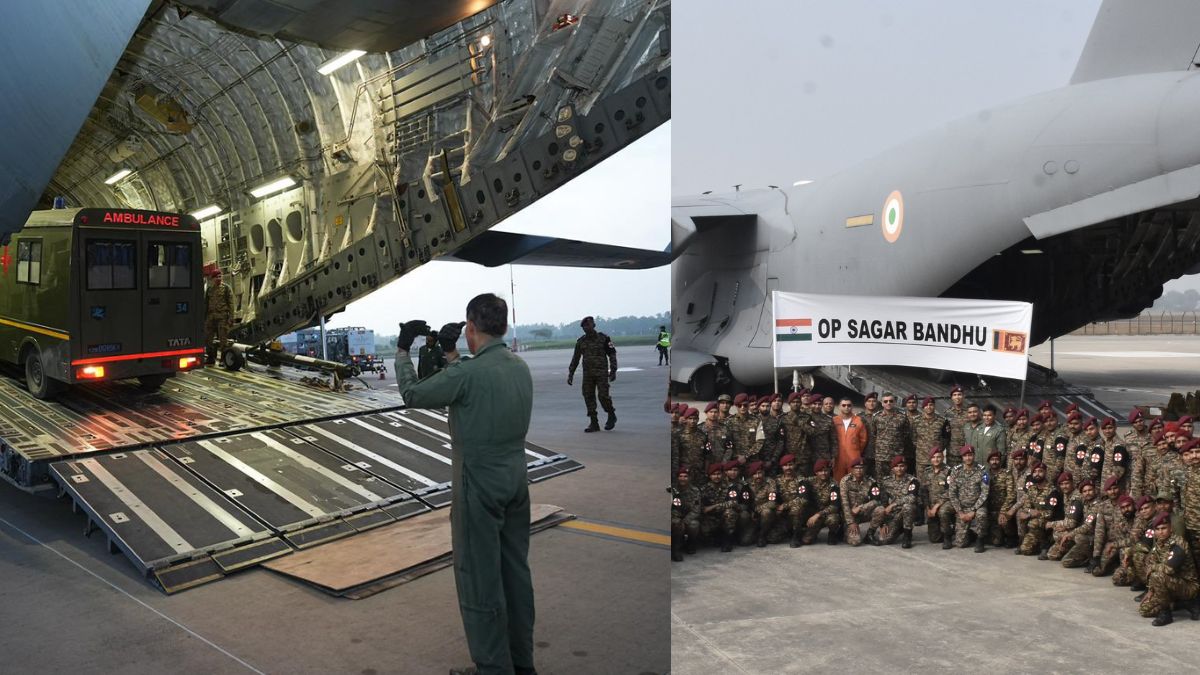
Under Operation Sagar Bandhu, Indian Air Force IFC 1885 flew essential relief to Poramadulla. Image courtesy: RNA

In a decisive show of solidarity and humanitarian commitment, the Indian Army and Indian Air Force have mounted a large-scale response to assist cyclone-hit Sri Lanka under Operation Sagar Bandhu. Triggered by the devastation caused by Cyclone Ditwah, severe flooding, landslides, widespread disruption, and heavy casualties, India has mobilised air and naval assets as well as a high-readiness humanitarian contingent.
This effort reflects a long-standing pattern: whenever natural disasters strike the neighbourhood, the Indian armed forces are among the first to respond. Guided by its Neighbourhood First policy and Vision MAHASAGAR, India continues to be the First Responder, standing firmly in solidarity with the Government and people of Sri Lanka in this time of need.
Operation Sagar Bandhu: How is the Indian Army supporting relief efforts?
The Indian Army has deployed an Integrated Task Force drawn from the elite Shatrujeet Brigade. This self-contained, high-readiness composite HADR (Humanitarian Assistance and Disaster Relief) unit has been tasked to deliver critical relief, restore essential services, and support affected families in the worst-hit regions.
The Army emphasised that the deployment is part of India’s Neighbourhood First policy and embodies the civilisational ethos of ‘Vasudhaiva Kutumbakam’, which means the world is one family. The contingent is equipped to operate autonomously, enabling rapid response in remote and inaccessible areas.
What role is the Indian Air Force playing?
The Indian Air Force has been at the forefront of the rapid-relief effort. A C-17 Globemaster airlifted a full para field hospital unit from Agra to Colombo, carrying 73 medical professionals and critical medical equipment. Mi-17 helicopters continued intensive HADR missions, airlifting over eight tonnes of relief material and evacuating 65 survivors, including foreign nationals, critically ill patients and a pregnant woman.
In continued operations, the IAF air-dropped nearly six tonnes of essential supplies and medicines to areas cut off by flooding. A total of 96 people, including children and critically injured survivors, were rescued from multiple isolated regions.
The CEIR-backed coordination between India and Sri Lanka has further helped in precise targeting of aid and evacuation.
Cyclone Ditwah relief and rescue: How much aid has India delivered?
Since November 28, India has swiftly delivered 53 tonnes of relief material via air and sea routes. Supplies include tents and tarpaulins; blankets; hygiene kits; ready-to-eat food; medicines and surgical equipment. Three IAF aircraft have been used to transport 31.5 tonnes of these essentials.
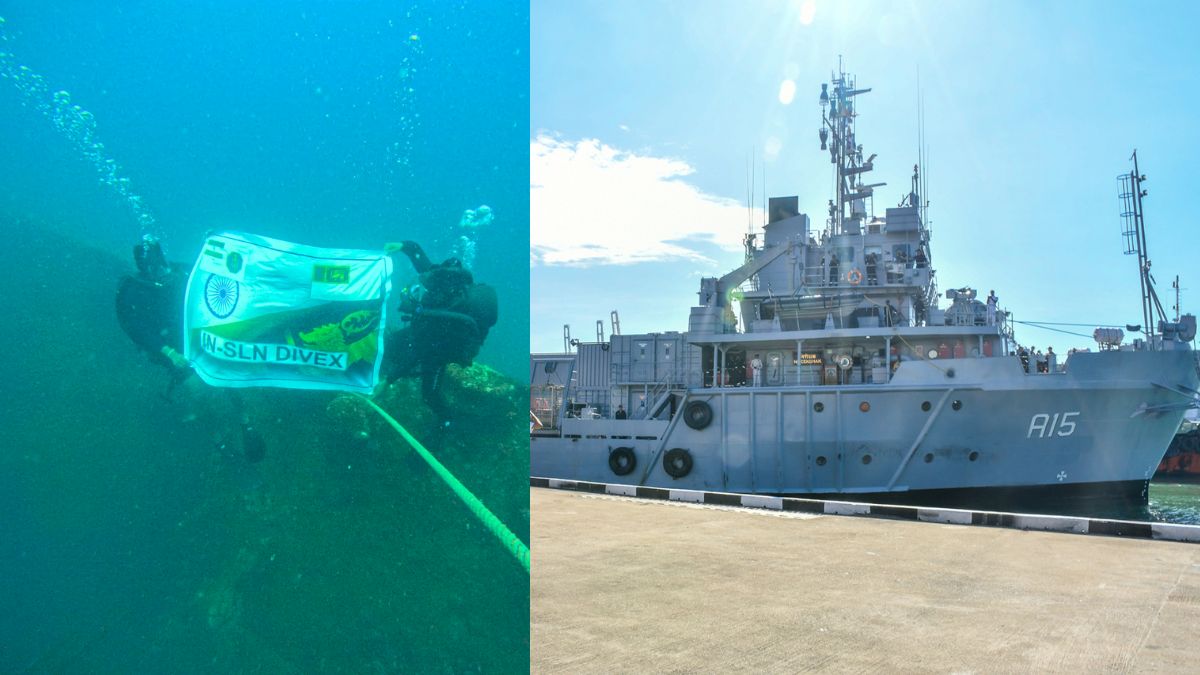
In addition to the Army and Air Force, Indian Navy is also contributing significantly on the maritime front. The Navy acted within hours of the cyclone’s landfall, as INS Vikrant and INS Udaygiri, already in Colombo for the Sri Lanka Navy’s 75th anniversary fleet review, delivered 9.5 tonnes of emergency rations almost immediately.
INS Sukanya has since reached Trincomalee with additional relief, bolstering India’s ongoing support. These rapid maritime deliveries ensured Sri Lanka received immediate help even before large-scale air operations commenced.
Why is India’s humanitarian mission in Sri Lanka significant?
Cyclone Ditwah has severely strained Sri Lanka’s disaster-response system, leaving several districts inaccessible and causing catastrophic loss of life, 390 killed and 352 missing as of Monday. India’s swift mobilisation of its military resources underscores its capacity for rapid regional humanitarian response, the strategic depth of the India–Sri Lanka partnership, and Indian Army and Air Force’s consistent role in saving lives across borders.
Operation Sagar Bandhu extends India’s longstanding tradition of stepping forward, be it Nepal’s earthquake, Mozambique’s floods, Sri Lanka’s economic crisis, or global evacuations during conflicts.