

Thunderbirds F-16 Crashes In California Desert During Training; Pilot Ejects Safely, Investigation Underway
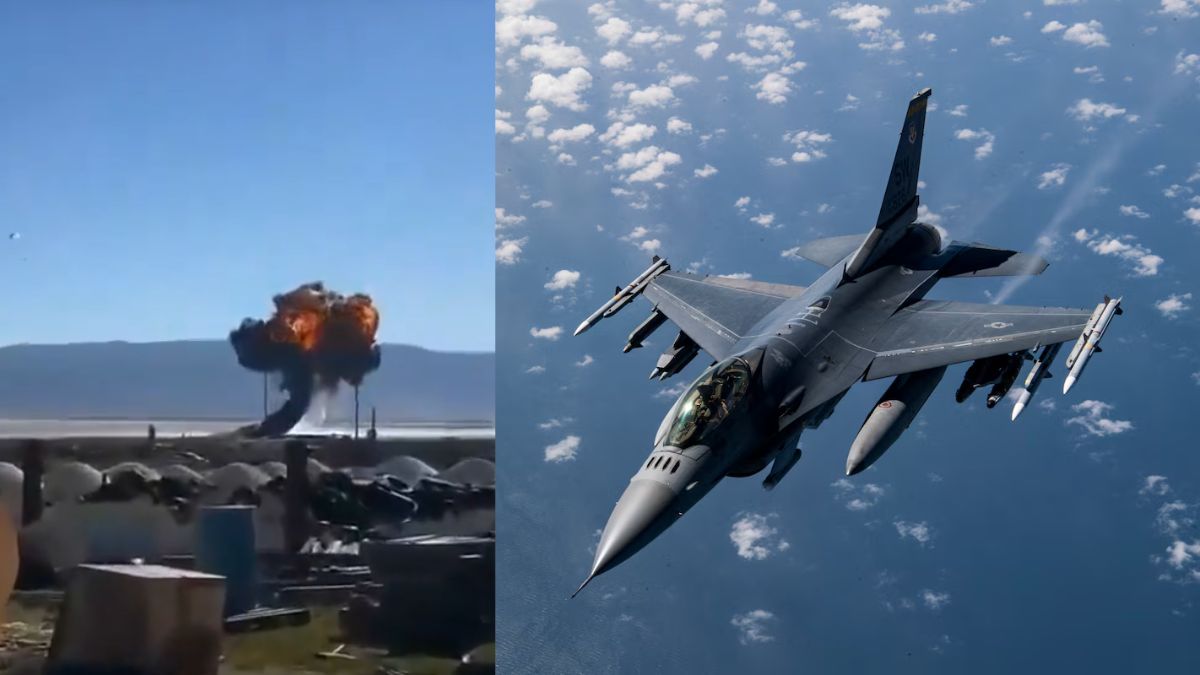
The United States Air Force confirmed an F-16C belonging to the ‘Thunderbirds’ squadron crashed on December 3, 2025. Image courtesy: X.com

Just a few weeks after the tragic Tejas fighter jet crash at Dubai Air Show 2025, a US Air Force F-16C Fighting Falcon from the elite Thunderbirds demonstration squadron crashed in the Mojave Desert near Trona, California, on Wednesday (December 3, 2025), during a routine training mission.
The jet went down at around 10:45 am local time over controlled military airspace, with officials confirming that six aircraft took off but only five returned. Footage circulating online showed the F-16 spiralling downward before the pilot successfully ejected, moments before the aircraft erupted into a fireball on impact.
The pilot, the sole occupant, suffered non-life-threatening injuries and was taken to a hospital in Ridgecrest after initial treatment on-site by emergency responders.
US F-16C crash California: Why is the location significant for military aviation?
The crash occurred near Trona Airport, close to Naval Air Weapons Station (NAWS) China Lake, a critical testing and evaluation hub for US Navy aviation systems. The region’s vast open terrain, sparse population, and restricted airspace make it a prime location for high-speed, high-risk military flight training.
Worth mentioning here is that this area has a history of aviation incidents. In 2022, a Navy F/A-18E Super Hornet also crashed near Trona, claiming the pilot’s life.
The San Bernardino County Fire Department said there was no threat to surrounding vegetation, but urged civilians to avoid the crash zone as military investigators secured the site.
How does this impact the Thunderbirds and their flight operations?
The Thunderbirds, formed in 1953 and based at Nellis Air Force Base, are the Air Force’s premier aerial demonstration squadron, the counterpart to the Navy’s Blue Angels. Their high-precision aerobatic routines involve flying within inches of each other, making training missions inherently risky.
Their fleet includes F-16C/D Fighting Falcons, supported by Nellis-based aircraft such as F-22 Raptors and A-10 Warthogs.
While the squadron has recorded several accidents over its decades-long history, Wednesday’s incident comes at a critical time as the team trains for its upcoming airshow season. Officials have not announced any changes to the Thunderbirds’ schedule yet.
US F-16C crash reason: What do investigators know about the cause?
The Air Force’s 57th Wing Public Affairs Office confirmed that the cause of the crash remains undetermined, with a detailed investigation now underway. Crash assessment teams and safety boards will examine possible mechanical failure, human factors, weather conditions, flight profile at the time of impact, any cockpit voice/data recordings.
The Air Force stated that additional information will be released once the initial inquiry is complete.