India-France Elevate Ties To Special Global Strategic Partnership; H125 Helicopter Line Among Modi-Macron Meet’s Top Outcomes
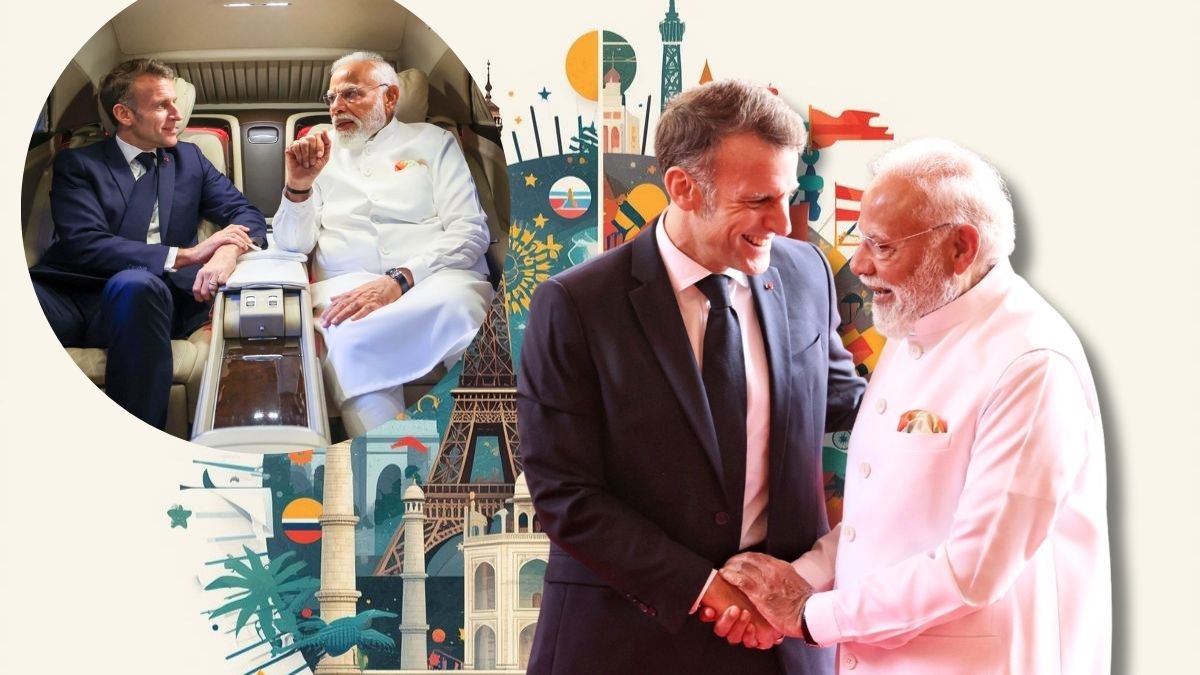
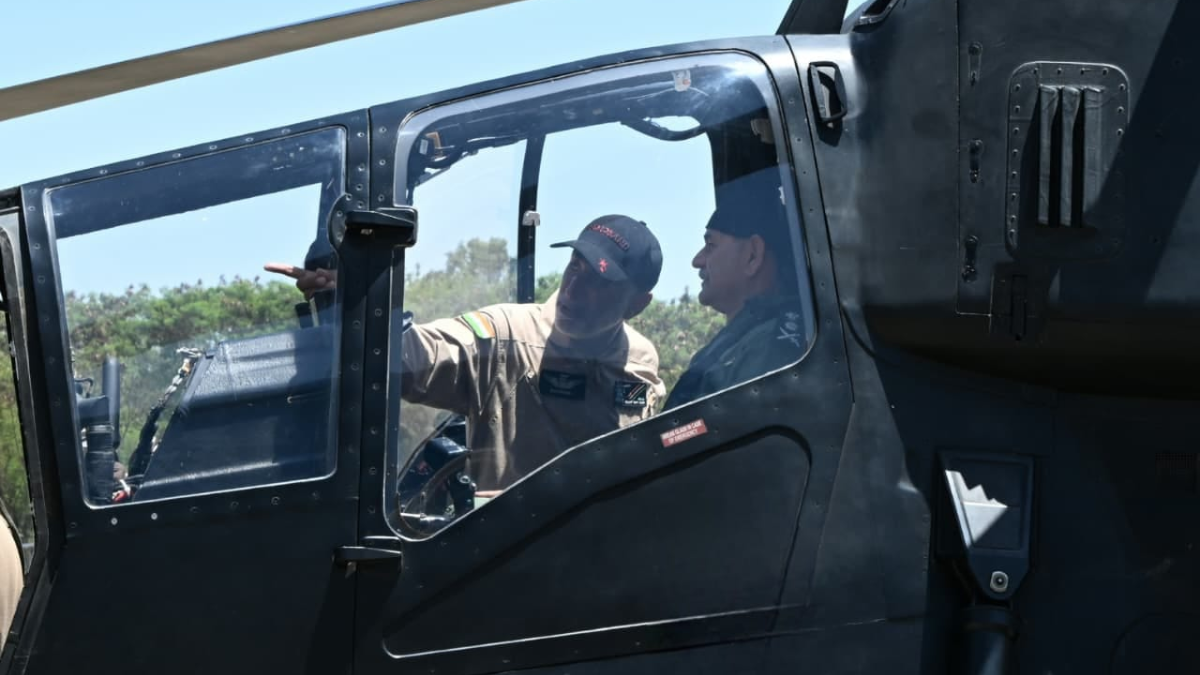
PM Modi said India and France would together manufacture only helicopter capable of flying to the heights of Mount Everest in India. Image courtesy: RNA

With the inauguration of India–France Year of Innovation 2026, both the countries have taken yet another step to galvanise joint efforts focused on deepening talent mobility, startup collaboration and high-impact innovation with year-round engagements. It is worth mentioning here that France is India’s oldest strategic partner.
In a sweeping expansion of bilateral ties, Prime Minister Narendra Modi and French President Emmanuel Macron on Tuesday (February 17, 2026) unveiled more than 20 agreements spanning defence, aerospace manufacturing, artificial intelligence, skilling, trade, health and cultural cooperation.
With this, they also formally elevated the India-France relationship to a ‘Special Global Strategic Partnership’, which reflects a “complete faith in this relationship”.
India-France partnership: Why elevation to ‘Special Global Strategic Partnership’ significant?
Addressing a joint press conference in Mumbai, PM Modi described the partnership as “a force for global stability” at a time of geopolitical uncertainty. “Based on this trust and shared vision, today we are establishing our relations as a Special Global Strategic Partnership,” he said.
The elevation reflects a deeper defence-industrial cooperation, expanded technology collaboration, greater coordination in the Indo-Pacific, stronger people-to-people and innovation linkages.
President Macron, on his fourth visit to India, echoed the sentiment, calling the bilateral relationship “remarkable and unique,” rooted in trust, openness and long-term ambition.
PM Modi-Macron meeting: Major outcomes, announcements
From jointly manufacturing Everest-capable helicopters in India to launching Indo-French AI centres and deepening defence collaboration post-Rafale, the outcomes of the Mumbai summit signal a decisive broadening of one of India’s most trusted strategic relationships.
PM Modi and French President Macron announced 21 agreements, which also include the launch of India-France Innovation Network, JV between Bharat Electronics and Safran for HAMMER missiles, joint declaration of intent for cooperation in critical minerals and metals, among others.
‘Made in India’ H125 Helicopter project: What is it?
One of the headline announcements was the virtual inauguration of the Final Assembly Line (FAL) for Airbus H125 helicopters at Vemagal, Karnataka – a joint venture between Airbus and Tata Advanced Systems Limited (TASL). The investment in the programme is expected to exceed Rs 1,000 crore, generating significant direct and indirect employment.
PM Modi underscored the symbolism of the project noting, “We take pride in the fact that, together, India and France will manufacture in India the world’s only helicopter capable of flying to the heights of Mount Everest and export it to the entire world.”
Why is the H125 important?
It is the world’s best-selling single-engine helicopter, the only helicopter to have landed on Mount Everest, designed for high-altitude and extreme environments, and suitable for military, rescue, firefighting, law enforcement and civilian missions. The helicopter will help meet Indian armed forces’ light multi-role requirements, particularly for Himalayan deployments.
A military variant, the H125M, is also planned, with high levels of indigenisation. The first ‘Made in India’ H125 is expected by early 2027, with exports to South Asia and potentially beyond.
For India, this strengthens domestic aerospace manufacturing under Make in India. For France, it anchors long-term industrial presence in one of the world’s fastest-growing aviation markets.
India-France defence cooperation beyond Rafale fighter jets
The summit comes days after India cleared a proposal to procure 114 Rafale fighter jets from France under a government-to-government framewor, one of India’s largest military acquisitions in recent years. “From Rafale jets to submarines, we are expanding defence cooperation,” Macron said, calling India one of France’s most trusted partners.
With the H125 assembly line and potential military variant, defence cooperation is now moving beyond buyer-seller dynamics towards co-development and co-production.
The partnership spans fighter aircraft, submarines, helicopters, space collaboration, maritime security in the Indo-Pacific.
What is the India–France Year of Innovation 2026?
A major announcement was the launch of the India–France Year of Innovation, aimed at transforming the strategic partnership into a “Partnership of the People.” PM Modi highlighted, “Innovation doesn’t happen in isolation, but through collaboration”. Key initiatives include:
- Indo-French Centre for AI in Health
- Indo-French Centre for Digital Science and Technology
- National Centre of Excellence for Skilling in Aeronautics
These platforms will connect startups, MSMEs, researchers, students and defence innovators across both countries, thereby strengthening collaboration in AI, clean energy, space and emerging technologies. The focus on skilling in aeronautics also directly supports aerospace manufacturing projects like the H125 line.
How does this fit into Indo-Pacific and global strategy?
Both leaders emphasised shared values, from rule of law, multipolarity and opposition to hegemony, particularly in the Indo-Pacific region. The French President highlighted cooperation under the International Solar Alliance (ISA), the India-Middle East-Europe Economic Corridor (IMEC), joint maritime and security initiatives.
With Europe seeking stronger Indo-Pacific engagement and India diversifying strategic partnerships, France remains a pivotal bridge between New Delhi and the European Union.
Cultural and people-to-people initiatives
Beyond defence and technology, cultural diplomacy featured prominently. India will open the Swami Vivekananda Cultural Centre in France, while both nations will collaborate on heritage projects including the National Maritime Heritage Complex in Lothal. These moves reinforce the civilisational and academic dimension of ties.
The announcements reflect a maturing partnership that now rests on three pillars – defence and strategic security; industrial co-production and innovation ecosystems; and global governance and climate cooperation.
The H125 helicopter line alone symbolises a shift from procurement to partnership. The AI and innovation centres deepen technological interdependence. The Rafale expansion strengthens air power cooperation. India and France appear determined to anchor their ties in trust, co-production and shared strategic autonomy.