
India Signs $1 Billion Deal With GE For 113 Jet Engines To Power Tejas Mk-1A Fighters
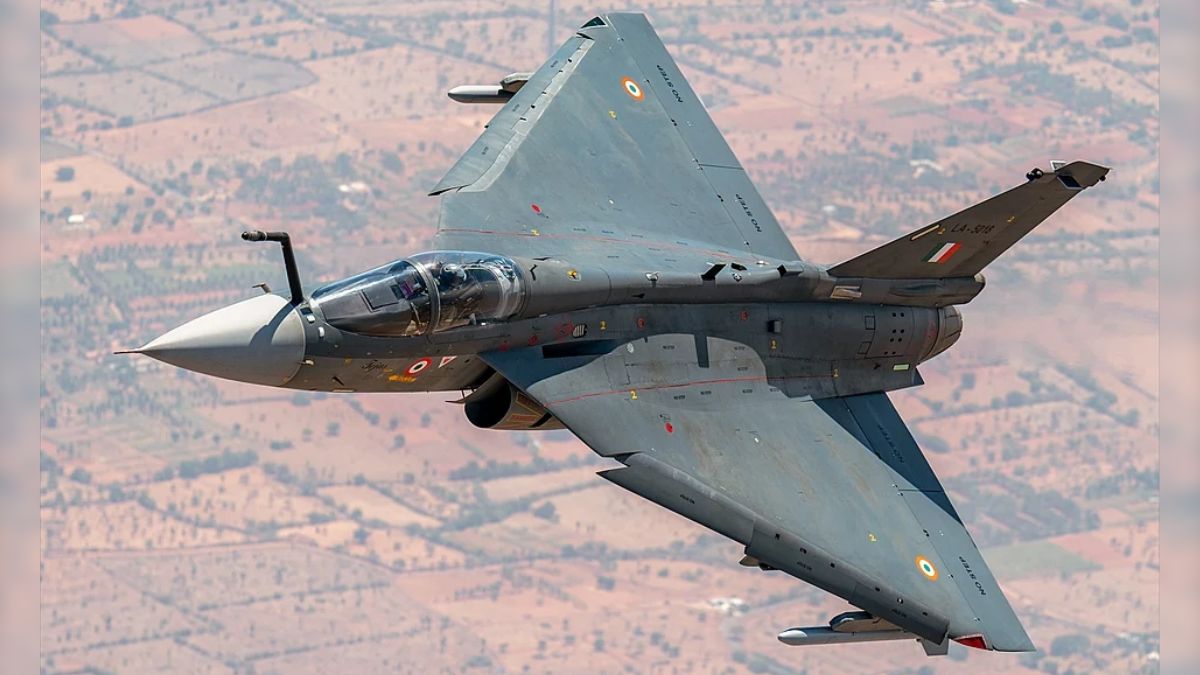
Indian Air Force's LCA Tejas has crashed at the Dubai Airshow. Image courtesy: Screengrab from X.com

In a major boost to India’s indigenous fighter jet program, New Delhi on Friday (November 7, 2025) inked a $1 billion (Rs 8,900 crore) agreement with US aerospace giant General Electric (GE) for the supply of 113 F404 jet engines to power the Tejas Mark-1A light combat aircraft (LCA).
The deal, signed in Bengaluru, marks another milestone in India’s long-delayed Tejas programme and is expected to partially ease production delays that have hampered delivery to the Indian Air Force (IAF).
The new engines will be delivered between 2027 and 2032, supplementing an earlier order of 99 engines placed in August 2021 under a Rs 5,375 crore contract.
Why is Tejas production delayed? What is HAL’s roadmap?
According to Hindustan Aeronautics Limited (HAL) chief D.K. Sunil, 11 Tejas Mk-1A aircraft are already ready for delivery, with four fitted with the GE engines. “We aim to hand over the first 10 jets to the IAF by March next year,” he said.
HAL attributed earlier delays to supply chain bottlenecks in engine delivery and incomplete weapon integration trials, including tests of Astra beyond-visual-range missiles, ASRAAM short-range missiles, and laser-guided bombs. These systems are being integrated with the Israeli-origin Elta ELM-2052 radar and fire control system.
The state-run defence manufacturer plans to scale up production significantly — from 16 aircraft annually to 20–30 aircraft per year — supported by a third production line in Nashik alongside its two existing lines in Bengaluru. GE, in turn, has committed to delivering 20 engines per year once the supply stabilises.
Why this deal matters for India’s air power?
The IAF currently operates only 29 fighter squadrons, far below the sanctioned strength of 42.5 squadrons. The 180 Tejas Mk-1A aircraft on order — 83 signed in February 2021 and 97 more added in September 2025 — are expected to bridge part of this critical gap.
The urgency is underscored by the regional balance of power: Pakistan fields around 25 squadrons and is set to acquire 40 Chinese J-35A fifth-generation stealth fighters, while China maintains more than four times India’s air combat assets, including bombers and force-multipliers.
Is co-producing the next-gen F414 engines in the pipeline?
Parallel to the F404 engine deal, HAL is negotiating with GE to co-produce the advanced F414 engines — which deliver 98 kilonewton thrust — for the upcoming Tejas Mark-2 variant.
The $1.5 billion project includes 80% transfer of technology (ToT), a significant step toward self-reliance in aerospace manufacturing under the ‘Make in India’ initiative.
A Defence Ministry official confirmed that six rounds of technical discussions with GE have been completed, with commercial negotiations likely to wrap up by March 2026.
What is the expected outcome?
The new GE engine deal represents a crucial acceleration in India’s efforts to indigenise its air combat capabilities while maintaining strong defence ties with the United States.
With production now stabilising and testing advancing, the IAF hopes the long-delayed Tejas Mk-1A will finally take flight in strength, powering India’s skies with homegrown might.